Snacks supply about a quarter of the calories American adults eat, and 43 percent of the added sugar. That second number is the tell. Snacking itself is a normal eating pattern; the products designed for it are where the sugar hides, and they are exceptionally good at looking wholesome while they do it.
This guide is the fix: a ten-second label test that works in any store, a translation table for the eight most common health-halo claims, and an honest list of healthy snacks to buy and skip, drawn from labels we actually vet, including a few hard truths about products we sell. For the protein-forward corner of this topic, our high-protein, low-sugar snacks guide goes deeper on bars, jerky, and sweetener fine print.
The rules, up front
- Judge a snack by its Nutrition Facts panel, never the front of the bag. Serving size, added sugars, sodium, and the protein-fiber pair answer the healthy question in about ten seconds.
- Use the 5/20 shortcut. At 5 percent of the Daily Value or less per serving, a nutrient is low; at 20 percent or more, it is high. For a snack, that means roughly 2.5 grams of added sugar and 115 milligrams of sodium mark the low end.
- Protein plus fiber is the fullness pair. A snack carrying around 5 grams of protein or 3 grams of fiber may hold you until the next meal better than the same calories of refined starch.
- "Veggie," "multigrain," "made with real fruit," and "no sugar added" are marketing, not measurements. Each one has a specific trap, decoded in the table below.
- Snacking is optional. Federal survey data shows 95 percent of adults snack on any given day, and among those who do, snacks deliver 43 percent of the added sugar they eat, so one deliberate snack beats a grazing pattern.
What makes a snack healthy?
A snack has one job: carry you from one meal to the next without wrecking either. That job takes roughly 100 to 250 calories for most adults, built on something recognizable as food. Nuts, seeds, fruit, vegetables, dairy, eggs, beans, and plainly prepared meat or fish all qualify before any package gets involved.
Regulation is finally catching up to that food-first view. In December 2024, the FDA finalized an updated definition of the "healthy" claim on food packages. To use the word, a product must now contain a meaningful amount of a real food group and stay under limits for added sugars, saturated fat, and sodium. Under the old nutrient math, salmon and almonds failed while some sweetened cereals passed; the new rule reverses that, qualifying nuts, seeds, higher-fat fish, and even plain water. Manufacturers have until February 2028 to comply, so the word on today's shelves still means whatever the marketing department wanted.
Until then, the working definition is practical. A healthy snack keeps added sugar and sodium low for what it delivers, brings protein or fiber to the table, and starts its ingredient list with an actual food. You can confirm all of that from the Nutrition Facts panel faster than you can read the front of the bag.
The ten-second label test
Flip the package over and read in this order. The sequence matters, because the first line changes the meaning of every line after it.
- Serving size first. Every number on the panel is per serving, not per bag. Puffed and airy snacks look innocent partly because a serving weighs almost nothing; a "share size" bag can quietly hold three servings. Decide what you will actually eat, then scale the numbers.
- Added sugars, not total sugars. The label separates sugar that occurs naturally in fruit or milk from sugar poured in at the factory. Dried fruit with 15 grams of total sugar and zero added is a different food from a granola cluster with 9 grams added. Around 2.5 grams of added sugar per serving sits at the FDA's "low" line of 5 percent of the Daily Value.
- Sodium next. Crunchy and meaty snacks earn their flavor somewhere, and it is usually here. Using the same 5/20 shortcut, 115 milligrams or less per serving is low; 460 milligrams or more is high territory for a between-meal bite.
- Find the protein-fiber pair. These two nutrients do the actual work of a snack. Around 3 grams of fiber earns a "good source" label under FDA rules, and around 5 grams of protein is where a snack starts pulling real weight. A snack that has neither is entertainment, not fuel.
- Scan the first three ingredients. Ingredients are listed by weight. You want a food you could name in a kitchen at the top: almonds, oats, chickpeas, beef, apples. Sugar hiding in the top three under an alias (cane syrup, brown rice syrup, tapioca syrup, fruit juice concentrate) means you are holding a dessert.
The 5/20 shortcut comes straight from the FDA's own guide to the Nutrition Facts label, and it works on every packaged food, not only snacks. For aisle-specific thresholds, we have run this exact exercise on cereal and crackers, where serving-size games are a competitive sport.
Held together on a single serving, and anchored to the Daily Values the percentages are built from, the four numbers look like this.
| On the panel | The 5% "low" line | The 20% "high" line | What to want in a snack |
|---|---|---|---|
| Added sugars | 2.5 g | 10 g | As close to zero as the craving allows. Sugar that arrives inside whole fruit, with the fiber still attached, is a different question. |
| Sodium | 115 mg | 460 mg | Under roughly 200 mg for most snacks. Meat sticks sit higher because the salt is doing the preserving. |
| Dietary fiber | 1.4 g | 5.6 g | Here you want the high end. 3 g earns a "good source" claim, and it should come from the food rather than an added fiber syrup. |
| Protein | 2.5 g | 10 g | High again. 5 g is the floor for a snack that holds, and the honest way to compare brands is protein per 100 calories. |
The FDA has proposed doing part of this reading for you. A rule published in January 2025 would put a Nutrition Info box on the front of most packaged foods, rating saturated fat, sodium, and added sugars as Low, Med, or High. It is still a proposal, and manufacturers would get three years after any final rule before the box appears, so nothing on the shelf changes this year. The proposal does confirm the method: two of the three nutrients the government wants flagged on the front are the two this test already reads first. Learn the panel now and the box, whenever it arrives, will tell you what you already knew.
The health-halo decoder: eight claims, translated
Front-of-package claims are legal, regulated to different degrees, and engineered to end your label reading before it starts. The table below translates each claim into the little it legally requires, plus the line on the panel that settles it.
| The claim | What it actually tells you | What to check instead |
|---|---|---|
| Made with real fruit | Some form of fruit is present, often as juice concentrate or puree, which counts as added sugar and carries none of the fruit's fiber. | The added sugars line, and whether fiber survived. Whole fruit brings roughly 3 grams per serving; concentrate brings close to zero. |
| Veggie (straws, chips, puffs) | A potato-starch or corn base tinted with vegetable powder. The vegetable is usually a colorant, and fiber typically lands near 1 gram. | Where the vegetable sits in the ingredient list, and the fiber line. A carrot beats the entire category. |
| Multigrain | Several grains are present. Nothing about the word requires any of them to be whole. | The word "whole" on the first ingredient, or a 100 percent whole grain stamp. |
| No sugar added | Nothing counted as added sugar went in. The product can still be intensely sweet through dates, raisins, or zero-calorie sweeteners like monk fruit and stevia. | Total sugars, and which sweetener appears in the ingredient list. Fruit-sweetened can be a genuinely better trade; it is still sweet. Zero-calorie sweeteners and sugar alcohols are where net-carb math gets slippery, which our keto snacks guide works through. |
| Natural | Very little. The FDA has never formally defined the term for food labeling, so it carries no nutritional requirement at all. | Ignore the word entirely and run the ten-second test. |
| Protein (cookies, chips, cereals) | Protein was added, often to a candy or chip formula that remains a candy or chip formula. The word does not cap sugar, fat, or calories. | Protein per 100 calories, then added sugars. Jerky and roasted soybeans win this math; most protein cookies lose to a handful of nuts. A jerky bag needs one extra check, the servings-per-container line, since the panel usually describes a fraction of the bag; how to read a jerky panel covers the rest. |
| Organic | The ingredients were grown and processed to USDA organic standards. That is a sourcing standard we care deeply about, and it says nothing about sugar, sodium, or fiber. Organic candy is candy. | The same Nutrition Facts panel as any other product. Organic plus a clean panel is the actual win. |
| Gluten-free | The product meets the FDA's under-20-parts-per-million rule. Essential for celiac disease and gluten sensitivity, neutral for everyone else. | Whether you medically need it, then the normal test. Our gluten-free guide covers the rest. |
One pattern connects every row: the claim points at what the product contains, while the panel shows what the product is. Most of these items also sit deep in ultra-processed territory, where marketing budgets concentrate because the ingredients cannot speak for themselves. Our ultra-processed foods guide maps that bigger picture.
Healthy snacks to buy, by craving
Willpower is a bad shopping strategy. Matching the snack to the craving works better, because a snack that ignores what you actually wanted gets followed by the snack you wanted. The pairing rule below runs through every category: put a protein or a fat next to a carbohydrate, and the snack lasts longer than either half alone.
When you want crunch
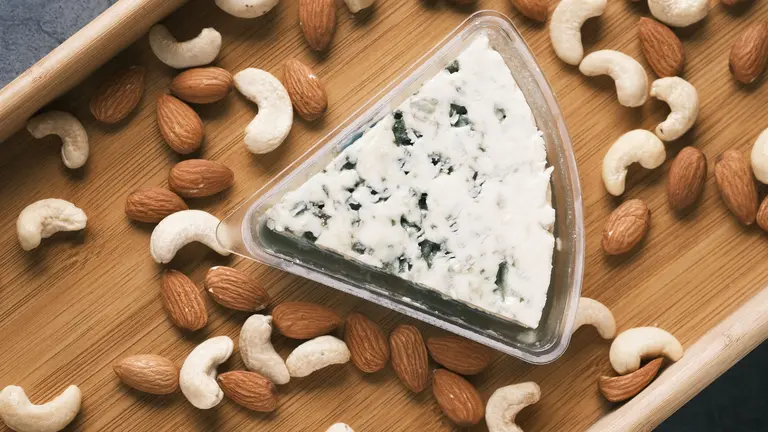
Plain nuts are the standing champion. A 30-gram serving of our raw almonds posts 8 grams of protein and 4 grams of fiber against a one-word ingredient list. Dry-roasted edamame is the upgrade most people have not met yet: the same 30 grams carries 14 grams of protein and 6 grams of fiber for 130 calories, where potato chips give you about 2 grams of protein for the same weight. Both clear the fiber bar without help from an additive, which matters more than the number itself; our high-fiber snacks guide shows why the biggest fiber count in the aisle usually belongs to a candy. Seed crackers built on pumpkin, sunflower, and flax carry the protein-fiber pair that refined wheat crackers lack; our crackers guide names the thresholds. Air-popped popcorn earns a spot too, a whole grain at about 30 calories a cup, as long as the butter-flavored coating stays out of it.
When you want sweet
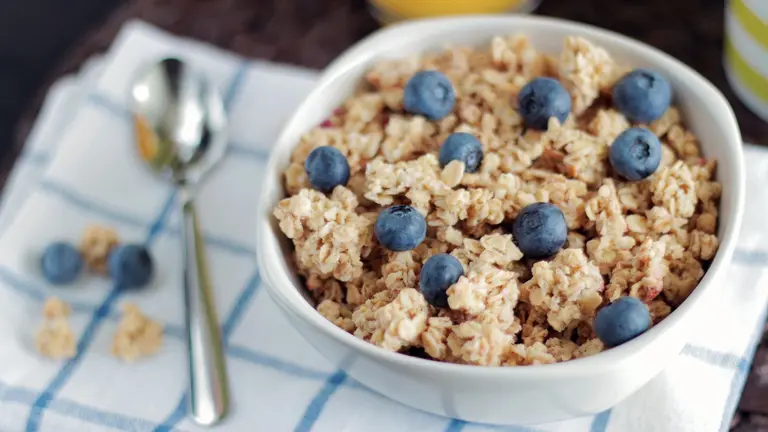
Start with fruit that still looks like fruit. A two-ingredient bar like the apple and cherry fruit bar reads "apples, cherries" and stops: 100 calories, 3 grams of fiber, zero added sugar. Its total sugars line still says 22 grams, which is the added-sugars distinction doing its job rather than a mark against the bar, because that sugar arrives inside the fruit carrying the fiber. Two Medjool dates deliver caramel-level sweetness with about 3 grams of fruit fiber, and a single-serve nut butter packet turns them into a snack that holds. For sweet crunch, run our own no-added-sugar granola through the same test and it splits the decision honestly: 3 grams of total sugar with none added, sweetened by date powder and monk fruit instead of the usual syrup, but the fiber line reads 0 grams and 5 of its 8 grams of fat are saturated, from coconut oil. Against a syrup-bound cluster that is a real upgrade. It is still not the fiber win the word granola implies. Dark chocolate over 70 percent cacao closes the list; treat the square as the serving.
When you want salty or meaty
A grass-fed beef stick is the cleanest template in the savory case: 100 calories, 10 grams of protein, zero sugar, and beef ahead of a short list of salt, spices, and a celery-powder cure. Turkey sticks and biltong run the same play. The honest caveat for the whole meat-snack category is sodium, which is doing the preservation work: that single stick carries 380 milligrams, 17 percent of the Daily Value, so one is a snack and three are a salt delivery system. Wasabi roasted edamame and seed crackers with hummus cover the salty craving with plants. For the bar aisle specifically, protein and sugar move in opposite directions across brands; our high-protein, low-sugar guide sorts the field.
Healthy snacks for work, the desk drawer, and the car
Work snacks fail on logistics before nutrition, so buy shelf-stable and pre-portioned: single-ounce nut packs, meat sticks, fruit bars, nut butter packets, roasted edamame. Nothing needs a refrigerator, and the portion decision was made on a calm day instead of a stressful one.
Healthy snacks for kids
For kids, the same label test applies with two additions. The American Academy of Pediatrics counts whole nuts, popcorn, and other hard or round foods as choking hazards until around age four, and a child's sodium budget is smaller than the adult one that snack makers design for. Applesauce pouches with one ingredient, cheese, fruit, and yogurt without cartoon-level sugar all pass. Fruit-shaped gummies mostly do not, a point the decoder table already made.
What to skip, and what it really is
None of these will hurt you as an occasional treat. The problem is the costume: each one is engineered to be eaten as a daily healthy snack while carrying dessert math. Full disclosure, we stock a few of them, because a well-labeled treat has a place. The mistake is filing it under health food.
- Veggie straws. Reconstituted potato starch in a vegetable costume. If the craving is crunch, roasted chickpeas, seed crackers, or nuts win on every line of the panel.
- Fruit snacks and gummies. Even the organic versions we carry are candy-adjacent: fruit concentrate is added sugar without fiber. They belong in the treat rotation, not the fruit bowl.
- Yogurt-covered anything. The coating is typically sugar and oil with a trace of yogurt powder. The health signal comes entirely from the word.
- Granola clusters with syrup in the top three. Oats do not rescue 9 grams of added sugar per tiny serving. A date-sweetened or plain version delivers the same crunch with a cleaner panel.
- Protein cookies. A cookie with a scoop of whey stirred in is still a cookie. Run the protein-per-100-calories math against jerky or roasted edamame and watch it lose.
- 100-calorie packs of refined crackers or cookies. Portion control is genuinely useful; it just is not nutrition. The pack caps the damage without adding a single gram of protein or fiber.
The pattern for swaps runs one direction: move from starch dressed as vegetables toward actual plants, and from sugar dressed as fruit toward actual fruit.
How often should you snack?
Snacking is nearly universal but not mandatory. In the USDA's most recent national survey data, 95 percent of adults snacked on any given day and 78 percent had two or more, with snacks averaging 24 percent of daily calories among people who snack. If your meals already hold you, skipping snacks entirely is a legitimate option, not a discipline failure.
If snacks are staying, two habits carry most of the value. First, decide the snack in the morning, not at 3 p.m.; the afternoon version of you reaches for whatever is closest, which is exactly what the packaging is designed for. Second, plate it. Eating from the bag disconnects the portion from the serving size you just read, and the fiber gap makes this worse: most Americans under-eat fiber substantially, so a snack that adds some is doing double duty. Our fiber guide covers how far short most of us run.
Do healthy snacks help with weight loss?
No snack causes weight loss, and a "healthy" label does not subtract calories. What a well-built snack may do is manage hunger between meals so the next meal starts from a calmer place, and the protein-fiber pair is what does that work. People eating on a reduced appetite, including those on GLP-1 medications, face the reverse problem of fitting protein and fiber into fewer calories; our GLP-1 eating guide covers that case. If you are shopping by calorie count specifically, our low-calorie snacks guide ranks the options by how long they hold, which is not the same order as the calorie line. For everyone else, the day's total pattern decides the outcome, and a snack is one decision inside it.
Frequently asked questions
What is the healthiest snack?
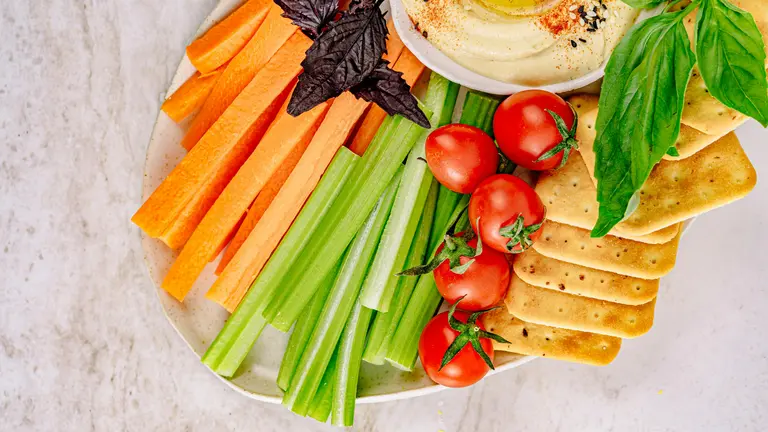
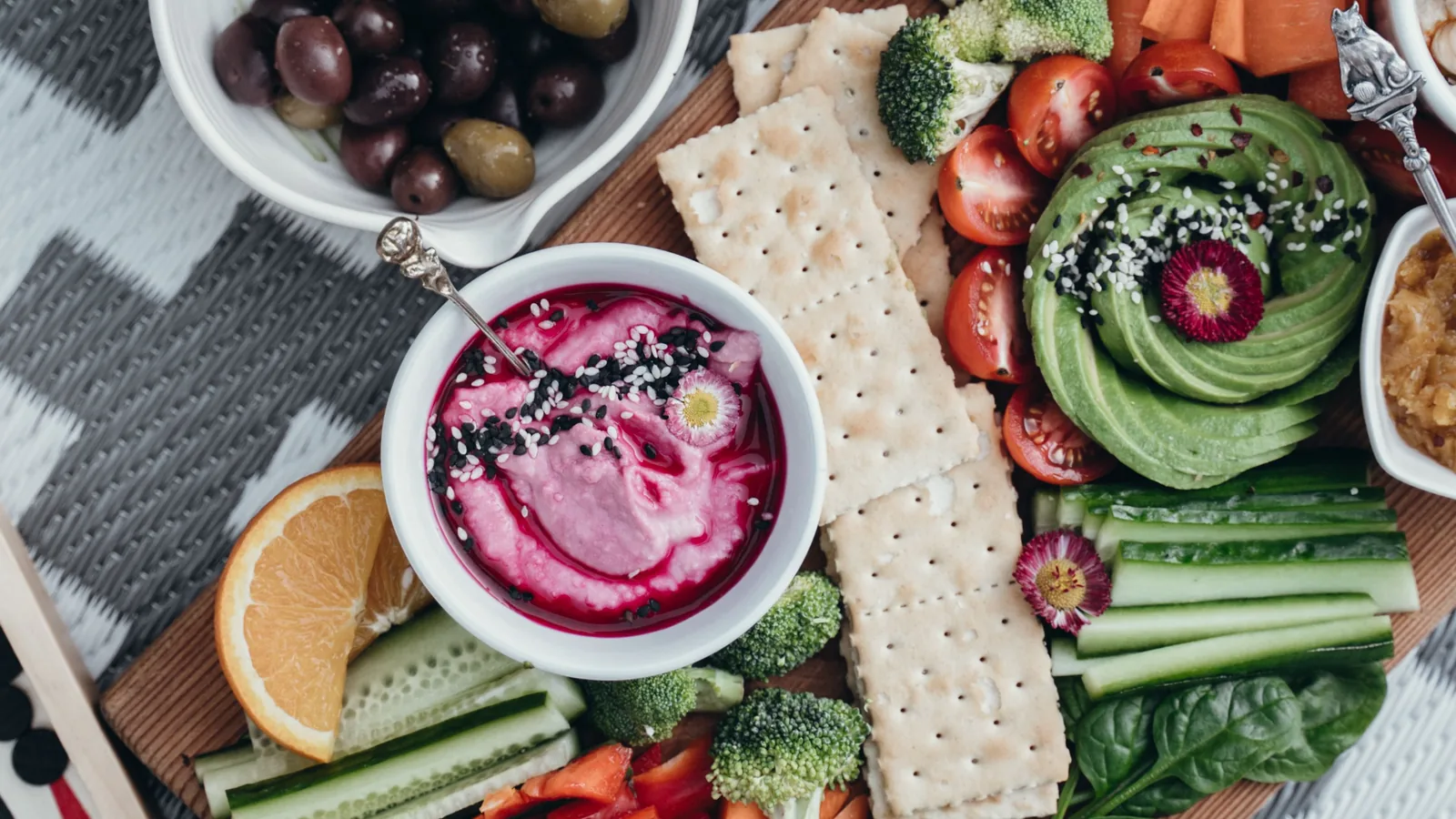
There is no single winner, but the shortlist is stable: a handful of plain nuts, fruit with nut butter, plain yogurt, roasted edamame, a hard-boiled egg, or vegetables with hummus. Each pairs protein or fat with fiber, keeps added sugar near zero, and needs no label decoding.
What about protein bars?
The label settles it fast. Look for meaningful protein, ideally 10 grams or more, with added sugar in the low single digits and an ingredient list that starts with food rather than syrup. Bars that fail that test are candy with a gym membership. Our high-protein, low-sugar snacks guide compares the field in detail.
Is popcorn a healthy snack?
Air-popped popcorn is a whole grain at about 30 calories per cup, which makes it one of the best volume-for-calories snacks available. The category goes wrong through oil, butter flavoring, and sweet coatings, so the popping method and the topping decide the answer.
Are veggie straws or veggie chips healthy?
No, not in any meaningful sense. The base is potato starch or corn flour, the vegetable is mostly powder used for color, and fiber usually lands around 1 gram per serving. As an occasional crunchy treat they are fine; as a vegetable serving they are marketing.
Do fruit snacks count as fruit?
No. Most are built on fruit juice concentrate, which the FDA counts as added sugar, and the fiber that defines whole fruit is gone. A fruit-snack pouch is a small candy with better artwork. Whole fruit, dried fruit, and two-ingredient fruit bars are the real versions.
Are rice cakes good for you?
Rice cakes are light and low in calories, but a plain one is mostly fast-digesting starch with little protein or fiber, so alone it rarely holds anyone for long. They work best as a base: add nut butter, smoked salmon, or cottage cheese and the pairing rule turns them into a real snack.
What are good healthy snacks for work?
Shelf-stable and pre-portioned wins: single-ounce nut packs, meat or turkey sticks, roasted edamame, two-ingredient fruit bars, nut butter packets, and seed crackers. Stock the drawer on a calm day so the 3 p.m. decision is already made.
What are healthy snacks for kids?
The same panel test applies, with a smaller sodium budget and one safety rule: whole nuts, popcorn, whole grapes, and other hard or round foods are choking risks under about age four, so cut or swap them. Fruit, cheese, plain yogurt, one-ingredient applesauce pouches, hummus with soft vegetables, and nut butter spread thin all pass the test. Fruit-shaped gummies and yogurt-covered anything do not, whatever the front of the box says.
What is a good late-night snack?
Something small that puts protein next to a modest carbohydrate: plain yogurt with berries, fruit with nut butter, cottage cheese, or a handful of nuts. Keep it near 150 calories and keep added sugar low, since a sweet snack close to bed is the one most likely to outrun actual hunger. If you are snacking late because dinner was too small, the fix belongs at dinner.
How many snacks a day is normal?
Federal survey data shows most American adults have one to three snacks daily, and snacks average about a quarter of daily calories. Normal is not the same as necessary. One or two deliberate snacks that carry protein or fiber generally serve people better than open-ended grazing.
What should I look for on a snack label?
Five things, in order: the serving size, added sugars (aim near 2.5 grams or less), sodium (115 milligrams or less is low), the protein and fiber lines (about 5 and 3 grams respectively are useful floors), and the first three ingredients, which should read like food. The whole check takes about ten seconds once it becomes a habit.
The bottom line
The snack shelf is the most heavily costumed real estate in the grocery store, and the costumes work: the average adult's snacks carry almost twice the share of added sugar that they carry of calories. You do not need to memorize brands to beat that math. Read the panel in order, serving size to ingredients, keep the protein-fiber pair in the cart, and file the gummies and straws where they belong, next to dessert. Stock a drawer with snacks that pass the test once, and the daily decision disappears.