The whole job of a keto snack is to not spike your blood sugar. So it should bother you that the number keto shoppers trust most, the “net carbs” on the front of the bag, is one each brand calculates for itself. No federal rule defines it. Two products with nearly identical ingredients can print very different net-carb counts, and a bar that says “3 grams” can still carry enough of the wrong sweetener to nudge you out of ketosis.
That gap between the label math and what actually reaches your bloodstream is where most keto snacking goes wrong. This guide decodes what net carbs really mean, which sweeteners and fibers you can honestly subtract and which you cannot, and the keto snacks worth keeping on hand. Most of the safest picks turn out to be whole foods with no math required.
Keto snacking in six lines
- “Net carbs” is a self-reported number. Total Carbohydrate is defined and required on the label; net carbs is not. Brands compute it themselves, so treat it as a claim, not a fact.
- Subtract fiber, erythritol, and allulose. Do not subtract maltitol or IMO. Those two still raise blood sugar, even when a package hides them inside a low net-carb figure.
- Whole foods are the cleanest keto snacks. Nuts, seeds, eggs, cheese, olives, avocado, and no-sugar meat sticks are naturally low in net carbs with no label games.
- Not all nuts are equal. Pecans, macadamias, brazil nuts, and walnuts run lowest in net carbs; cashews and pistachios run highest.
- Check the serving size before the carb count. A tiny listed serving is the oldest way to make a big-carb snack look keto.
- “Keto” on the front is marketing. It is not a regulated claim, so the ingredient list and the panel are the only parts that tell the truth.
What “net carbs” actually means, and who decides it
Start with the one number the government does define. Every Nutrition Facts panel lists Total Carbohydrate, and that figure already includes dietary fiber, total sugars, and any sugar alcohols in the food. Net carbs is a second calculation layered on top, popularized by low-carb dieters: take the total carbohydrate and subtract the parts your body does not turn into blood sugar.
The logic is sound where it applies. Fiber is the clearest case. Because high-fiber foods hold carbohydrate your body cannot fully digest, they cause a slower and lower rise in blood sugar than the same grams of refined starch. Subtracting fiber from total carbs gets you closer to the carbohydrate that actually affects you. So far, so reasonable.
The problem is everything brands subtract after fiber. The FDA sets rules for Total Carbohydrate, dietary fiber, total and added sugars, and sugar alcohols, but it has never defined “net carbs.” That leaves the subtraction up to the manufacturer. One company counts all of a product’s sugar alcohol against you and prints an honest number; another subtracts every gram and prints a flattering one. Same food, different math, and only one of them matches what your glucose meter would say.
The sugar-alcohol trap: not all “net” is equal
Sugar alcohols are the sweeteners that make most low net-carb treats possible, and they are where the label math quietly breaks. They are not all interchangeable. Some pass through with almost no effect on blood sugar. Others behave a lot like sugar while still getting subtracted on the front of the box.
Here is how the common label ingredients actually sort out. Two of them are not technically sugar alcohols (allulose is a rare sugar, IMO a syrup sold as fiber), but brands subtract them the same way, so the same decoder applies.
| On the label | Safe to subtract? | What it does to blood sugar |
|---|---|---|
| Dietary fiber | Yes | Largely undigested; little to no glucose response. |
| Erythritol | Yes | Absorbed but excreted mostly unchanged; essentially no blood-sugar effect. |
| Allulose | Yes | Barely metabolized for energy; negligible blood-sugar effect. |
| Maltitol | No, count most of it | Glycemic index around 35 to 52, well below sugar but far from zero. |
| Xylitol, sorbitol | Only about half | Modest blood-sugar rise; common cause of gas and bloating. |
| Isomalto-oligosaccharide (IMO) | No | Sold as “fiber,” but the FDA declined to count it; much digests to glucose. |
Maltitol is the one that catches people. It is the most common sugar alcohol in cheap “keto” and “sugar-free” candy precisely because it tastes and bakes like sugar, and it carries a real glycemic load to match. A bar sweetened with maltitol that advertises “2 grams net carbs” can push your blood sugar noticeably higher than that, and eat into your daily carb room without you spending it on purpose.
IMO is the same story in a different costume, and it echoes the trick behind a lot of high-fiber candy: a syrup marketed as fiber that the FDA did not accept as one, so a good share of it lands as glucose. Erythritol and allulose are the honest exceptions, which is why better keto brands have moved to them. When you see maltitol, IMO, or a long “proprietary fiber blend” near the top of the ingredients, treat the net-carb number on the front as optimistic.
How many carbs does a snack actually get?
Keto works by keeping carbohydrate low enough that your body runs low on glucose and shifts to burning fat for fuel. Most people reach that by keeping total carbohydrate under about 50 grams a day, and often closer to 20 to 30, with the bulk of calories coming from fat. That daily ceiling is the useful frame for snacking. A snack is not judged against zero; it is judged against how much of a small daily budget it spends.
In practice, that sorts keto snacks into two tiers. Zero-carb anchors like plain meat sticks, pork rinds, eggs, and hard cheese cost you almost nothing and can be eaten with little thought. Low-carb picks like nuts, seeds, nut butter, olives, and a few berries cost a couple of grams per portion, which is fine as long as you count them. The trouble starts when a snack you assumed was free quietly runs 8 or 10 net grams, because two of those in an afternoon can be a third of your day.
The best keto snacks are usually whole foods
The keto snack aisle has exploded into bars, chips, cookies, and crackers engineered to a low net-carb number, and many of them are ultra-processed foods leaning on the exact sweeteners above. You do not need them. The snacks that keep you in ketosis without any label decoding are mostly the plain ones, and they are cheaper per serving too. Here is where to look, by the craving you are trying to answer.
Nuts and seeds, the fat-forward base
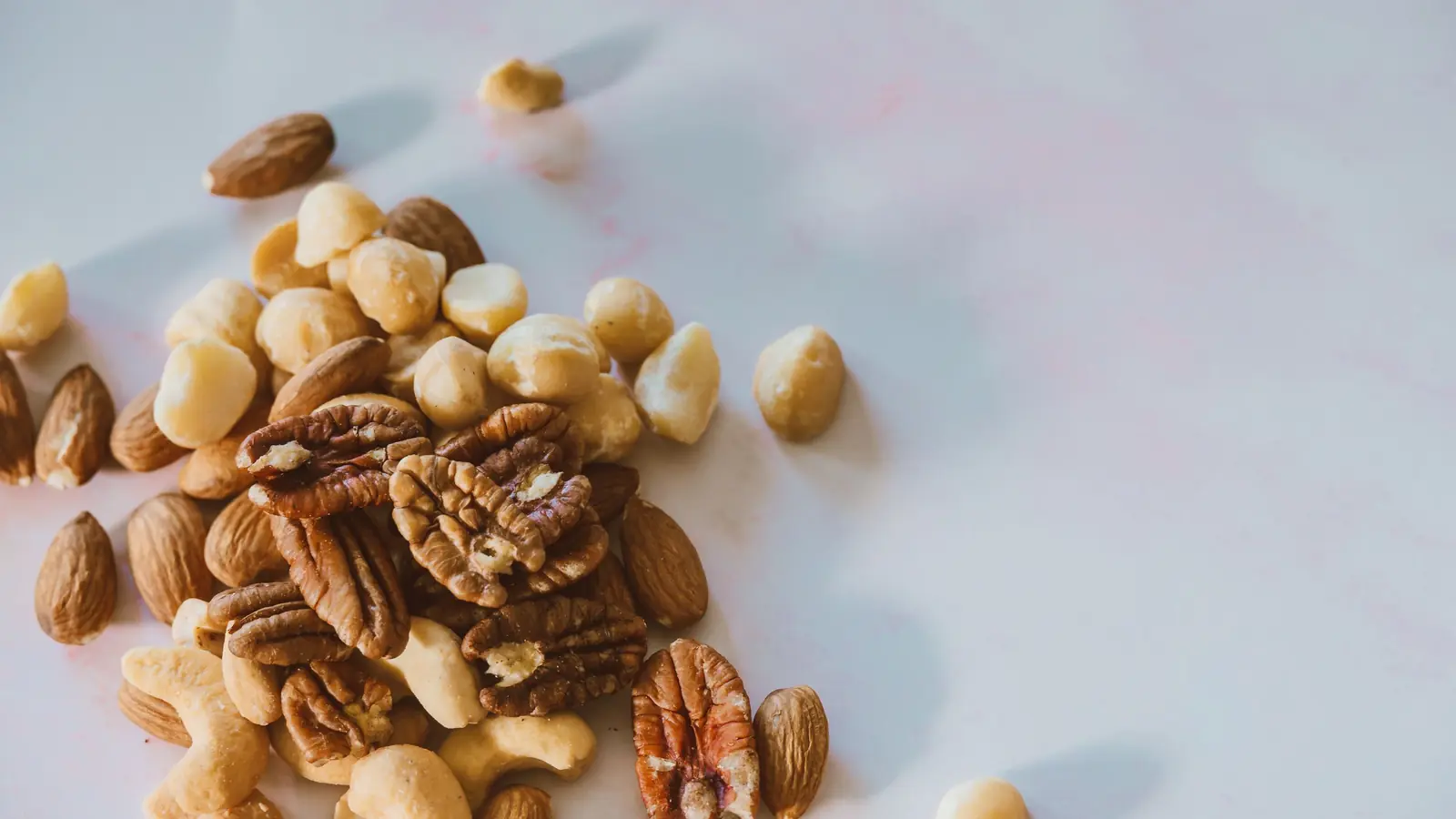
Nuts are the natural home of keto snacking: high fat, moderate protein, low net carbs, and portable. They are not all equal, though, and the spread matters when your budget is 20 grams. Macadamias are the lowest-carb nut of all, which is why they are the keto favorite, and pecans and brazil nuts sit right behind at 1 to 2 net grams an ounce with 19 to 20 grams of fat; brazil nuts also add a day’s worth of selenium in just two or three. Walnuts land near 2 net grams and bring plant omega-3s. Cashews sit at the other end, close to 8 net grams an ounce, and pistachios around 5, so those two are the ones to portion carefully rather than pour.
Seeds do the same job. Hemp hearts are one of the best keto foods in the store, with roughly zero net carbs, 15 grams of fat, and 10 grams of protein in three tablespoons, and they scatter over anything. Raw pumpkin seeds run about 2 net grams a quarter-cup with a heavy dose of magnesium. For a spreadable version, an unsweetened almond butter made from nothing but almonds runs about 3 net grams for two tablespoons; the only thing to check is that the label says almonds and salt, not almonds and cane sugar.
Meat and cheese, the zero-carb anchors
When you want something more filling than a handful of nuts, protein does the work and costs almost no carbs. A no-sugar grass-fed beef stick is close to ideal: about 100 calories, 10 grams of protein, and zero net carbs, with nothing on the ingredient list you need a chemistry degree to read. The one caveat is real and worth repeating at the shelf: many jerkies and meat sticks are glazed with brown sugar, honey, or teriyaki, which can add 4 to 6 grams of sugar a serving. Flip the package and read the added-sugar line before you assume a meat snack is keto. Format predicts that line better than the brand does. Ground sticks and air-dried biltong almost always post zero, while whole-muscle jerky is where the marinade sugar lives, and we sort out which meat snacks carry the sugar across a full shelf.
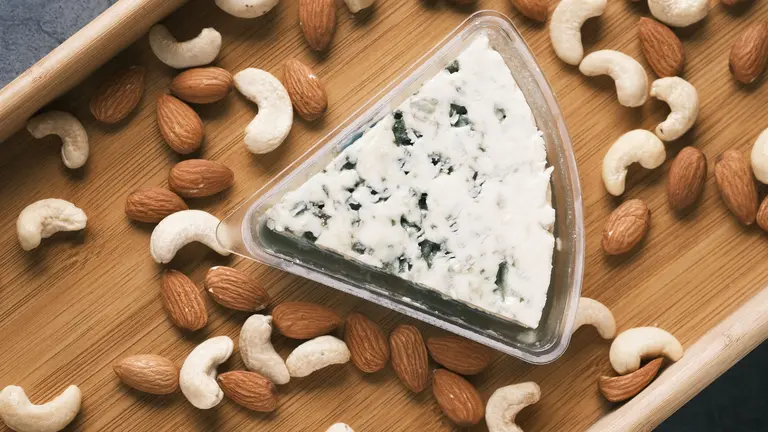
Hard cheese belongs here too. A stick of cheddar or a small handful of cheese crisps brings fat and protein for a gram or less of carbohydrate, and the baked-cheese crisps now on most shelves answer a chip craving without the potato. Olives and a couple of hard-boiled eggs round out the same savory, near-zero-carb category.
Crunch, salt, and something sweet without the carbs
Crunch is where keto dieters miss chips and crackers most, and it has the easiest swaps. Pork rinds are genuinely zero-carb and deliver the salty crackle, roasted seaweed snacks are light and nearly carb-free, and a spoon of nut butter on a few squares of very dark chocolate covers a sweet craving. For chocolate, aim for 85 percent cacao or higher, where a couple of squares run low on sugar; the “keto” dessert bars beside it are the ones most likely to hide maltitol. If you want a make-ahead treat, a homemade fat bomb (nut butter, coconut oil, and cocoa chilled into bite-size pieces) is the keto classic and skips the sweetener games entirely. A small handful of raspberries or blackberries, the two lowest-sugar fruits, is the honest way to end on something sweet.
Notice the pattern across all three groups: none of these needed a net-carb calculation. Browse the snacks aisle for more grab-and-go staples, and you have most of a keto snack drawer without reading a single front-of-box claim.
| Snack (per serving) | Net carbs | Fat | Protein |
|---|---|---|---|
| No-sugar beef or turkey stick (1 stick) | 0 g | 7 g | 10 g |
| Hemp hearts (3 tbsp) | 0 g | 15 g | 10 g |
| Pork rinds (1 oz) | 0 g | 9 g | 17 g |
| Brazil nuts (1 oz) | 1 g | 19 g | 4 g |
| Macadamias (1 oz) | 1.5 g | 21 g | 2 g |
| Pecans (1 oz) | 2 g | 20 g | 3 g |
| Walnuts (1 oz) | 2 g | 19 g | 4 g |
| Almond butter (2 tbsp) | 3 g | 18 g | 7 g |
| Pistachios (1 oz) | 5 g | 13 g | 6 g |
| Cashews (1 oz) | 8 g | 12 g | 5 g |
Net carbs equal total carbohydrate minus fiber; figures come from Nutrition Facts panels and USDA data, and vary a little by brand and portion.
Reading a “keto” label in twenty seconds
When you do reach for a packaged snack, the front of the box is the last place to look. Run the panel through five quick checks instead, in this order.
- Read the serving size first. If the low carb count only holds for half of what you would actually eat, double every number before you judge it.
- Find Total Carbohydrate, not net carbs. Start from the regulated number. The front-of-box net-carb figure is the brand’s math, not the FDA’s.
- Subtract only fiber, erythritol, and allulose. Those genuinely pass you by. Leave maltitol, IMO, and other sugar alcohols mostly in the count.
- Scan the ingredient list for the traps. Maltitol, isomalto-oligosaccharide, tapioca or corn fiber, and hidden starches near the top mean the real net carbs are higher than advertised.
- Ignore the word “keto.” It is a marketing term with no legal definition. The panel and the ingredients decide, not the badge.
Keto snacking, honestly
A few caveats keep this from turning into another oversold diet page. Net carbs is a useful guide, not a guarantee: people vary in how they respond to sugar alcohols and even to specific whole foods, so if you track ketones or glucose, trust your own readings over any package. Many people adopt keto to help steady their blood sugar, a goal often tied to insulin resistance, and for them the hidden-carb traps above matter even more. That said, keto is not automatically healthier than a balanced diet. The evidence shows real short-term improvements in weight and blood sugar, but at one year those results are not much different from conventional approaches, so the diet’s value is mostly in whether it helps you eat in a way you can sustain.
The safety note matters most if you take medication. Cutting carbohydrate sharply can lower blood sugar fast, which is dangerous if you use insulin or certain diabetes drugs and have not adjusted them with your doctor. Keto is also not recommended during pregnancy or for people with certain kidney, liver, or pancreatic conditions. The safest move, whenever a medication or health condition is in the picture, is to clear a keto plan with your healthcare professional first rather than assembling one from snack labels.
Frequently asked questions
What snacks can I eat on keto?
The reliable keto snacks are mostly whole foods: nuts and seeds, no-sugar meat sticks and jerky, hard cheese and cheese crisps, olives, hard-boiled eggs, avocado, pork rinds, nut butter, and a few low-sugar berries. Packaged keto bars and chips can work, but only after you read the ingredient list for maltitol and IMO and check the serving size.
Are nuts keto?
Most are, but the type matters. Pecans, macadamias, brazil nuts, and walnuts are lowest in net carbs at roughly 1 to 2 grams an ounce, which makes them ideal. Almonds and hazelnuts are moderate. Pistachios (about 5 net grams an ounce) and cashews (about 8) are the highest, so enjoy those in a measured portion rather than by the handful.
What is the best store-bought keto snack?
For a single pick, a no-sugar grass-fed beef stick is hard to beat: zero net carbs, about 10 grams of protein, and a clean ingredient list. Hemp hearts and a portion of pecans or brazil nuts are close behind. The best choice is the one you will actually keep on hand, so stock two or three so you are not cornered into a vending machine.
Do sugar alcohols count as carbs?
Some do and some do not. Erythritol and allulose have almost no effect on blood sugar and can be subtracted like fiber. Maltitol, xylitol, and sorbitol do raise blood sugar, maltitol the most, so they should stay mostly in your carb count even when a label subtracts them. This is the single biggest reason a “low net-carb” treat can still stall ketosis.
How many carbs will kick you out of ketosis?
It depends on the person, but most people hold ketosis by keeping total carbohydrate under about 20 to 50 grams a day. No single snack automatically breaks ketosis; the daily total is what counts. Even so, one snack that quietly runs 15 or 20 net grams can use up most of a strict keto budget, which is exactly why the hidden carbs in maltitol and IMO matter so much.
Is popcorn keto?
Not really. Air-popped popcorn runs about 15 net carbs for three cups, which can be a large chunk of a keto day in one bowl. It is a whole grain and a fine snack on a moderate low-carb plan, but it is too starchy to be a routine keto snack. Pork rinds or cheese crisps scratch the same crunchy, salty itch for almost no carbs.
What can I snack on with zero carbs?
Plain meat sticks and jerky with no added sugar, pork rinds, hard cheese, eggs, and most plain proteins are effectively zero net carbs. Hemp hearts and a single-ingredient nut butter come very close. These are the snacks you can reach for without doing any math.
Are snacks labeled “keto” always keto?
No. “Keto” is not a regulated term, so it promises nothing on its own. Plenty of “keto” bars and cookies rely on maltitol or IMO and land higher in real net carbs than the front of the box suggests. Judge the product by its Total Carbohydrate, its ingredient list, and its serving size, not by the badge.
The bottom line
The best keto snacks are the ones that never make you do the math. Whole foods like nuts, seeds, no-sugar meat, and cheese are naturally low in net carbs, and they skip the sugar-alcohol games that make packaged keto treats unreliable. When you do buy something with a claim on the front, read the serving size, start from Total Carbohydrate, and subtract only fiber, erythritol, and allulose. This is the low-carb corner of our snack coverage: the healthy snacks hub ties it together, while the high-protein, low-sugar, high-fiber, and low-calorie guides each answer a different goal. To go deeper on the carbohydrate side, read how food choices shape blood-sugar balance.