Fullness is measurable, and when researchers actually measured it, the ranking barely matched the calorie counts on the package. In a 1995 study now cited across nutrition science, volunteers ate fixed-calorie portions of common foods and then rated how full they felt for the next two hours. Plain boiled potatoes topped the list. Croissants landed near the bottom, at roughly a seventh of the potato’s score. Same calories in, very different hunger out.
That gap is the whole problem with shopping by the calorie number alone. A snack can be genuinely low in calories and still leave you rummaging through the cabinet twenty minutes later. The snacks that hold you are the ones built from the things your body registers as filling: protein, fiber, and sheer volume. This guide covers what makes a low-calorie snack actually satisfying, the label tricks that fake it, and the picks we stock that earn their place in a desk drawer.
What actually keeps you full
- Calories measure cost, not fullness. Two 150-calorie snacks can satisfy you very differently. What separates them is protein, fiber, and volume, not the number on the front of the bag.
- Protein is the strongest single lever. Eight to fifteen grams of protein in a snack does more to hold hunger than the same calories spent on refined starch. Edamame, jerky, and meat sticks lead here.
- Volume and water lower the calorie cost of feeling full. Foods with more water, fiber, and air weigh more per calorie, and weight is what stretches your stomach and signals fullness. This is why an air-puffed chickpea snack or a piece of fruit outperforms a dense cookie.
- The “100-calorie” label is often a portion trick. Many diet snacks hit a low number by shrinking the serving to a few crackers, not by being filling. Read the serving size first.
- Rice cakes and pretzels are low-calorie but low-satiety. They are mostly air and refined starch with little protein or fiber, so they rank near the bottom for staying power. Fine as a base, weak on their own.
Why “low calorie” tells you only half the story
A calorie count answers one question: how much energy this food carries. It says nothing about how long that food will keep you from wanting more. Those are two separate measurements, and the second one has a name in the research literature.
The satiety index, published by Susanna Holt and colleagues in the European Journal of Clinical Nutrition, ranked common foods by how full each one made people feel per calorie, using white bread as the baseline score of 100. Boiled potatoes scored 323. Croissants scored 47. When the researchers looked at what drove the differences, a clear pattern emerged: heavier, more water-rich foods scored higher, and foods higher in protein and fiber scored higher, while fattier and more intensely palatable foods scored lower.
Read that last part again, because it upends the diet-snack aisle. The foods engineered to taste irresistible and melt in your mouth tend to score low on fullness. The plain, watery, chewable ones score high. A low-calorie snack that ignores those levers is just a small number that leaves you hungry.
The three levers that make a snack filling
Every satisfying low-calorie snack pulls at least one of these, and the best pull two or three at once.
Protein. Gram for gram, protein is the most filling macronutrient, and it is the one most low-calorie snacks skimp on. A stick of jerky, a scoop of roasted edamame, or a handful of nuts brings protein that slows digestion and blunts the hunger signal between meals. Aim for a snack that carries at least 7 to 10 grams.
Fiber. Fiber adds bulk without adding many calories, and it slows how fast a snack leaves your stomach. It travels with whole foods by default: beans and legumes, nuts and seeds, fruit with the skin on, and whole grains. Landing in the 3-to-6-gram fiber range makes a snack a real contribution toward the 25-to-38 grams most adults need and rarely reach.
Volume, through energy density. Here is the lever that gets overlooked most. Energy density is calories divided by weight, measured in calories per gram. Water weighs a lot and carries zero calories, fiber carries very little, and fat carries the most, so water-rich and airy foods weigh more per calorie than dense, oily ones. In Barbara Rolls’ work at Penn State, foods under about 1.5 calories per gram count as low energy density, and eating a larger volume of them lets you feel full on fewer total calories. A cup of air-puffed chickpea snacks and a small, dense cookie can land at the same calorie count, but the puffs fill more space in your stomach and register as more food.
| Snack (per serving) | Calories | Protein | Fiber | Why it fills, or doesn’t |
|---|---|---|---|---|
| Dry-roasted edamame | 130 | 14 g | 6 g | Protein and fiber both high for the calories. The standout. |
| Turkey or beef stick | 80–100 | 9–10 g | 0 g | Lean protein does the work; watch the sodium. |
| Raw almonds (1 oz) | 170 | 7 g | 3 g | Protein, fiber, and fat; a fixed 1-oz bag caps the portion. |
| Chickpea puffs | 130 | 4 g | 3 g | Air and fiber add volume for the crunch craving. |
| Dried apricots (no sugar added) | 80 | 1 g | 3 g | Fiber and chew for a sweet tooth, low in calories. |
| Two plain rice cakes | ~70 | 1 g | 0 g | Low calorie, but air and starch with nothing to hold you. |
Nutrition figures come from each product’s Nutrition Facts panel; ranges cover the different brands we carry.
The low-calorie trap: three ways snacks fake it
A low number on the front of a package can be honest, or it can be engineering. Three tactics show up again and again.
The shrinking serving. The fastest way to a small calorie count is a small serving. A “100-calorie” pack is often three crackers or a thin cookie, portioned to hit the headline number rather than to fill you. Check the serving size and servings per container before you trust the calories. If the filling amount is two servings, the real cost is double.
Low calorie, low staying power. Some of the most popular diet snacks score near the bottom of the satiety research for a reason. Rice cakes, pretzels, and puffed refined-grain snacks are mostly air and starch. They are genuinely light, and they digest fast and leave little behind. There is nothing wrong with a rice cake as a base for something with protein on top, but on its own it is a placeholder, not a meal-gap closer.
Hyper-palatable by design. The satiety index found that the more intensely palatable a food was, the less full it tended to leave people. Many low-calorie treats are tuned for exactly that pull: sweet, soft, and easy to keep eating. The calorie count per piece is low, so the portion quietly grows. A snack you can stop eating is doing more for you than one engineered so you cannot.
Low-calorie snacks that are actually filling, by craving
Match the snack to the craving you actually have, and you stop white-knuckling your way past the vending machine. Here is where to look, organized by what you are reaching for, with picks we stock and vet.
For a crunchy, salty craving
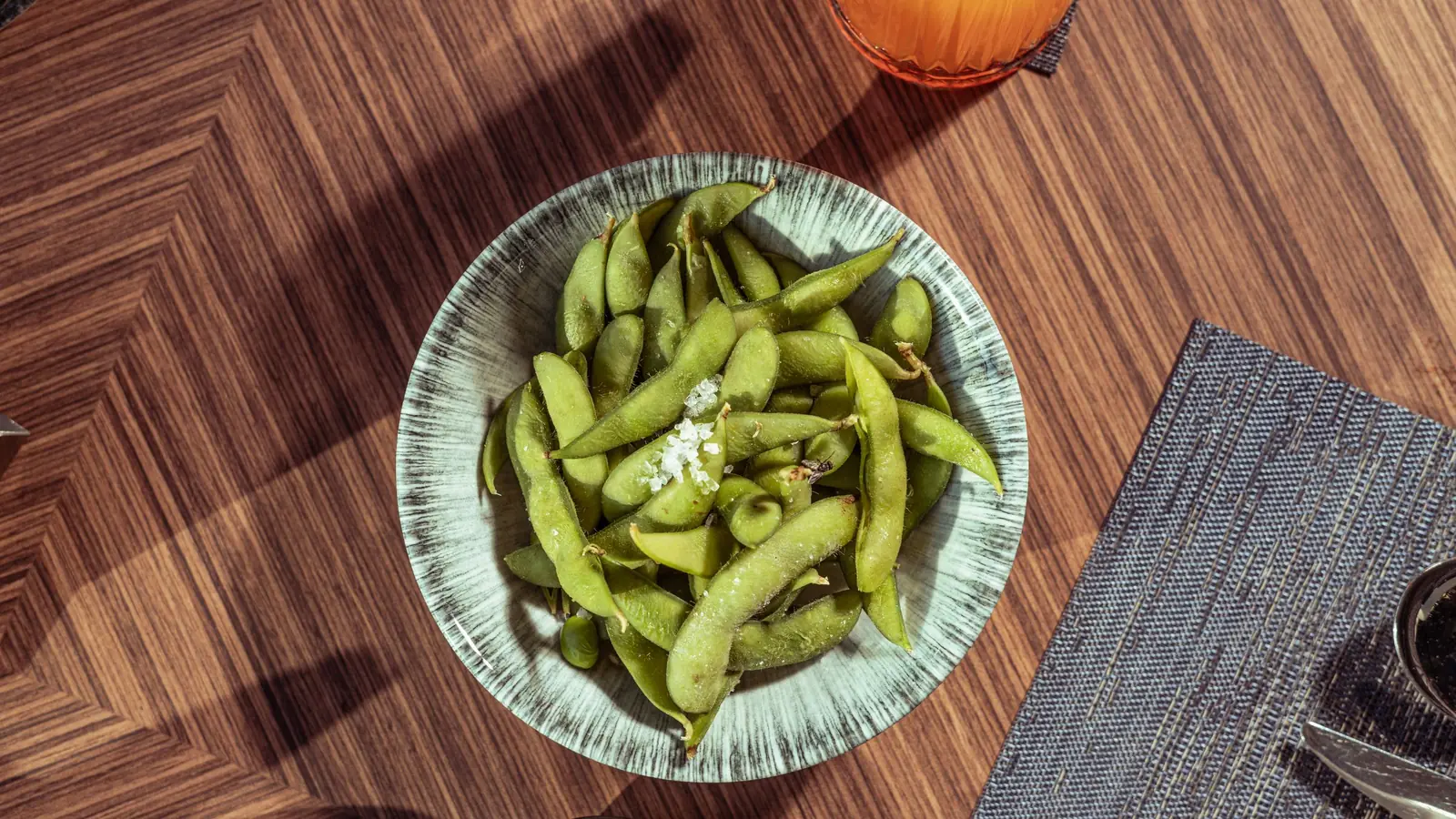
This is where most people reach for chips and end up hungry. Trade the refined-starch crunch for one with protein or fiber behind it. Dry-roasted edamame is the strongest low-calorie snack we carry on the fullness math: 130 calories for 14 grams of protein and 6 grams of fiber, with a clean, salty crunch. Chickpea puffs answer the same craving with air-puffed volume, 130 calories for 4 grams of protein and 3 grams of fiber, so a satisfying handful stays light. Both beat a same-calorie serving of pretzels or rice cakes on every lever that matters.
For the long stretch before dinner
The gap between lunch and dinner, or the hour after a workout, is where protein earns its keep. A turkey stick at 80 calories carries 9 grams of protein and no sugar, and a grass-fed beef stick brings 10 grams of protein for 100 calories with zero carbohydrate. These are the snacks that actually hold you, because protein is the lever with the most pull. The one number to watch is sodium, which runs high in cured meat snacks; if you eat them often, keep the rest of the day lighter on salt. Before you make them a habit, it is worth seeing where each one lands: the sodium math on cured meat snacks ranks everything we stock by salt per gram of protein.
For a sweet tooth
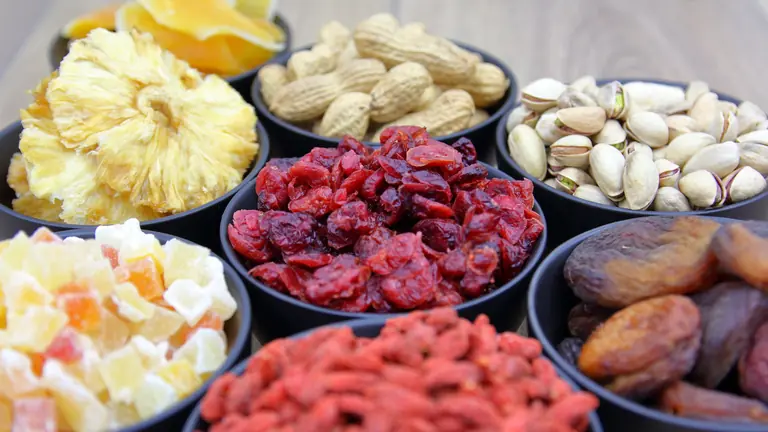
You do not have to fight a sweet craving with an engineered “diet” treat. Whole dried fruit brings sweetness with fiber and chew attached. No-sugar-added Turkish apricots land at 80 calories for a serving with 3 grams of fiber and no added sugar, so the sweetness comes from the fruit itself. The fiber and the chewing time are what a soft cookie skips, and they are exactly what turns a sweet snack into a satisfying one.
For the desk drawer
Keep something with protein and fiber where the 3 p.m. slump finds you. A fixed 1-ounce bag of raw almonds is the honest fix here: 170 calories for 7 grams of protein and 3 grams of fiber, in a single-serve portion that solves the real problem with nuts, which is the open bag. Nuts carry more calories per gram than most snacks because of their healthy fat, so the pre-portioned bag does the discipline for you. Browse the full snacks aisle for more single-serve options that travel well.
A ten-second test for “will this actually fill me?”
Before a low-calorie snack goes in the cart, run the label through four quick questions in order. Most snacks fail at least one, and that tells you what you are really buying.
- What is the serving size? Read it first. If the calorie count only holds for a portion smaller than you would actually eat, the number is fiction.
- Is there at least 5 grams of protein or 3 grams of fiber? One of these is the minimum for a snack to do more than occupy your mouth. Both is better.
- Where does the volume come from? Water, air, and fiber are what fill you. A dense, oily, or sugary snack packs calories into a small space and leaves your stomach fast.
- Can you picture stopping? If the snack is built to be endless, the low per-piece calorie count will not save you. Portion it, or pick something with a natural stopping point.
How many calories should a filling snack be?
There is no single right number, but a useful working range for a snack that bridges a real gap is about 150 to 250 calories, spent on protein, fiber, and volume rather than on refined starch or added sugar. A 200-calorie snack that carries 12 grams of protein will hold you far better than a 90-calorie one that is mostly air, and it is the more honest choice when you are genuinely hungry rather than just fidgety.
The point of “low calorie” is to leave room in the day without leaving you hungry, and that only works when the calories you do spend are working for you. If your appetite has shifted recently, for instance while adjusting to a GLP-1 medication, protein-forward snacks matter even more, because getting enough protein in a smaller appetite takes deliberate choices. If you manage a health condition or take medication that affects appetite or blood sugar, talk with your healthcare professional about what fits your plan.
Frequently asked questions
What is the most filling low-calorie snack?
By the fullness math, dry-roasted edamame is hard to beat: about 130 calories for 14 grams of protein and 6 grams of fiber, which pulls the protein and fiber levers hardest for the calories. Lean protein snacks like a turkey or beef stick are close behind, delivering 9 to 10 grams of protein for 80 to 100 calories.
Do rice cakes keep you full?
Rice cakes are genuinely low in calories, but they rank low for fullness because they are mostly air and refined starch with almost no protein or fiber. They work best as a base rather than a snack on their own. Top one with nut butter, cottage cheese, or a slice of turkey and you turn a placeholder into something that actually holds you.
Why am I still hungry after a low-calorie snack?
Usually because the snack was low in calories but also low in the things that create fullness: protein, fiber, and volume. Snacks built on refined starch or sugar digest quickly and leave little behind. Switching to a snack with at least 5 grams of protein or 3 grams of fiber, and more water or air per bite, tends to close the gap.
Is it better to snack on high-protein or high-volume foods to stay full?
Both work, and the best snacks combine them. Protein is the single strongest lever for holding hunger, while high-volume, water-rich, and airy foods let you eat a satisfying amount for few calories. Edamame is a good example of both at once, which is why it tops the list.
How many calories is a “low-calorie” snack?
There is no legal definition, but most guides use roughly 200 calories or fewer per serving as a rule of thumb. The more useful question is what those calories are made of. A 180-calorie snack with protein and fiber will serve you better than a 90-calorie one that is mostly air and sugar.
Do low-calorie snacks help with weight management?
Choosing snacks that fill you on fewer calories can make it easier to stay within a calorie target without feeling deprived, which is the mechanism behind the energy-density research. No single snack drives weight change on its own; the overall pattern of what you eat does. Focus on snacks that satisfy you, and the calorie math tends to take care of itself.
Do nuts count as a low-calorie snack?
Nuts carry more calories per gram than most snacks because of their healthy fat, so portion is everything. A pre-measured 1-ounce bag keeps a handful of almonds at around 170 calories with 7 grams of protein and 3 grams of fiber, which is filling and reasonable. The trouble starts with an open bag and no portion, where the calories climb quietly.
The bottom line
A low-calorie snack is only worth buying if it actually holds you, and the calorie number on the front cannot tell you whether it will. Fullness comes from protein, fiber, and volume, and the snacks that deliver all three, like roasted edamame, a lean protein stick, or a portioned handful of nuts, do far more than a diet treat engineered to a small number. Read the serving size, check for protein or fiber, and pick the snack you can picture stopping. For the wider view, start with our guide to healthy snacks and its companions on high-protein, low-sugar and high-fiber picks.