A GLP-1 medication is a brake, not a steering wheel. It slows how much you want to eat, but it does not point you toward the protein, fiber, and strength work that decide whether the weight you lose is fat or muscle. That steering is still your job, and on a smaller appetite it matters more than it ever did before.
This guide is for people already taking a GLP-1 medication such as semaglutide (Ozempic, Wegovy) or tirzepatide (Mounjaro, Zepbound), or about to start one, and it answers a practical question: what to eat on a GLP-1 so the food supports your results rather than working against them. Your prescriber manages the medication itself; what follows is the food side of the plan. If you are not on one of these drugs and are weighing natural options instead, our look at berberine versus Ozempic is the better starting point.
Start here
- Protein comes first at every meal. Because you are eating less overall, a smaller plate has to deliver more. Clinicians and dietitians commonly target around 1.2 to 1.6 grams of protein per kilogram of body weight per day, spread across meals, to help protect muscle while you lose fat.
- Some muscle loss is normal, but you can limit it. In the STEP 1 trial, most of the weight lost on semaglutide was fat, yet lean tissue still fell by roughly a tenth. Adequate protein plus resistance training two to three times a week is the most effective way to hold on to muscle.
- Fiber and fluids answer the most common complaint. Constipation affects about one in four people on semaglutide. Soluble fiber, plenty of water, movement, and sometimes magnesium can ease it.
- Eat small, gentle, and slow to calm nausea. Nausea is the most common side effect and clusters in the first weeks and after each dose increase. Smaller low-fat meals, bland foods, and stopping at the first sign of fullness help most.
- Low intake makes micronutrients and hydration easy to miss. When you are eating far fewer calories, a food-first plan plus a daily multivitamin is reasonable insurance, and fluids need active attention.
- Habits are what last. Weight tends to return when the medication stops, so the protein, strength, and fiber routines you build now are what carry your results forward. This is general education, not medical advice; talk with your clinician about your own plan.
What GLP-1 medications actually do to appetite and digestion
GLP-1 is a hormone your gut already releases after you eat. The medications mimic it, and they work on two fronts. They slow how fast the stomach empties, so a meal sits longer and you feel full sooner and for longer. They also act on appetite centers in the brain, which quiets the background pull toward food that many people describe as constant "food noise." Tirzepatide adds a second hormone, GIP, to the same idea.
The practical effect is that you eat less without much effort of will. That is the point, and it is also the catch. When total intake drops, the composition of what you do eat carries far more weight than before. A day built around crackers, sweetened coffee, and a few bites of dinner can hit a low calorie number and still leave you short on the protein and nutrients your body needs to lose fat rather than muscle. The sections below are about making those fewer bites count.
The two things that matter most: protein and fiber
If you remember nothing else, remember protein and fiber. They solve the two biggest risks of eating on a GLP-1: losing muscle along with fat, and the digestive complaints that push people off their medication.
Start with muscle. Any large, rapid weight loss costs some lean tissue, and GLP-1 medications are no exception. The STEP 1 body-composition analysis put real numbers on it: over 68 weeks, total fat mass fell about 19 percent and visceral fat about 27 percent, while lean body mass dropped close to 10 percent. Read carefully, that is mostly good news, because fat made up the large majority of the loss and lean tissue actually rose as a share of total body weight. The concern is the muscle that still goes, especially for adults over 50, who start with less to spare and rebuild it more slowly. Muscle is also metabolically active, so protecting it helps protect the metabolic rate that keeps weight off later.
You cannot eliminate that muscle loss, but two levers narrow it a lot: eating enough protein and training your muscles. Protein supplies the raw material; resistance exercise supplies the signal to keep it. Neither alone works as well as the two together. For the full picture on daily needs and the best whole-food sources, our guide to high-protein foods and how much you need goes deeper than we can here.
Fiber is the quieter half. Soluble fiber softens and regulates stools, which directly counters the constipation the medication tends to cause. It also feeds the gut and blunts blood-sugar swings, and along with the slow stomach emptying, it stretches fullness even further. Most people were already short on it before starting a GLP-1: our fiber guide covers why 95 percent of Americans miss the target. One caution worth stating early: add fiber gradually and with water. Piling it on quickly can trade constipation for gas and bloating, which is the last thing you want on a sensitive stomach.
How to hit your protein target on a smaller appetite
The math gets harder exactly when your appetite gets smaller. A useful working target during active weight loss is about 1.2 to 1.6 grams of protein per kilogram of body weight each day, the range The Obesity Society points to; people who lift weights may aim toward the higher end or a little above. For a 75-kilogram person that lands near 90 to 120 grams a day. The trick is not one giant protein meal but roughly 25 to 40 grams at each meal, since spreading it out supports muscle protein synthesis more steadily than loading it all at dinner.
Four habits make the target realistic when you can only eat a little:
- Eat protein first. Put the eggs, yogurt, fish, or chicken on the fork before the bread or the side. If fullness arrives early, the most important food is already in.
- Anchor every meal and most snacks with it. A snack of fruit alone becomes fruit with a stick of jerky or a spoon of cottage cheese. Small meals still count when each one carries protein.
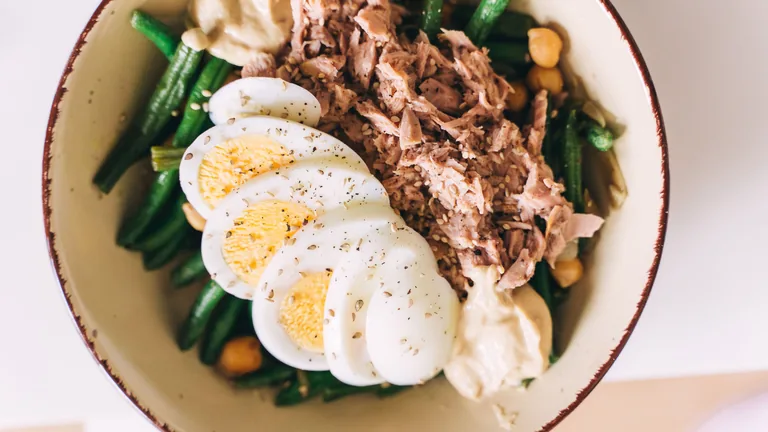
- Keep easy wins on hand. Greek yogurt, hard-boiled eggs, canned tuna, edamame, turkey sticks, and a ready protein shake take the decision out of a low-appetite moment.
- Use a shake to fill the gap, not to replace food. On days nausea wins, a scoop of quality whey or plant protein in water or milk can deliver 20 to 30 grams your plate could not.
The table below shows how quickly small portions add up when each one is chosen for protein density. For more grab-and-go ideas, our high-protein, low-sugar snacks guide has a longer list, and our protein collection gathers the shakes, bars, and pantry staples themselves.
| Protein-first option | Protein (approx.) | Why it fits a small appetite |
|---|---|---|
| Greek yogurt, plain, 3/4 cup | 15-20 g | Soft, cool, and easy on a queasy stomach; add berries for fiber |
| Two eggs | 12-13 g | Gentle, versatile, and quick; scramble soft on rough mornings |
| Cottage cheese, 1/2 cup | 12-14 g | High protein in a few spoonfuls; mild flavor |
| Canned tuna or salmon, 1 pouch | 18-22 g | No cooking, no smell if you choose pouches; keep at your desk |
| Protein shake, 1 scoop in water or milk | 20-30 g | Sips down when chewing feels like too much |
| Turkey stick or jerky, 1 serving | 10-14 g | Shelf-stable and portable; turns any snack into a protein snack |
| Edamame, 1 cup | 17 g | Adds plant protein plus fiber in one bowl |
| Lentils or beans, 1 cup | 15-18 g | Protein and soluble fiber together; warming and easy in soup |
What a day of eating might look like
Numbers are easier to picture as meals. Here is one way a smaller-appetite day can still reach roughly 100 grams of protein:
- Breakfast: two scrambled eggs with a scoop of Greek yogurt and berries (about 30 grams).
- Lunch: a pouch of tuna or a few slices of chicken over greens, with beans or edamame (about 30 grams).
- Snack: a turkey stick, or a protein shake if the day got away from you (about 15 to 25 grams).
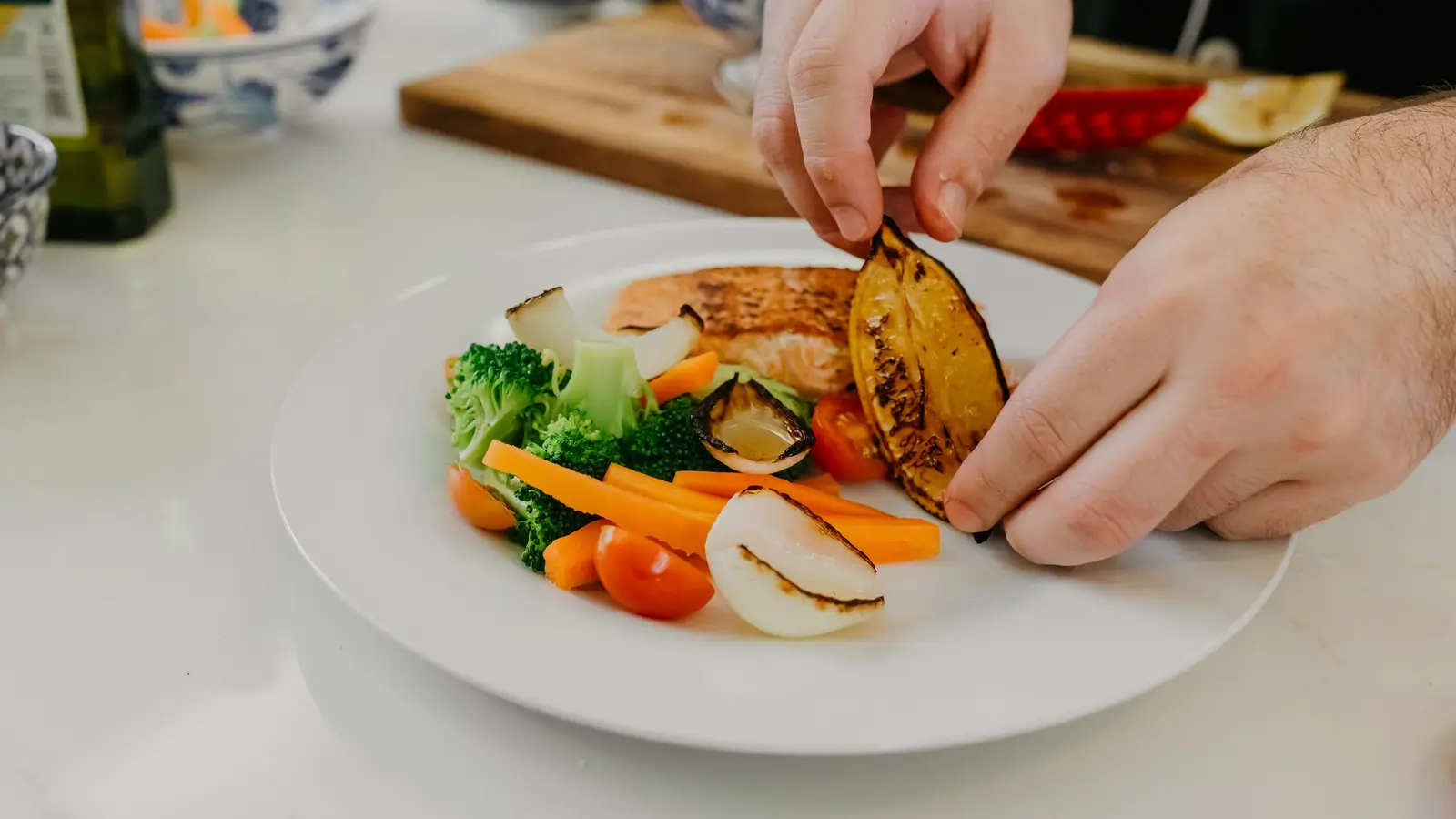
- Dinner: a palm-sized piece of fish or chicken with a cooked vegetable and a small starch (about 25 to 30 grams).
On a rough day you might manage only half of that, and half a plate with protein at its center still beats a full plate of toast and coffee. Scale the portions to your own target and whatever your appetite allows.
Eating around the side effects
Most GLP-1 side effects are digestive, and most are manageable with how and what you eat rather than with medication. In the pooled STEP trials they were common but rarely serious: about 44 percent of people reported nausea and 24 percent constipation on semaglutide, yet more than 98 percent of these events were mild or moderate, and the great majority showed up during the first weeks and after each dose increase before settling down. Only about 4 percent of people stopped the drug because of them. A few food habits blunt the worst of it.
| Symptom | What tends to help | What to ease off |
|---|---|---|
| Nausea | Small, frequent, low-fat meals; bland foods like rice, toast, oats, banana, and broth; ginger tea or ginger chews; eating slowly and stopping at first fullness | Fried and greasy food, very rich or heavy meals, strong smells, lying down right after eating |
| Constipation | Soluble fiber built up slowly (oats, chia, beans, psyllium); more water; a daily walk; magnesium may help some people | Sudden large fiber jumps without fluid; long stretches of very low food intake |
| Reflux or heartburn | Smaller portions; staying upright for a while after meals; a lighter, earlier dinner | Large late meals, high-fat dishes, carbonation and alcohol close to bed |
| Fatigue or low energy | Enough total protein and iron-rich foods; not letting intake fall too low; steady fluids | Skipping meals entirely, running on coffee, very-low-calorie days |
| Dehydration | Deliberate sips through the day; water-rich foods; electrolytes if losses are high | Relying on thirst alone, which fades when appetite does |
Two rules cover most nausea. Eat small and eat slow, because a slowed stomach handles a light meal far better than a large one, and a few minutes of pause lets fullness register before you overshoot. Ginger has a modest but real track record for settling the stomach, whether as tea, chews, or fresh in food.
For constipation, treat fiber and fluid as a pair, never fiber alone. If food changes are not enough, magnesium is a common next step, and the form matters: citrate draws water into the stool and tends to loosen it, which is why our breakdown of magnesium forms and our magnesium overview point people toward citrate for this specific job. Persistent constipation, or any severe or lasting abdominal pain, is a reason to call your clinician rather than push through.
Do not coast on micronutrients or water
When your daily intake falls to 900 or 1,200 calories, hitting your vitamin and mineral needs from food alone gets genuinely hard. Iron, vitamin B12, calcium, and vitamin D are the usual first shortfalls, and low intake of any of them can quietly feed the fatigue people often blame on the drug itself. A food-first approach still comes first, but a sensible daily multivitamin is inexpensive insurance during a phase of very low eating. Our guides to the best multivitamin for women and the best multivitamin for men cover what to look for. If you expect to be on a GLP-1 for many months, ask your clinician about checking labs so any real gap is caught rather than guessed at.
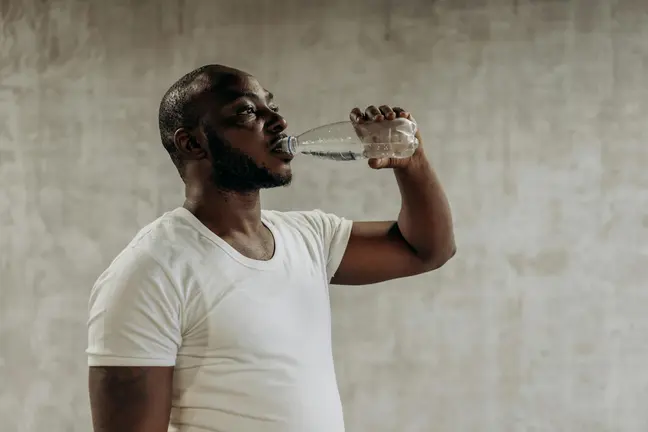
Hydration deserves the same attention, because the medication mutes thirst along with hunger, and vomiting or loose stools add losses on top. Aim to sip through the day rather than wait to feel thirsty, lean on water-rich foods, and add electrolytes when losses run high or the weather is hot. Our guide to hydration and electrolytes explains when plain water is not quite enough.
What to limit, and the alcohol question
A short list of foods reliably makes GLP-1 days worse, and cutting back on them does more good than any single "superfood" addition.
- Fried and very high-fat meals. They sit heavily on an already slowed stomach and are the classic trigger for nausea and reflux.
- Sugary drinks and refined-carb snacks. They deliver calories with almost no protein or fiber, so they crowd out the nutrients you have limited room for. Managing blood-sugar swings gets easier as you cut them, a theme we cover in balancing blood sugar naturally.
- Large portions of anything. Volume, more than any single ingredient, brings on the discomfort. The plate that felt normal before will often feel like too much now.
Alcohol is its own case. Many people notice their desire for it drops on a GLP-1, part of the same quieting of reward-driven cravings. If you do drink, keep it modest: alcohol is empty calories that displace protein, it can worsen nausea, and it can raise the risk of low blood sugar for anyone also taking insulin or a sulfonylurea, which is a conversation for your clinician.
Protecting your results if you pause, plateau, or stop
The hardest truth about these medications is also the most useful one to plan around. In the STEP 4 trial, people who stopped semaglutide after the first months regained about two-thirds of the weight they had lost within roughly a year, and much of the metabolic benefit faded with it. Obesity behaves like a chronic condition, and the drug manages it rather than curing it.
That is not a reason for despair; it is the argument for building real habits now. The protein routine, the twice-weekly strength session, and the fiber-rich plate are yours to keep whether you stay on the medication, taper down, or come off it entirely. Muscle built and defended during weight loss is the single best hedge, because it steadies your metabolism and makes maintenance more forgiving. If a plateau frustrates you or you are considering a change in dose, raise it with your prescriber rather than adjusting on your own; the food plan here is designed to support whatever medical decision you and your clinician make together.
When to loop in your clinician or dietitian
Food strategy handles the everyday side of a GLP-1, but some situations belong with a professional. Reach out promptly if you cannot keep fluids down, are vomiting repeatedly, or show signs of dehydration; if you have severe or persistent abdominal pain, which can signal a gallbladder or pancreas problem and needs to be evaluated rather than eaten around; or if you notice rapid loss of strength and muscle. Anyone who is pregnant, trying to become pregnant, or breastfeeding, and anyone managing diabetes, thyroid conditions, or other prescriptions, should coordinate closely with their care team, since GLP-1 medications interact with several of them. A registered dietitian can turn the general targets in this article into a plan built around your body, your labs, and your tastes, which is worth doing if you plan to be on treatment for the long haul.
Frequently asked questions
What should I eat on a GLP-1 medication?
Build each meal around protein first, add soluble fiber and colorful vegetables, and keep portions small and gentle. Lean proteins, Greek yogurt, eggs, fish, beans, oats, fruit, and cooked vegetables are easy anchors, with plenty of fluids across the day. The goal is nutrient-dense bites, since you are eating fewer of them.
How much protein do I need on a GLP-1?
A common target during active weight loss is about 1.2 to 1.6 grams per kilogram of body weight per day, with people who strength-train aiming toward the higher end. Spreading it across meals at roughly 25 to 40 grams each works better than one large serving. Our high-protein foods guide shows how to reach it from real food.
What foods help with nausea from Ozempic or Wegovy?
Small, low-fat, bland meals are the mainstay: rice, toast, oats, bananas, plain yogurt, and broth-based soups. Ginger tea or ginger chews can settle the stomach, and eating slowly while stopping at the first sign of fullness prevents much of it. Nausea usually eases after the early weeks and after your body adjusts to each dose.
What helps constipation on a GLP-1?
Increase soluble fiber gradually from foods like oats, chia, beans, and psyllium, drink more water alongside it, and move your body daily. Magnesium, particularly the citrate form, helps some people when food alone is not enough. If constipation is severe or lasting, check with your clinician.
Will I lose muscle on a GLP-1?
Some lean tissue loss comes with any significant weight loss, and GLP-1 medications are no different. You can limit it considerably by eating enough protein and doing resistance training two to three times a week, which together are the most effective way to keep muscle while losing fat.
Can I drink alcohol on a GLP-1?
Many people find they want it less. If you do drink, keep it light, since alcohol adds empty calories, can worsen nausea, and can raise the risk of low blood sugar for those also on insulin or a sulfonylurea. Ask your clinician about your specific situation.
Do I need a protein powder or supplements?
Neither is required, but both can help. A protein shake is a practical way to close the gap on low-appetite days, and a daily multivitamin is reasonable insurance when you are eating very little. Whole foods still come first.
What happens to my weight if I stop the medication?
Studies show most people regain a large share of the weight after stopping, because the underlying appetite drive returns. Building durable habits with protein, strength training, and fiber gives you the best chance of holding your results, and any change to your medication should be discussed with your prescriber.
The bottom line
A GLP-1 medication does the hard part of turning down appetite, and that gift comes with a job attached. Fewer bites mean each one has to carry more protein, more fiber, and more real nutrition than it used to. Eat protein first, build up fiber with plenty of water, train your muscles, and keep an eye on the vitamins and fluids that low intake makes easy to miss. Do that, and you steer the weight you lose toward fat instead of muscle, calm the side effects that derail so many people, and build the habits that hold your results long after the medication has done its part. As always, this is general nutrition education, not a substitute for advice from the clinician who knows your history.