The seed oil panic gets one thing right and one big thing wrong. It is right that the fried, packaged, drive-through foods these oils ride in are worth eating less of. It is wrong about the molecule itself: when researchers measure linoleic acid in people's blood and follow what happens to them, the fat that social media calls inflammatory keeps landing on the healthier side of the ledger.
So the question worth asking is not whether seed oils are poison. It is which fats are worth cooking with, and what actually deserves your worry. Here is the evidence, without the fear and without the eye-rolling dismissal.
Start here
- Seed oils are not the dietary villain the internet made them. Large reviews and human studies link higher linoleic acid, the main omega-6 in seed oils, with lower inflammation markers and lower heart-disease and diabetes risk, not higher.
- The real problem is the food, not the oil. Seed oils are cheap, so they turn up in ultra-processed and fried foods. Those foods are the issue; the same oil in a home stir-fry is a different story.
- "Seed oil" is a marketing category, not a chemistry one. The list people fear (canola, soybean, sunflower, safflower, corn, cottonseed, grapeseed, rice bran) is heavily refined, and that processing is a fair reason to prefer minimally processed oils even though the refined versions are not toxic.
- Match the oil to the heat. Extra virgin olive oil is best for finishing and medium-heat cooking; refined avocado oil handles high-heat searing and roasting.
- Avocado oil has a fraud problem. University testing found most store avocado oil was stale or cut with cheaper oil, so brand and freshness matter more here than with almost any other oil.
What "seed oils" actually are
"Seed oil" is not a scientific term. It is a label that grew online to group the inexpensive vegetable oils pressed or extracted from seeds rather than fruit. The set usually called the "hateful eight" is canola, soybean, sunflower, safflower, corn, cottonseed, grapeseed, and rice bran. What they have in common is a high share of omega-6 polyunsaturated fat, mostly linoleic acid. That omega-6 often gets cast as the rival of the omega-3 fats most people under-eat, though both are essential, and the more useful goal is getting enough omega-3 rather than avoiding omega-6.
How they are made is where the real objection lives. Most commodity seed oils are not simply pressed. The seeds are cleaned, heated, and run through a solvent, usually food-grade hexane, to extract the last of the oil. The crude oil is then refined, bleached, and deodorized so it pours clear and neutral and keeps for a long time. Trace hexane is driven off during processing, and finished oils fall within established safety limits, but that multi-step refining is a legitimate reason some shoppers prefer a cold-pressed oil they can trace to a single fruit or seed.
Compare that with extra virgin olive oil and virgin avocado oil, which are pressed mechanically from the fruit and bottled with little more than filtering. You are tasting the fruit, not a deodorized commodity. That gap in processing, not a gap in "toxicity," is the honest case for choosing them.
What the science says about omega-6 and inflammation
The case against seed oils runs like this: they are high in omega-6 linoleic acid, the body turns linoleic acid into arachidonic acid, and arachidonic acid feeds inflammation. Every step sounds plausible. The chain breaks at the measurements.
Only a sliver of dietary linoleic acid, on the order of 0.2 percent, converts to arachidonic acid, so eating more does not flood the body with inflammatory raw material. And when scientists measure linoleic acid in real people, higher levels track with better health. A 2025 analysis of blood from 1,894 adults, presented at the American Society for Nutrition's annual meeting, found that people with more linoleic acid in their plasma had lower C-reactive protein and other inflammation markers, along with lower glucose, insulin, and insulin resistance.
Controlled trials point the same direction. A systematic review of human studies found no trial showing that seed oils raise inflammation, and a few suggesting the opposite. A 2026 scoping review in Critical Reviews in Food Science and Nutrition went further, judging that concerns about industrially produced seed oils are "without scientific foundation" based on the clinical and observational record. In a Harvard analysis of roughly 200,000 people followed for more than three decades, published in JAMA Internal Medicine in 2025, higher intake of plant oils such as soybean and canola was associated with lower death rates; trading about two teaspoons of butter a day for plant oil tracked with roughly 17 percent lower mortality risk.
None of this makes seed oils a health food to pour freely. It means the specific charge, that the oil itself drives inflammation and disease, is not supported by the human evidence. As always in nutrition, the dose and the whole diet matter more than any single ingredient, and anyone managing a medical condition should run a major diet change past their clinician first.
The real problem is the plate, not the molecule
If seed oils are not the culprit, why do so many people feel better after cutting them? Usually because of what gets cut alongside. Seed oils are cheap and heat-stable, so they are the default fat in fried fast food, packaged snacks, baked goods, and shelf-stable sauces. Drop those foods and you also drop a wave of refined starch, added sugar, sodium, and surplus calories. The oil takes the credit; the ultra-processed package did most of the damage.
Hold onto that distinction. A fast-food fryer running all day, its oil reheated and oxidized for hours, is nothing like a tablespoon of fresh oil in a home pan. The pattern of eating, not the fatty acid, is what tracks with poor outcomes. We lay out the full case in our guide to how ultra-processed foods affect the body, and the same logic runs through our look at the foods that fight and feed inflammation. Fix the plate first, and the oil question mostly answers itself.
Olive oil vs. avocado oil vs. seed oils: smoke point and processing
Once you stop fearing oils and start choosing them, two things matter: how the oil was made, and how hot you plan to cook. Smoke point is the temperature where an oil begins to break down and turn acrid. Refining raises it by stripping out the very compounds, chlorophyll, free fatty acids, and aromatics, that also carry flavor and antioxidants. That is the trade behind every bottle. A neutral, high-heat oil gives up character; a flavorful unrefined oil tolerates less heat.
| Oil | Approx. smoke point | How it is made | Best use |
|---|---|---|---|
| Extra virgin olive oil | 325–410°F | Mechanically pressed, unrefined | Finishing, dressings, everyday saute and roast |
| Refined avocado oil | 480–520°F | Refined for a high smoke point High heat | Searing, roasting, air-frying |
| Virgin (unrefined) avocado oil | 350–400°F | Cold-pressed from the fruit | Medium-heat saute, dressings |
| Refined seed oils (canola, soybean, sunflower, corn) | 400–450°F | Solvent-extracted, then refined, bleached, deodorized | Neutral high-heat frying |
| Butter | 300–350°F | Churned from cream | Low-heat cooking and flavor |
Two practical notes. Good olive oil is more heat-tolerant than its reputation suggests; its antioxidants make it fairly stable, and it is fine for daily sauteing and roasting. The "high smoke point" selling point on refined avocado oil is genuine, but only if what is in the bottle matches the label, which brings us to the catch.
The avocado oil trap: most of it is not what the label says
Avocado oil rode the seed-oil backlash straight onto front-of-package marketing; "made with avocado oil" claims grew about 825 percent between 2019 and 2023. Supply did not keep pace with honesty. In the first large U.S. study of the category, University of California, Davis researchers found that roughly 82 percent of tested avocado oils were either rancid before their expiration date or mixed with cheaper oils; a few bottles labeled "pure" were nearly all soybean oil. A follow-up on private-label store brands found close to 70 percent rancid or adulterated.
The reason is mundane. Avocado oil is new enough that the FDA has not set a "standard of identity" defining what can legally be sold under the name, so there is little to enforce against. That does not make avocado oil a bad choice; it makes brand, freshness, and storage the deciding factors. Buy from a maker that publishes purity testing, choose dark glass or a sealed container, keep it away from heat and light, and use it within a few months of opening. Price is a weak signal: the UC Davis work found expensive bottles were not reliably purer than cheap ones.
What to actually cook with
You do not need a shelf of specialty oils. Two cover almost everything: a good extra virgin olive oil for finishing and everyday cooking, and a trustworthy refined avocado oil for high heat. Keep any seed oils you already own for the occasional fry if you like. The goal is not to fear them, only to stop building meals around the foods they usually come in.
Match the oil to the job:
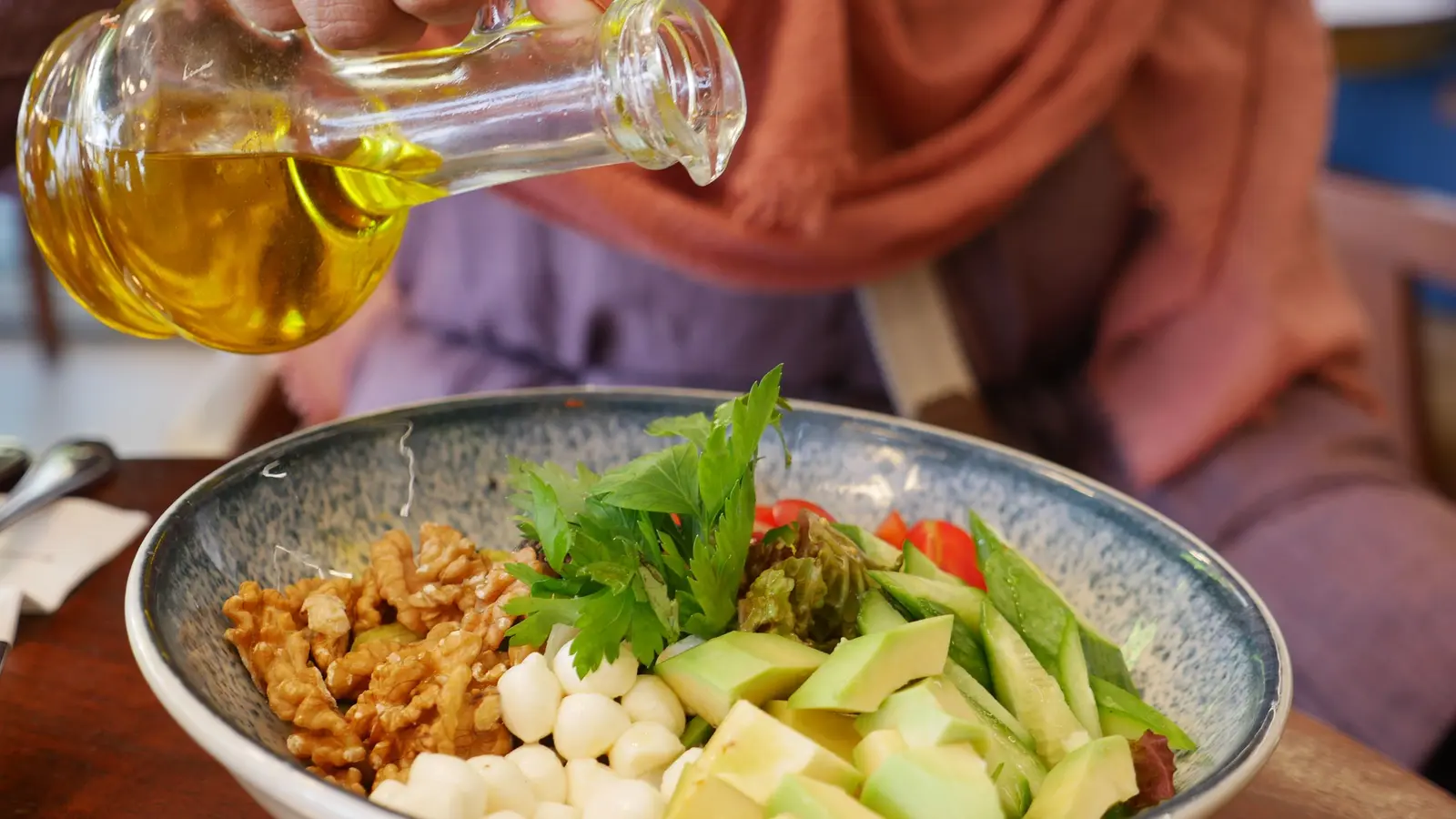
- Finishing and dressings. Use extra virgin olive oil raw, drizzled over salad, soup, or toast, where its flavor and antioxidants stay intact.
- Everyday saute and roast. Extra virgin olive oil handles medium and medium-high heat well for vegetables, eggs, and pan dinners.
- High-heat searing, roasting, and air-frying. Refined avocado oil's high smoke point and neutral taste make it the workhorse.
- Baking. Butter, coconut oil, or olive oil, chosen for flavor; smoke point barely matters at oven temperatures.
From the cooking oils we stock, these are the clean, single-ingredient picks worth keeping in reach. They cover the two jobs that matter, with no refined-commodity blends.
The clean-oil shortlist
Six single-ingredient oils, sorted by the job they do
Stock one olive oil for flavor and a refined avocado oil for high heat and you are set. Each pick below is a single pressed ingredient, so the only decision left is which job you are buying it for.
| Oil | What it is | Best for |
|---|---|---|
| Graza "Drizzle" Extra Virgin Olive Oil Early-harvest finishing EVOO, single origin. | Cold-pressed olives, bottled unrefined | Raw drizzling and dressings |
| Graza "Sizzle" Extra Virgin Olive Oil Everyday EVOO in a squeeze bottle. | Cold-pressed olives, unrefined | Daily saute, roast, and pan dinners |
| California Olive Ranch EVOO Spray 100% California olives, mist format. | Extra virgin olive oil, propellant-free spray | A light, even coat on pans and trays |
| Spectrum Organic EVOO Spray USDA Organic olive oil, mist format. | Organic extra virgin olive oil spray | Low-medium heat with portion control |
| Chosen Foods Avocado Oil Spray 100% pure avocado oil, non-GMO. | Refined avocado oil, high smoke point | Searing, roasting, and the air fryer |
| Primal Kitchen Avocado Oil Spray Single-ingredient avocado oil mist. | Avocado oil, neutral and heat-stable | Grilling, eggs, and high-heat finishing |
Frequently asked questions
Are seed oils actually bad for you?
The available human evidence does not support the idea that seed oils themselves are harmful. Studies that measure linoleic acid in people's blood associate it with lower, not higher, inflammation, and large reviews find no convincing link to disease. The foods seed oils are most common in, ultra-processed and fried products, are the better target for concern.
Which oils count as "seed oils"?
The commonly cited list is canola, soybean, sunflower, safflower, corn, cottonseed, grapeseed, and rice bran oil. They are grouped by being high in omega-6 fat and, in commodity form, heavily refined. Olive oil and avocado oil come from fruit, not seeds, and are usually far less processed.
Is avocado oil or olive oil healthier?
Both are excellent, minimally processed choices, and the better question is which suits the task. Extra virgin olive oil brings more flavor and well-studied antioxidants and shines raw or at medium heat; refined avocado oil is neutral and tolerates higher heat. Many kitchens keep both. With avocado oil, buying a verified-pure brand matters more than with most oils.
What is the healthiest oil for high-heat cooking?
Refined avocado oil is a strong default thanks to its high smoke point and neutral flavor. Good olive oil is more heat-stable than its reputation suggests and works for most home roasting and sauteing. The bigger factor is using fresh oil and not reheating the same oil repeatedly.
Do seed oils cause inflammation?
Current research does not show that they do. A systematic review of human trials found none demonstrating that seed oils raise inflammation, and several large studies link higher linoleic acid intake with lower inflammatory markers. The "omega-6 is inflammatory" claim rests on biochemistry that does not play out when measured in people.
Is canola oil bad for you?
No strong evidence says so. Canola is high in monounsaturated fat and low in saturated fat, and in long-term studies plant oils including canola are associated with lower mortality. If the refining process is your concern, a cold-pressed (expeller-pressed) canola or a fruit oil like olive or avocado is a reasonable swap, but the conventional version is not the hazard it is made out to be.
The bottom line
Seed oils became a lightning rod because they are everywhere the modern diet goes wrong, not because the oil molecule is dangerous. The science, measured in actual people, is reassuring; the marketing around their replacements, especially avocado oil, deserves more skepticism than the seed oils themselves. Cook with an olive oil you enjoy, keep a verified-pure avocado oil for high heat, and spend the energy you were going to spend fearing canola on eating fewer ultra-processed foods. That is the trade that actually moves the needle.