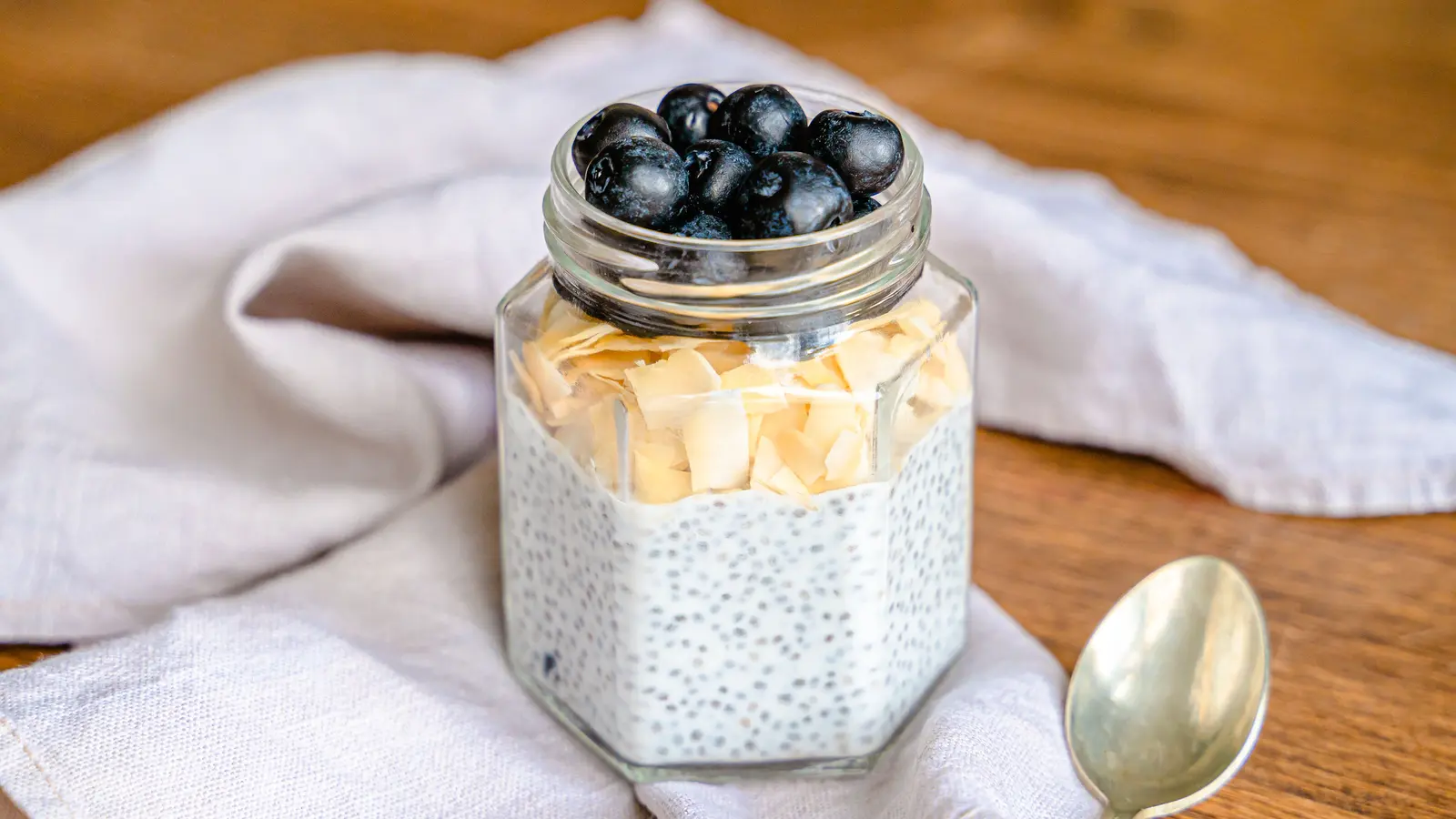
Drop a spoonful of chia seeds into water and within ten minutes they disappear into a soft, gray gel. That one trick, the seed's habit of soaking up many times its weight in liquid, explains almost everything people love and fear about chia: why it keeps you full, why it sets into pudding, and why swallowing it dry can be a real hazard.
That single property explains why chia turns up in three of the biggest nutrition conversations at once: fiber, gut health, and plant omega-3. It also explains the superfood halo, the viral chia water videos, and a couple of cautions that rarely make it into the hype.
The short version
- Chia is one of the most fiber-dense foods you can buy. One ounce, about two tablespoons, carries roughly 9.8 grams of fiber, close to a third of a day's target, alongside protein, calcium, and plant omega-3.
- The benefits are real but modest. Chia's gel-forming fiber may support fullness, steadier blood sugar, and regularity. It is a useful everyday food, not a weight-loss cure.
- Chia vs. flax is not either-or. Chia has more fiber and calcium and can be eaten whole; flax carries more omega-3 ALA and far more lignans but has to be ground to absorb. Plenty of people keep both.
- "Chia water" will not melt fat. The fullness is genuine, but no evidence shows the drink alone causes weight loss, and it comes with a safety catch worth knowing.
- Never eat chia dry by the spoonful. Dry seeds can swell many times over and lodge in the throat, so soak them or stir them into food, especially if you have any trouble swallowing.
- A tablespoon or two a day does the job. Add fluid as you add fiber, and build up slowly to avoid bloating.
What chia actually is
Chia comes from Salvia hispanica, a flowering member of the mint family native to Central America, where the seeds were a staple of Aztec and Mayan diets centuries before they became a health-food trend. The tiny black and white seeds are nearly flavorless, which is part of their appeal: they take on whatever they are mixed with.
Their defining feature is that gel. Chia is unusually high in soluble fiber, the kind that dissolves into a viscous mass in water. When the seeds hit liquid, each one wraps itself in a clear hydrogel and can hold many times its own weight. That gel is the engine behind most of chia's effects, good and bad.
The nutrition backs up the reputation. A single ounce (28 grams, or two to three tablespoons) delivers about 9.8 grams of fiber, 138 calories, 4.7 grams of protein with all nine essential amino acids, 8.7 grams of fat, and 179 milligrams of calcium. Roughly 5 of those fat grams are alpha-linolenic acid (ALA), the plant form of omega-3, which makes chia one of the richest plant omega-3 sources on the shelf. That fiber number is the headline: most adults get nowhere near the 25 to 38 grams a day experts recommend, and two tablespoons of chia closes a meaningful part of that gap. Our guide to why fiber is the nutrient most Americans miss covers why that shortfall matters.
Chia seeds benefits: what the evidence supports
Chia is food, not medicine, and the strongest claims for it are sensible rather than miraculous. Here is where the evidence is reasonable and where it thins out.
Digestion and regularity. This is chia's most dependable effect. The seeds carry both insoluble fiber, which adds bulk to stool, and soluble fiber, which draws in water and softens it. Together they help keep things moving, which is the same mechanism we cover in our complete guide to gut health and regularity. The catch is fluid: fiber needs water to do its job, and chia that pulls water from a dry gut can constipate rather than relieve.
Fullness and weight. This is why most people reach for chia seeds for weight loss: the gel slows how fast your stomach empties, which can blunt appetite and stretch the energy from a meal further. That may support weight management as part of an overall pattern, but chia does not burn fat on its own, and the calories still count. Anyone expecting the seeds to do the work on their own will be disappointed.
Blood sugar. Because the gel slows digestion, chia stirred into a carb-heavy meal is associated with a gentler rise in blood sugar afterward. It is a small, food-level effect, not a substitute for the broader habits in our look at balancing blood sugar naturally, but a worthwhile one.
Heart and bone. The soluble fiber in chia may help lower LDL cholesterol and triglycerides, and its calcium, magnesium, and phosphorus contribute to bone nutrition. These are supporting-cast benefits that come from chia being a genuinely nutrient-dense whole food, not from any single magic compound. As with any meaningful diet change, anyone managing a medical condition should check with their clinician first.
Chia vs. flax: which seed wins, and where hemp fits
Chia and flax get lumped together for good reason. Both are tiny, fiber-rich, omega-3-heavy seeds that do similar jobs in the kitchen. But they are not interchangeable, and the differences decide which one belongs in your bowl.
| Per 1 oz (28 g) | Chia seeds | Flax seeds |
|---|---|---|
| Calories | 138 | 150 |
| Fiber | ~9.8 g More fiber | ~8 g |
| Protein | ~4.7 g | ~5 g |
| Omega-3 ALA | ~5 g | ~6.4 g More omega-3 |
| Calcium | ~179 mg (about 2.5x flax) | ~70 mg |
| Lignans | Some | Top plant source |
| Eat whole or ground? | Either; whole works | Grind it; whole passes undigested |
| Best at | Gels and puddings, fiber, calcium | Omega-3, lignans, baking |
The single most important line in that table is the grinding rule. A whole flax seed has a hard shell your gut cannot crack, so eaten whole it tends to pass straight through with its omega-3 and lignans locked inside. To get the benefit you have to grind it, or buy it pre-ground as flaxseed meal, and use it within a few months because ground flax goes rancid faster. Chia has no such requirement: the body breaks it down whole, though grinding it does not hurt.
Flax's other edge is lignans, plant compounds that act as antioxidants and weak phytoestrogens, where flax is the richest dietary source by a wide margin. Chia answers with more fiber, more than twice the calcium, and the convenience of skipping the grinder. Neither is a clear winner, and the honest answer is that a tablespoon of each covers gaps the other leaves. They are complements as much as rivals.
One caution on the omega-3 selling point for both seeds. The ALA in chia and flax is real omega-3, but the body converts only a small share of it, often cited at well under 15 percent, into the EPA and DHA that fish provide. Chia is a fine way to raise your omega-3 intake, especially on a plant-based diet, but it is not a one-for-one swap for fish or fish oil. Our omega-3 guide walks through the plant-versus-marine difference.
If you want a third seed in the rotation, hemp hearts round things out. They lead on complete protein, roughly 10 grams per three-tablespoon serving, and on magnesium, but they are low in fiber and carry less omega-3 than chia or flax. Think of hemp as the protein seed, chia as the fiber-and-gel seed, and flax as the omega-3-and-lignan seed.
Is chia water actually good for you?
"Chia water," two tablespoons of seeds stirred into a glass and drunk daily, is back on social feeds, sometimes nicknamed "frog water" for its texture and sold as a natural laxative and weight-loss shortcut. People do feel fuller, because the gel expands in the stomach and dulls appetite. Where it falls apart is the weight-loss promise: no evidence shows that chia water on its own sheds pounds, the drink still has calories, and any effect comes from the same fiber you would get by stirring chia into oatmeal.
The safety note matters more than the hype. Dry chia can absorb up to 27 times its weight in liquid, and if it goes down dry it can keep swelling on the way. In a 2014 case reported to the American College of Gastroenterology, a man swallowed a tablespoon of dry chia followed by a glass of water; the seeds gelled in his esophagus and caused a complete blockage that doctors had to clear with an endoscope. He had an underlying narrowing of the esophagus, which raised his risk, but the lesson is general: let chia hydrate in the glass or the bowl, not in your throat.
Practically, that means soak the seeds for at least ten to fifteen minutes before drinking chia water, or skip the trend and eat them in food instead. People with swallowing difficulty, a history of esophageal narrowing, or trouble managing pills and thick liquids should be especially careful, and children should only have chia that is already hydrated.
How much chia to eat per day (and how to use it)
One to two tablespoons a day, roughly an ounce, is a sensible target and lines up with what most studies use. There is little reason to go higher, and pushing fiber up fast is the quickest way to bloating, gas, and cramping. Start with a teaspoon or two, give your gut a week or two to adjust, and drink more water as you go, since fiber without fluid backfires.
Chia is easy to fold into food without thinking about it:
- Chia pudding. Stir three tablespoons of seeds into one cup of milk or a dairy-free alternative, sweeten lightly, and refrigerate for a few hours or overnight until it sets.
- Smoothies and oatmeal. Add a tablespoon at the end; it thickens the texture and adds fiber without changing the flavor.
- An egg substitute in baking. One tablespoon of chia plus three tablespoons of water, rested until gelled, replaces one egg in many recipes.
- A topping. Sprinkle dry chia over yogurt, salad, or toast, where there is plenty of moisture and you are chewing normally rather than swallowing a dry spoonful.
Whole or ground is mostly a texture choice with chia, unlike flax. Whole seeds give the classic gel and crunch; ground chia disappears into batters and sauces and may release its nutrients a touch more readily. Either is fine.
Chia seeds side effects and who should be careful
For most people chia is well tolerated, and the side effects that do show up are the predictable result of adding a lot of fiber quickly. A few situations deserve a closer look.
- Digestive upset. Too much too soon, or too little water, can bring bloating, gas, cramping, or even constipation. Building up gradually and drinking enough fluid heads off most of it.
- Choking and swallowing. Because dry seeds expand so fast, anyone with swallowing difficulty or a history of esophageal narrowing should eat chia only after it has gelled, never as a dry spoonful chased with water.
- Medication interactions. Chia's fiber can modestly lower blood sugar, and its omega-3 and fiber may nudge blood pressure and cholesterol down, so large amounts could add to the effect of medications for diabetes, blood pressure, or blood thinning. If you take any of these, mention a regular chia habit to your clinician.
- Allergy. Chia allergy is uncommon but real. Stop and seek care if you notice itching, hives, or swelling after eating it.
None of this makes chia risky for a typical healthy eater. It means a food this concentrated in fiber rewards a little restraint and a full glass of water.
What to buy for a clean pantry
Chia is a simple ingredient, so a clean label is the only thing to check: the bag should list one thing, chia seeds, with no oils, sweeteners, or fillers. Organic is worth choosing where you can, and the same goes for flax. Buy whole chia for puddings and toppings, and pick pre-ground flaxseed meal if you want flax without keeping a grinder going. Store seeds somewhere cool and dark, and keep any ground seed sealed and used up within a few months.
From the grains and seeds we stock, these are the clean, single-ingredient picks worth keeping on hand. A bag of whole chia such as Bob's Red Mill Organic Chia Seeds or Navitas Organics Chia Seeds covers pudding and topping duty, while ground chia blends invisibly into batters. For flax, flaxseed meal skips the grinding step, and if you want the third seed, hemp hearts add complete protein. The related products below round out the set.
Frequently asked questions
How much chia should I eat per day?
About one to two tablespoons (roughly one ounce) a day is a sensible amount and matches what most research uses. More is not better, and a sudden jump in fiber often causes bloating or gas, so start small, build up over a week or two, and increase your water as you go.
Do I need to soak chia seeds or grind them?
You do not have to grind chia; the body absorbs it whole, which is a key difference from flax. Soaking is not strictly required when you sprinkle a little over moist food, but it is strongly recommended before drinking chia in water, because dry seeds can swell and lodge in the throat. Let them gel in the glass for at least ten to fifteen minutes first.
Is chia water actually good for weight loss?
Chia water can help you feel full because the gel expands in the stomach, but there is no evidence the drink alone causes weight loss, and it still contains calories. Any benefit comes from the fiber, which you also get by stirring chia into oatmeal, yogurt, or a smoothie. Treat it as a fiber habit, not a fat-burner.
Chia seeds vs. flax seeds: which is better?
Neither is clearly better; they are good at different things. Chia has more fiber and calcium and can be eaten whole, while flax has more omega-3 ALA and far more lignans but must be ground to absorb. Using a tablespoon of each covers what the other lacks.
Can chia seeds cause digestive problems?
They can if you eat too much too soon or skimp on fluids. Chia's fiber draws in water, so without enough to drink it can cause bloating, gas, or constipation rather than relief. Starting with a small amount and drinking plenty of water usually prevents the problem.
Are chia seeds a good source of omega-3?
Yes, chia is one of the richest plant sources of ALA omega-3, with about 5 grams per ounce. The caveat is that the body converts only a small fraction of ALA into the EPA and DHA found in fish, so chia is a strong addition to your omega-3 intake but not a direct replacement for fish or fish oil.
Can you eat chia seeds every day?
Yes. A daily tablespoon or two is exactly how chia's fiber, calcium, and omega-3 add up over time, and there is no need to cycle off it. Keep the amount sensible, drink enough water, and let the seeds hydrate before eating, and a daily habit is a safe, low-effort upgrade for most people.
Where chia fits
Chia earns its spot less as a superfood than as a quietly excellent way to eat more fiber, plant omega-3, and calcium without much effort. The benefits are steady rather than dramatic, the "chia water" miracle is mostly marketing, and the one rule that genuinely matters is to let the seeds hydrate before they reach your throat. Keep a bag of whole chia and, if you like, some ground flax in the pantry, stir a spoonful into food most days, and you have captured nearly everything chia has to offer.