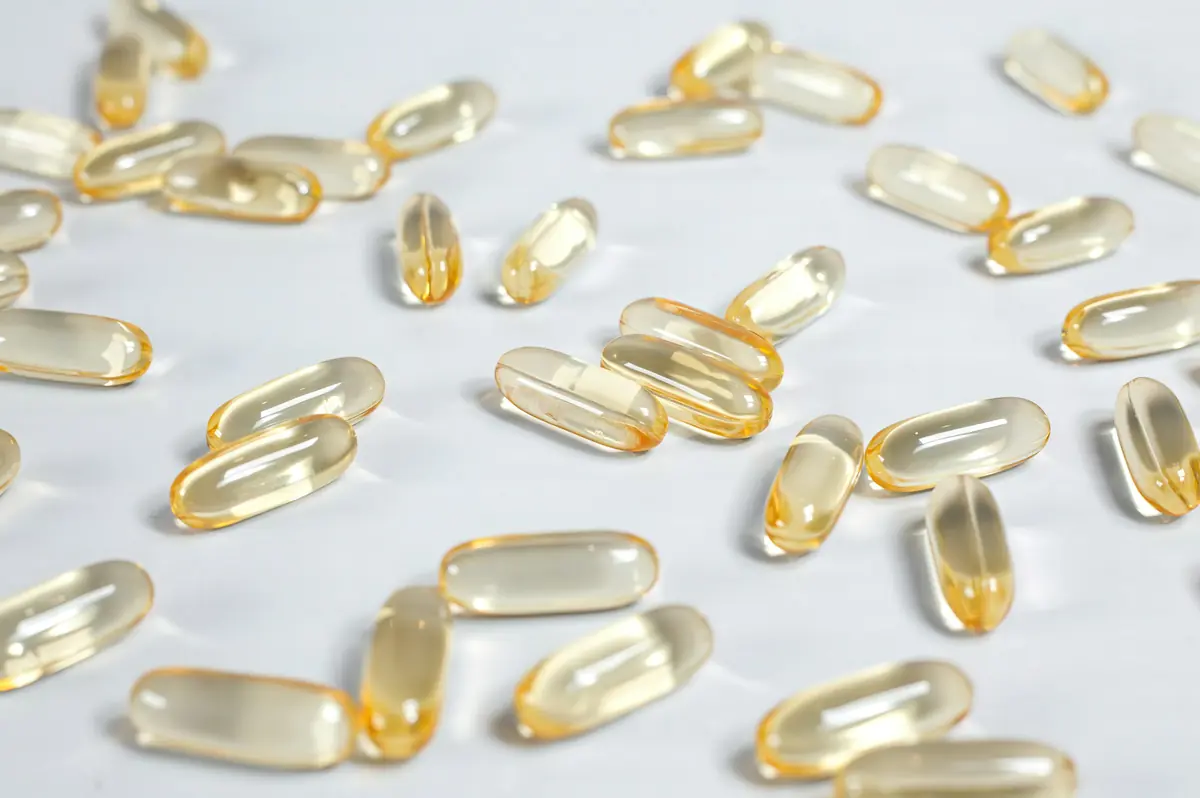
Walk down the fish oil aisle and the labels seem to compete on one number: "1000 mg," "1200 mg," "Triple Strength." Most people grab the biggest number and assume more is better. That number is usually the least useful thing on the bottle, because it describes how much fish oil is in the softgel - not how much of the omega-3 that actually does the work.
Here is the short version. The best fish oil supplement is the one that delivers enough EPA and DHA - the two omega-3s that matter - in a form your body absorbs, from oil that is fresh and tested for purity, in a format you will keep taking. Everything else on the front of the bottle is marketing. The rest of this guide shows you how to read the one number that counts, how much you actually need for your goal, how to judge form and freshness, and how a handful of real options we carry compare. If you want the background on why these fats matter in the first place, our guide to omega-3 fatty acids is the companion piece to this one.
Key takeaways
- Food comes first: eating fatty fish about twice a week likely covers your EPA and DHA. A supplement earns its place mainly because most people fall well short of that.
- Read one number on the label: combined EPA + DHA, not the "fish oil" weight. The big front-of-bottle milligrams are usually much larger than the actual omega-3 inside, so compare products on EPA + DHA per serving.
- Match the dose to your goal. General maintenance needs far less than the higher amounts studied for high triglycerides, which belong under a doctor's guidance.
- A few groups benefit most. People who rarely eat fish, those who are pregnant or nursing, and anyone eating plant-based gain the most from a daily omega-3.
- Form, source, and freshness matter. Check the omega-3 form, the source, and signs of freshness, since rancid oil is the usual cause of fishy aftertaste and burps.
- No fish? Algae oil delivers the same EPA and DHA. Algal oil is the plant-based route to preformed omega-3, while krill and cod liver oil are other options with their own trade-offs.
- Our top pick: Nordic Naturals Ultimate Omega. 650 mg EPA + 450 mg DHA per two-softgel serving in triglyceride form; the picks-by-goal list below covers one-a-day, budget, prenatal, eye-health, and easy-swallow alternatives.
Do you even need a fish oil supplement?
Food comes first: if you eat fatty fish - salmon, sardines, mackerel, anchovies, herring - about twice a week, you are likely getting enough EPA and DHA, and a supplement is optional. The trouble is that most people do not. Average fish intake in the United States falls well short of that, and the gap is where a supplement earns its place.
A few situations make supplementing the sensible default. If you rarely eat fish, a daily omega-3 is the simplest way to close the gap. If you are pregnant or nursing, DHA demand rises and most prenatal diets fall short. If a blood test has flagged high triglycerides, fish oil is one of the better-studied dietary tools for them, though the doses involved are higher and belong under a doctor's guidance. And if you eat a plant-based diet, you are getting little or no preformed EPA and DHA from food at all. For everyone else, a supplement is reasonable insurance rather than a daily necessity - but for those groups, it does real work.
EPA vs. DHA: what each one actually does
"Omega-3" is a family, and only part of it comes from fish oil. The two that matter most are EPA (eicosapentaenoic acid) and DHA (docosahexaenoic acid), the long-chain omega-3s your body can use directly. They overlap in their roles but lean in different directions, and knowing which is which helps you match a product to your goal.
DHA is structural. It is a major building block of the brain and the retina, which is why it leads in prenatal and eye-health formulas - a fetus and a developing infant need it to build those tissues, and it stays concentrated in them for life. EPA is more associated with the body's normal inflammatory balance and is the form most often emphasized in mood and cardiovascular research. Most general fish oils carry both, usually with more EPA than DHA; prenatal and vision formulas flip that and lead with DHA.
There is a third omega-3 worth naming so you can rule it out. ALA (alpha-linolenic acid), the omega-3 in flaxseed, chia, and walnuts, is genuinely healthy food, but your body converts only a small fraction of it - often under ten percent - into EPA, and less into DHA. ALA is a fine reason to eat those foods; it is not a reliable substitute for the EPA and DHA in fish or algae oil. If a "plant omega-3" product lists only ALA, it is not doing the same job as fish oil.
The one number that matters: EPA + DHA, not "fish oil"
This is the single most useful habit when comparing fish oils, and it is where most shoppers get quietly misled. A softgel can say "1000 mg fish oil" on the front and deliver only about 300 mg of actual EPA and DHA, because the rest of that oil is other fats. The big front-of-bottle number is the amount of oil; the number that does the work is the EPA plus DHA, which you find further down the Supplement Facts panel.
So flip the bottle over and add the EPA and DHA lines together. A standard, unconcentrated fish oil runs roughly 18 percent EPA and 12 percent DHA, so "1000 mg fish oil" nets about 300 mg of omega-3. A concentrate - the products that say "triple strength" or list a high total omega-3 per serving - packs 500, 700, sometimes 900-plus milligrams of EPA and DHA into the same softgel. That concentration is what you are really paying for, and it is why two bottles with the same "1000 mg" claim can be completely different products.
Concentration also decides your pill burden. If a daily target takes one concentrated softgel from one product and four standard ones from another, that difference shows up every single morning. When you compare prices, compare the cost per gram of EPA and DHA, not the cost per bottle - it is the only apples-to-apples number.
How much EPA and DHA do you actually need?
For general wellness in a healthy adult, most authorities point to roughly 250 to 500 mg of combined EPA and DHA per day as a sensible floor - about what two fish meals a week would supply. That is the target most everyday fish oils are built to hit in one or two softgels, and for most people it is plenty.
Specific goals push the number up, and this is where a doctor's input matters. Pregnancy and nursing: experts generally suggest at least 200 to 300 mg of DHA a day on top of a prenatal, which is why DHA-forward prenatal oils exist. High triglycerides: the doses studied for lowering them are far larger - on the order of 2 to 4 grams of EPA and DHA daily - and at that level fish oil behaves more like a medication and should be taken under medical supervision, not self-prescribed. Our guide to lowering cholesterol and triglycerides naturally puts omega-3 in context with the rest of a heart-healthy routine.
The practical move is to pick your target first, then read the Supplement Facts to see how many softgels it takes to reach it. A "high potency" claim means nothing until you have done that small piece of arithmetic.
Reading the label: form, source, and freshness
Two fish oils can list the same EPA and DHA and still differ in how well you absorb them and how much you can trust the bottle. Three things on the label separate a thoughtfully made product from a cheap one.
Triglyceride form vs. ethyl ester
Fish oil comes in two molecular forms. Ethyl ester (EE) is the cheaper, more common form used in many concentrates - the omega-3 is bound to an ethanol backbone during processing. Triglyceride form - you will see it written as "triglyceride," "rTG," or "reesterified triglyceride" - rebuilds the omega-3 into the natural structure found in fish, and it tends to absorb somewhat better and resist oxidation. Both forms work, and EE is not a red flag; but a label that specifies triglyceride form is usually a sign of a more carefully built oil, and it is a reasonable thing to pay a little more for.
Source fish, and why smaller is better
The best fish oils come from small, short-lived, cold-water fish - anchovies, sardines, mackerel - that sit low on the food chain and accumulate far less mercury and fewer industrial contaminants than large predator fish. Cod liver oil is a traditional option that also supplies vitamins A and D, which is a bonus as long as you mind the vitamin A dose. Look, too, for an added antioxidant such as natural tocopherol (vitamin E) in the ingredients, which helps keep the oil from going rancid in the bottle.
Freshness and third-party testing
Fish oil is perishable, and rancid oil is the real reason behind unpleasant "fish burps." Freshness is therefore a quality marker in its own right, and the way to verify it is third-party testing. Independent programs test fish oil for potency, oxidation, heavy metals, and contaminants like PCBs and dioxins - look for seals or certificates of analysis from IFOS (the International Fish Oil Standards program), USP, or NSF, or a brand that publishes to the voluntary GOED standard. Because the FDA does not approve supplements before sale, that outside verification is what tells you the oil inside is both potent and clean. One caveat for careful shoppers: enrollment in these programs is voluntary and brand-by-brand. Nordic Naturals, for example, does not currently enroll Ultimate Omega in IFOS and instead publishes a certificate of analysis for every batch on its website, which serves the same verification purpose. Our guide to reading supplement labels and quality seals breaks down which mark proves what.
Fish oil vs. krill, cod liver, and algae
"Fish oil" is the default, but a few alternatives sit next to it on the shelf, and each answers a slightly different question.
Krill oil carries its omega-3 in phospholipid form and includes the antioxidant astaxanthin. Some people find it easier on the stomach with fewer fishy burps, but it usually delivers far less EPA and DHA per capsule and costs considerably more per milligram, so you often need more capsules to match a concentrated fish oil. Cod liver oil is fish oil with built-in vitamins A and D - a fine traditional choice, just keep an eye on the vitamin A if you take other supplements. Algae oil is the one that matters most for vegans and vegetarians: it is grown from marine algae, the original source fish get their omega-3 from, and it supplies real DHA (and increasingly EPA) with no fish involved. It is the only plant-based option that genuinely replaces fish oil, and it is the right pick if you do not eat animal products. In our range that is Wiley's Finest CatchFree Omega, which pairs Algarithm algal oil with Ahiflower seed oil, and our plant-based omega collection gathers the rest of the fish-free options.
Fixing fish burps and aftertaste
The reflux and fishy aftertaste that put people off fish oil are usually fixable, and they are not a reason to give up on omega-3s. Start with freshness - a quality, well-tested oil should not taste strongly of fish, and a strong fishy flavor often means the oil has oxidized. From there: take it with a meal that contains some fat rather than on an empty stomach, split the dose across the day instead of taking it all at once, keep the bottle refrigerated, and choose a lemon-flavored or enteric-coated softgel. If the softgels themselves are the problem, smaller "mini" softgels solve the swallowing issue without cutting the dose.
Special cases: pregnancy, heart, eyes, and kids
A few goals deserve a formula built for them rather than a general daily. In pregnancy and nursing, choose a DHA-forward prenatal oil and confirm your dose with your provider; DHA is doing structural work for the baby's brain and eyes, which our prenatal nutrition guide covers in full. For heart and triglyceride goals, concentration and a high EPA and DHA total matter most, and higher therapeutic doses belong under medical care; omega-3 pairs naturally with the other heart nutrients in our CoQ10 guide. For eye health, DHA is the structural omega-3 of the retina, and blends that add lutein and zeaxanthin target the macula directly - see our guide to nutrients for eye health. For children, smaller doses and kid-formulated products exist; match the EPA and DHA to age and check with a pediatrician.
The best fish oil supplements: our picks by goal
For most adults, the best fish oil supplement we carry is Nordic Naturals Ultimate Omega: 650 mg EPA and 450 mg DHA per two-softgel serving, in absorbable triglyceride form, from small wild-caught fish, with a certificate of analysis published for every batch. "Best" still shifts with the job you are hiring the oil to do, so here are our picks, by goal, from the brands we stock:
- Best overall: Nordic Naturals Ultimate Omega - the high-potency, triglyceride-form benchmark that suits most people, with a clean lemon finish.
- Most effective per serving: Garden of Life Dr. Formulated Advanced Omega - 695 mg EPA and 465 mg DHA, the highest EPA per serving in our range, and the cleanest label of the group: triglyceride form, Non-GMO Project Verified, MSC certified.
- Best one-a-day value: Solgar Triple Strength Omega-3 - a full daily target in a single softgel at a low cost per milligram of omega-3.
- Best with vitamin D: Nordic Naturals Ultimate Omega-D3 - the same high-concentrate oil plus 1,000 IU of vitamin D3, folding the most common American shortfall into one step.
- Best for pregnancy: Nordic Naturals Prenatal DHA - DHA-forward and unflavored, built for the trimester stomach; confirm your dose with your provider.
- Best for eye health: Nordic Naturals Vision Support - DHA-rich oil plus FloraGLO lutein and zeaxanthin, the carotenoids of the macula.
- Easiest to swallow: Wiley's Finest Easy Swallow Minis - a full 630 mg EPA + DHA dose in small softgels, the fix when pill size or fish burps are the real obstacle.
- Best vegan (plant-based): Wiley's Finest CatchFree Omega - fish-free softgels built on Algarithm algal oil and Ahiflower seed oil, also available as a tropical mango liquid with 500 mg of algal DHA per teaspoon.
- Best budget pick: NOW Ultra Omega-3 - 750 mg of EPA + DHA in one affordable softgel, the strongest value for everyday omega-3 support.
Every pick here earns "highest quality" - and "safest" - the honest way: full EPA + DHA disclosure and testing you can verify. The line-by-line comparison is next, and the complete omega-3 and fish oil collection has everything we stock.
Fish oil and omega-3 supplements in our range, compared
Seven options we carry, each chosen because it suits a different reason for buying - not because any one is the universal best. Find your goal in the "best for" column, then read across to the EPA and DHA per serving. Every product here lists its omega-3 honestly, so the real choice is your goal, the dose you need, and the format you will keep up with.
Quick comparison
Match your goal to the EPA and DHA, then read across
Find the row that fits why you are buying - everyday wellness, fewer softgels, omega plus vitamin D, pregnancy, or eyes - then check the EPA and DHA per serving. The total omega-3 number is what matters, not the size of the softgel.
| Product | Best for | EPA + DHA per serving | Notable in the formula |
|---|---|---|---|
| Nordic Naturals Ultimate Omega High-concentrate everyday omega-3 in lemon. | Most adults who want a proven, high-potency daily. | 650 mg EPA + 450 mg DHA (1,280 mg total omega-3; 2 softgels) | Triglyceride-form fish oil from wild-caught anchovy and sardine, third-party purity tested with a published certificate of analysis for every batch, Non-GMO. A high EPA and DHA load in two softgels with a clean lemon finish. |
| Solgar Triple Strength Omega-3 Concentrated EPA and DHA in a single softgel. | Fewer pills and a low cost per milligram of omega-3. | 504 mg EPA + 378 mg DHA (950 mg total omega-3; 1 softgel) | One softgel covers a full daily target, which is the appeal here. Purified to reduce mercury and other contaminants, Non-GMO, and made without gluten, wheat, or dairy. |
| Nordic Naturals Ultimate Omega-D3 The Ultimate Omega base plus vitamin D3. | Covering omega-3 and vitamin D in one step. | 650 mg EPA + 450 mg DHA (1,280 mg total omega-3; 2 softgels) | Same high-concentrate oil as Ultimate Omega with 1,000 IU (25 mcg) of vitamin D3 added - a tidy way to fold the most common American shortfall into your fish oil. |
| Garden of Life Dr. Formulated Advanced Omega High-potency triglyceride-form fish oil. | Shoppers who want a clean-label, high-EPA daily. | 695 mg EPA + 465 mg DHA, plus 30 mg DPA (1,290 mg total omega-3; 2 softgels) | Triglyceride form from mercury-free tuna oil, Non-GMO Project Verified and MSC certified for sustainable sourcing. One of the higher EPA and DHA loads in our range. |
| Nordic Naturals Prenatal DHA DHA-forward fish oil for pregnancy. | Pregnancy and nursing, where DHA leads. | 480 mg DHA + 205 mg EPA (830 mg total omega-3; 2 softgels) | Weighted toward DHA for fetal brain and eye development, with 400 IU vitamin D3 and unflavored softgels that are gentle on a sensitive stomach. Talk to your provider about your dose. |
| Nordic Naturals Vision Support Omega-3s paired with eye antioxidants. | Eye health, especially with a lot of screen time. | 845 mg DHA + 360 mg EPA (1,460 mg total omega-3; 2 softgels) | Adds FloraGLO lutein and zeaxanthin, the two carotenoids concentrated in the macula of the eye, to a DHA-rich fish oil base. A targeted blend rather than a general daily. |
| Wiley's Finest Easy Swallow Minis Small softgels for easier swallowing. | Anyone who struggles with large softgels or burps. | 630 mg EPA + DHA (2 mini softgels) | Mini softgels deliver a full daily dose in a smaller, easier-to-swallow size, from certified-sustainable wild Alaskan fish. A practical fix when pill size is the real obstacle. |
Two budget-friendly alternatives if none of these fit: Solgar Omega-3 Fish Oil Concentrate is a purified, no-frills daily, and NOW Ultra Omega-3 delivers 500 mg EPA and 250 mg DHA per softgel at a value price. Whichever you choose, the deciding numbers are the EPA and DHA per serving and a freshness or purity test you can verify - not the size of the bottle or the word "strength" on the front.
How to choose the best fish oil for you
Put the four things that actually matter in order and the shelf narrows fast. First, ignore the front-of-bottle "fish oil" number and read the EPA plus DHA on the back - that is your real dose. Second, match that dose to your goal: 250 to 500 mg a day for general wellness, DHA-forward for pregnancy, higher and doctor-supervised for triglycerides. Third, favor a fresh, third-party-tested oil from small fish, ideally in triglyceride form. Fourth, pick the format - concentrate for fewer pills, minis for easy swallowing, a flavored oil if aftertaste is your obstacle - that you will take every day. Do that and the best fish oil for you is whichever option checks those four boxes, regardless of which brand shouts loudest on the front.
Frequently asked questions
What is the best fish oil supplement?
For most adults, Nordic Naturals Ultimate Omega is the best all-around choice we carry: 650 mg EPA and 450 mg DHA per two-softgel serving, triglyceride form, third-party tested with a published certificate of analysis for every batch. Prefer one softgel a day? Solgar Triple Strength Omega-3 covers a full daily target in a single capsule, and NOW Ultra Omega-3 does it at a budget price. Whichever brand you choose, the criteria stay the same: 250 to 500 mg of combined EPA and DHA a day for general wellness, from a fresh, tested oil, in a format you will keep taking - compared by the EPA + DHA per serving, never the "1000 mg fish oil" claim on the front.
How much EPA and DHA should I take per day?
For general health, most authorities suggest roughly 250 to 500 mg of combined EPA and DHA daily, about what two servings of fatty fish a week would provide. Pregnancy raises DHA needs, and lowering high triglycerides can call for several grams a day under a doctor's supervision. Read the Supplement Facts and add the EPA and DHA lines to see how many softgels reach your target.
What is the difference between fish oil and omega-3?
Fish oil is the source; omega-3 is the active fat inside it. A fish oil softgel contains EPA and DHA - the omega-3s that do the work - along with other fats. That is why "1000 mg fish oil" can mean only about 300 mg of actual omega-3. Always check the EPA and DHA figures, not just the total fish oil amount.
Why does fish oil give me fishy burps?
Fishy burps usually mean the oil has oxidized or that you took it on an empty stomach. Choose a fresh, well-tested oil, take it with a meal that has some fat, split the dose, keep the bottle refrigerated, and try a lemon-flavored or enteric-coated softgel. A quality oil should not taste strongly of fish; if it does, that is a sign to check its freshness.
When is the best time to take fish oil?
Take fish oil with a meal that contains fat, which improves absorption and cuts down on reflux and aftertaste. The specific time of day matters less than consistency and taking it with food. Our supplement timing guide covers how omega-3 fits alongside your other vitamins.
Is there a vegan source of omega-3?
Yes - algae oil. It is made from marine algae, the original source of the omega-3 that fish accumulate, and it supplies real DHA and, increasingly, EPA with no fish involved. Plant foods like flax and chia provide ALA, but your body converts very little of it to EPA and DHA, so algae oil is the reliable vegan replacement for fish oil. In our store, that is Wiley's Finest CatchFree Omega.
Is there an organic fish oil?
Not in the certified sense. The USDA organic program does not cover wild-caught fish, so a genuine USDA Organic fish oil cannot exist, and a bottle marketed as "organic" is leaning on the word rather than a certification. What the organic instinct is really after - an oil free of contaminants, made responsibly - is exactly what third-party purity testing (IFOS, USP, NSF, or a published certificate of analysis) and a sustainability mark like Friend of the Sea or MSC verify. Judge fish oil by those seals and the EPA + DHA per serving, and you get everything "organic" promises with proof behind it.