Search "Brazil nuts" and you get two stories. One sells them as a testosterone-boosting superfood you should eat by the handful. The other warns that they are a selenium bomb you should barely touch. Both miss the more useful - and more interesting - truth: a Brazil nut is the rare snack you should count rather than pour, because one nut can carry a full day's selenium, and that single fact decides almost everything about how to use them well.
This guide walks through what Brazil nuts actually do, what the testosterone and thyroid claims really hold up to, how many are sensible per day, and the few quality details - including a contamination question most articles skip - that are worth knowing before you buy. If you want to compare options as you read, our nuts collection includes Organic Raw Whole Brazil Nuts in several sizes.
Key takeaways
- One to two nuts a day is plenty. A single Brazil nut supplies 68 to 91 micrograms of selenium against a 55-microgram daily need.
- Selenium is the real benefit - it supports normal thyroid, antioxidant, and immune function - but more is not better, and deficiency is uncommon in the United States.
- The testosterone boost is mostly a myth. Selenium only helps men who are genuinely deficient; it will not raise a healthy man's levels.
- The main risk is stacking selenium from nuts plus supplements past the 400-microgram daily upper limit, which can cause selenosis.
- Buy fresh, store cool, and count them out. That one habit handles the toxicity and the trace-contaminant concerns at the same time.
The short answer: how many Brazil nuts per day?
For most healthy adults, one to two Brazil nuts a day is the sensible amount. A single nut delivers about 68 to 91 micrograms of selenium, which already meets or exceeds the 55 micrograms adults need each day. One nut covers the benefit; two is a comfortable daily ceiling, and there is rarely a reason to eat more.
The catch is the upper limit. Adults should stay under 400 micrograms of selenium a day from all sources combined, and a small handful of Brazil nuts can quietly pass it - especially if you also take a selenium or multivitamin supplement. Count them out rather than pouring from the bag.
What is actually in a Brazil nut
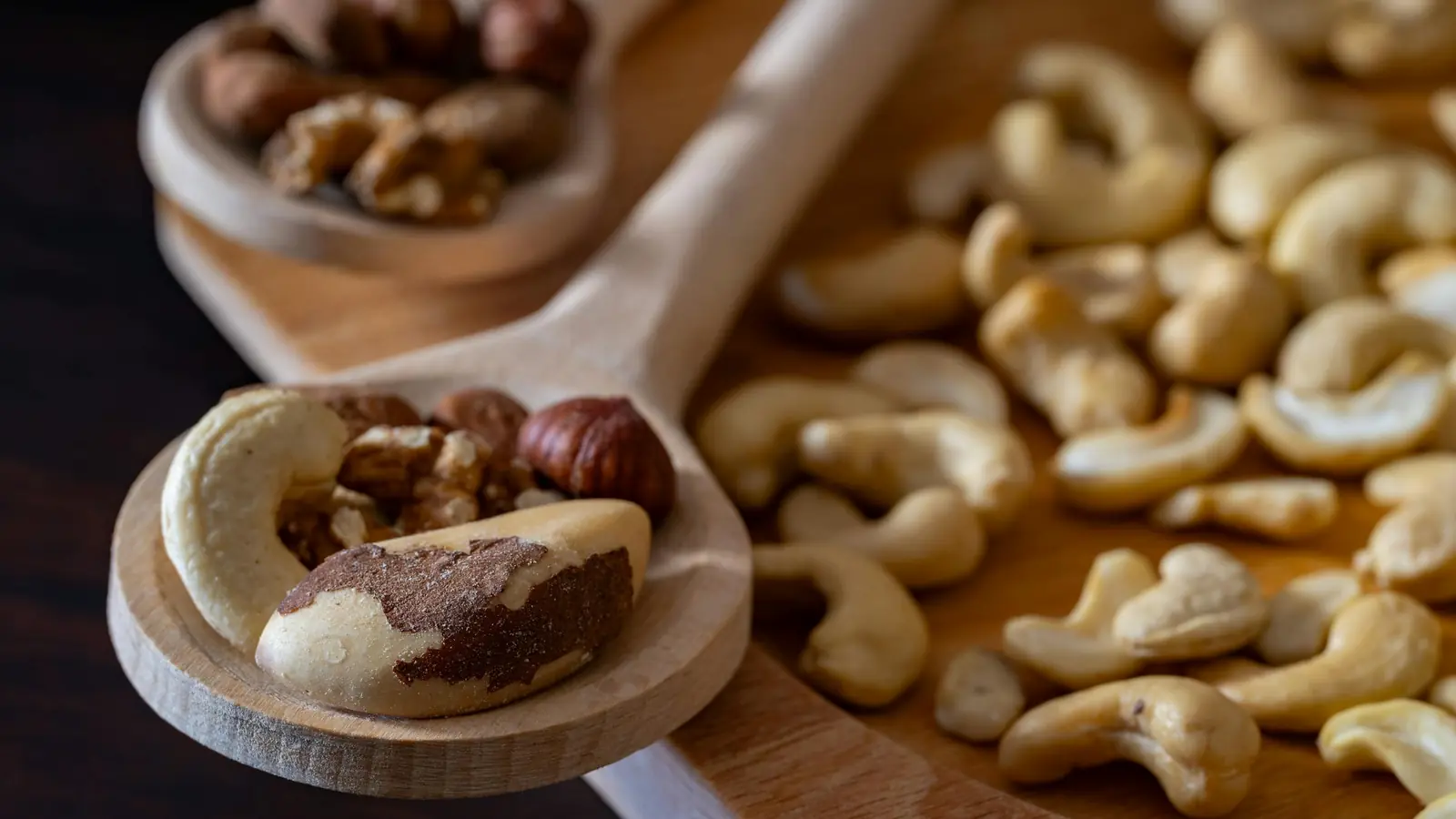
Brazil nuts (Bertholletia excelsa), sometimes called Brazilian nuts, look like ordinary mixed-nut filler, but nutritionally they sit in their own category. A one-ounce serving - about six nuts - is a dense package of fat, minerals, and one standout trace mineral that no other common nut comes close to. Where almonds and walnuts earn their place with fiber, vitamin E, and unsaturated fats, Brazil nuts are essentially a selenium delivery system that happens to taste rich and buttery.
| Nutrient | Amount | Why it matters |
|---|---|---|
| Calories | About 185-190 | Energy-dense, so a small portion goes a long way. |
| Fat | About 19 g | Mostly unsaturated; the reason the texture is so rich. |
| Protein | About 4 g | A modest plant-protein contribution. |
| Fiber | About 2 g | Adds to daily fiber, though not a primary source. |
| Selenium Standout | Roughly 400-550 mcg | Per ounce this far exceeds the daily need - the reason to think in single nuts, not servings. |
| Copper | About 55% Daily Value | Supports normal connective tissue and iron metabolism. |
| Magnesium | About 25% Daily Value | Involved in muscle, nerve, and energy function. |
| Phosphorus, manganese, zinc, thiamine, vitamin E | About 10-16% Daily Value each | A useful spread of minerals and antioxidants alongside the headline selenium. |
Selenium content is an estimate, not a fixed dose. Levels in Brazil nuts vary by more than tenfold depending on where the trees grew, so two nuts from the same bag can differ substantially. That natural variability is exactly why leaving a safety margin beats trying to hit a precise number.
The real benefit: selenium, and what it does
Strip away the marketing and the genuine reason Brazil nuts stand out is selenium in food form. Selenium is an essential trace mineral, and the body builds it into a family of proteins - selenoproteins - that handle some specific and important jobs.
The best understood is antioxidant defense. Selenium is the active component of glutathione peroxidase, an enzyme that helps neutralize the everyday oxidative byproducts of normal metabolism. It also plays a direct role in thyroid hormone metabolism, in normal immune function, and in reproduction and DNA synthesis. The NIH Office of Dietary Supplements sets the adult recommended amount at 55 micrograms a day, rising modestly during pregnancy and breastfeeding.
The catch is that selenium is a nutrient where more is not better. Deficiency is genuinely uncommon in the United States and Canada, where soil and a varied diet usually cover it. So for most people, a Brazil nut is insurance against a gap that may not exist - useful, pleasant, but not a megadose to chase. Our selenium guide covers supplement forms, the upper limit, and how Brazil nuts fit alongside a multivitamin or thyroid formula.
How much selenium is in Brazil nuts?
A single Brazil nut contains about 68 to 91 micrograms of selenium, and a one-ounce serving of six nuts carries roughly 400 to 550 micrograms - the full adult daily upper limit in one small handful. Adults need 55 micrograms a day, so one nut covers the target with room to spare. The exact figure swings with the soil the tree grew in, which is why published selenium numbers vary more for Brazil nuts than for almost any other food. Roasting changes none of this: selenium is a mineral, so roasted and raw nuts deliver essentially the same amount.
| Measure | Selenium | Context |
|---|---|---|
| 1 Brazil nut | About 68-91 mcg | Meets or exceeds the full adult daily need on its own. |
| 1 oz (about 6 nuts) | Roughly 400-550 mcg | At or past the adult upper limit - the reason to count nuts, not pour them. |
| Adult daily need (RDA) | 55 mcg | Set by the NIH Office of Dietary Supplements; rises modestly in pregnancy. |
| Adult upper limit | 400 mcg | Daily ceiling from all sources combined, including supplements. |
Brazil nuts and testosterone: what the evidence actually says
This is the claim that sends most people to Brazil nuts in the first place, so it deserves a straight answer. The logic goes: selenium supports the machinery of testosterone production, Brazil nuts are loaded with selenium, therefore Brazil nuts raise testosterone. The first two points are true. The conclusion is where it breaks down.
In men who are deficient in selenium, correcting that gap can help normalize hormone function, because the body cannot run those pathways well without it. But for healthy men who already meet their selenium needs - which is most men eating a typical diet - there is no strong evidence that eating Brazil nuts pushes testosterone above its normal range. You cannot top up a system that is already full. Worse, chasing the effect by eating several nuts a day is the fastest way to overshoot selenium, which causes its own problems. The honest version: Brazil nuts support the nutrients behind normal hormone production; they are not a testosterone booster, and treating them like one backfires. If men's nutrition is your real question, our guides to men's health essentials and choosing a men's multivitamin are better starting points.
Brazil nuts and cholesterol: a surprising single-serving study
One finding rarely makes it into the shopping articles, and it is the most intriguing thing about this nut. In a small 2013 study, ten healthy volunteers ate a single serving of Brazil nuts, and researchers tracked their blood over the following weeks. LDL ("bad") cholesterol fell and HDL ("good") cholesterol rose within about nine hours - and remarkably, the improvement was still measurable thirty days after that one serving.
It is a striking result, but keep it in proportion. The study was very small, it has not been widely replicated, and a single experiment is a reason for curiosity, not a health claim. It does not mean Brazil nuts lower cholesterol the way a medication does, and it is not a license to eat more of them - the same selenium-stacking limits still apply. What it does suggest is that the fats and selenium in even a small portion may have a real metabolic footprint. For the bigger picture on managing cholesterol, our guide to lowering cholesterol naturally puts food, fiber, and omega-3s in context.
Brazil nuts and your thyroid
The thyroid connection is the best-supported of the popular Brazil nut claims, but it is still narrower than the headlines suggest. Your thyroid gland holds more selenium per gram than almost any other tissue, and it needs that selenium for two reasons: the enzymes that convert thyroid hormone into its active form depend on it, and selenoproteins help protect the gland from the oxidative stress its own hormone production generates.
That makes adequate selenium genuinely important for normal thyroid function. It does not make Brazil nuts a treatment for thyroid disease. If you have been diagnosed with a thyroid condition, take thyroid medication, or have abnormal labs, the right move is to work with your clinician - not to self-prescribe selenium by the handful, which can do more harm than good. Food can support a healthy baseline; it should not be used to manage a diagnosed condition on your own.
How many Brazil nuts per day, really?
Because one nut already covers the daily selenium need, the useful habit is to think in individual nuts, not in ounces. A standard one-ounce nut portion is reasonable for almonds or walnuts; for a selenium-dense food it is the wrong default. The table below is a safety frame, not a dosing chart.
| Count | Estimated selenium | What it means |
|---|---|---|
| 1 nut Best default | About 68-91 mcg | Already meets or exceeds the daily selenium need for most adults. |
| 2 nuts Still measured | About 136-182 mcg | Comfortably below the upper limit, but leaves less room for selenium elsewhere. |
| 3 nuts Watch stacking | About 204-273 mcg | A high-selenium day once seafood, eggs, grains, or a multivitamin are added. |
| 4 nuts Close to limit | About 272-364 mcg | Near the 400 mcg adult upper limit before the rest of your diet counts. |
| 5+ nuts Too easy to overdo | About 340-455+ mcg | Can exceed the upper limit on its own, depending on the nuts. |
The adult upper limit for selenium is 400 micrograms a day from all sources, per the NIH; the European Food Safety Authority is more conservative at 255 micrograms. Neither number is a goal to aim for - they are ceilings to stay comfortably under, which is easy if you treat Brazil nuts as a one-a-day garnish rather than a snack you eat by feel.
What happens if you eat too many Brazil nuts
Routinely overshooting selenium can lead to selenosis. Early signs are easy to miss: a garlic-like odor on the breath, a metallic taste, nausea, diarrhea, skin rash, brittle or lost nails, hair thinning or shedding, unusual fatigue, and irritability. Severe, sustained excess can affect the nervous system, heart, and kidneys.
The risk almost never comes from one nut. It comes from stacking: several Brazil nuts every day, plus a multivitamin with selenium, plus a thyroid-support formula, plus selenium-rich foods like seafood and eggs. Each piece looks harmless; together they add up faster than the routine feels. If selenium already appears in your supplements, treat daily Brazil nuts as optional rather than automatic.
The contaminant question: radium, aflatoxin, and why sourcing matters
Here is the part most buying guides leave out, and it is worth understanding rather than fearing. Brazil nuts grow on wild Amazon trees with deep root systems that pull up trace minerals from the soil - which is also why they concentrate two things besides selenium.
The first is radium, a naturally occurring radioactive element. Brazil nuts contain more of it than virtually any other food, and the amount varies widely, even within a single batch. This sounds alarming, but context matters: the absolute levels are still low, most of it passes through the body rather than being absorbed, and the figure is high only relative to other foods, which contain almost none. It is not a reason to avoid Brazil nuts - it is one more reason that one or two a day, rather than a daily handful, is the smart pattern. Moderation handles it completely.
The second is aflatoxin, a mold byproduct that can develop on nuts stored in warm, humid conditions. This is a freshness-and-sourcing issue, not an inherent flaw: reputable suppliers test and store nuts properly, and regulators set limits on it. For you, it is the practical case for buying from a source you trust, choosing fresh stock, and storing nuts cool, sealed, and dry rather than leaving an open bag in a warm pantry for months. Our guide to choosing quality supplements and foods covers the same trust signals - testing, sourcing, and storage - that separate a well-made product from a cheap one.
Who should be more careful
Some people should be especially deliberate. Anyone already taking selenium, a multivitamin with selenium, a thyroid-support product, or a multi-mineral formula is likely close to the daily target before any nuts, so Brazil nuts should be occasional, not daily. People with thyroid disease, kidney disease, complex medication routines, or abnormal labs should ask a clinician before using Brazil nuts or selenium as a targeted strategy.
During pregnancy and breastfeeding, selenium needs rise slightly, but the upper limit still applies and many prenatal vitamins already include selenium - so the same "count, do not pour" rule holds. For children, Brazil nuts carry a choking risk depending on age and preparation, and kids have lower selenium upper limits than adults, so portion them carefully and check with a pediatric clinician if your child takes vitamins or has food allergies.
Raw, roasted, salted, organic: what to look for
Once you have the portion right, the buying decisions are simple. Start with the ingredient list - ideally it says Brazil nuts and little else. Unsalted is more flexible than salted and keeps a selenium-rich food from doubling as a sodium-heavy one. Raw or dry-roasted is easier to portion thoughtfully than oil-roasted snack mixes designed to be eaten by the handful.
Freshness is the detail people overlook. Like all high-fat nuts, Brazil nuts can turn stale or bitter when stored poorly, and proper storage also limits the aflatoxin concern above. Keep them sealed, cool, and away from heat and strong odors; if you buy a large bag, refrigerate or freeze the part you are not using soon. Organic Brazil nuts are a reasonable choice if you prefer that sourcing standard, but the organic label does not change the selenium math - freshness, ingredient simplicity, allergen clarity, and a package size that matches how often you will actually eat them matter more.
Brazil nuts we carry, compared
We stock a few options that suit different uses - a single-serving pack for portion control, mid and large bags for regular pantry use, and a kosher-certified alternative. They are the same nutrient-dense nut; the real choice is package size and how you plan to store and portion them.
Quick comparison
Match the size to how you will use them
Every option here is a simple, single-ingredient nut. Pick by portion control and storage, not by any nutritional difference - the selenium-per-nut guidance above applies to all of them.
| Product | Best for | Size | Notable |
|---|---|---|---|
| Organic Raw Whole Brazil Nuts - 1 oz Single-serving pack, about six nuts. | Built-in portion control and trying them before buying a big bag. | 1 oz | Organic, raw, and unsalted - the pack does the counting for you. |
| Organic Raw Whole Brazil Nuts - 8.5 oz Mid-size bag for steady, occasional use. | A one-a-day habit without committing to the largest bag. | 8.5 oz | Organic, raw, and unsalted; easy to reseal and refrigerate. |
| Organic Raw Whole Brazil Nuts - 16 oz Full-pound bag, best value per ounce. | Households that bake or blend with Brazil nuts and store them well. | 16 oz | Organic, raw, and unsalted; freeze what you will not use within a few weeks. |
| Woodstock Organic Kosher Brazil Nuts - 8.5 oz Certified-kosher mid-size option. | Shoppers who want a kosher certification on the bag. | 8.5 oz | Organic and kosher-certified whole Brazil nuts. |
Whichever size you choose, the routine is the same: decide your one or two nuts before you open the bag, then put it away.
How to use Brazil nuts without overthinking it
The easiest habit is to decide the portion before you start eating. Put one or two Brazil nuts on a plate, then put the bag away. Pair them with foods that round out the snack: chop one over oatmeal or yogurt, add one to a piece of fruit, or fold a couple into a trail mix where they are a small part of the blend rather than the whole thing.
For a snack that actually keeps you full, build it around fiber and protein and let Brazil nuts play the selenium role. Our guide to fiber explains why nuts, seeds, fruit, and whole grains work better together than any single "superfood," and if you eat plant-forward, our plant-based protein guide can help you assemble meals with real staying power.
Bottom line
Brazil nuts are a genuinely good food made confusing by overselling on one side and over-worrying on the other. The reality is simple: one or two a day gives you the selenium benefit, supports normal thyroid and antioxidant function, and avoids every downside - the toxicity, the stacking, and the trace contaminants - that only become issues when you treat a count-them nut like a pour-them one. Buy them fresh, store them cool, and use them as the precise pantry tool they are.
Frequently asked questions
Do Brazil nuts really boost testosterone?
Not in the way the internet claims. Selenium supports the pathways behind normal testosterone production, so correcting a selenium deficiency can help - but most men are not deficient, and you cannot raise testosterone above its normal range by topping up a nutrient you already have enough of. Eating several nuts a day to chase the effect mainly risks overshooting selenium.
Are Brazil nuts good for your thyroid?
Selenium is needed for normal thyroid hormone metabolism, and Brazil nuts are a rich source, so adequate selenium genuinely supports thyroid function. That is different from treating thyroid disease. If you have a thyroid condition, take medication, or have abnormal labs, work with your clinician rather than self-dosing selenium.
How many Brazil nuts can I eat per day?
For most adults, one to two is the sensible daily ceiling. One nut already provides 68 to 91 micrograms of selenium against a 55-microgram daily need, and the adult upper limit is 400 micrograms from all sources. Because selenium content varies from nut to nut, leaving margin is smarter than counting to the limit.
Can I eat Brazil nuts every day?
Many adults can fit one Brazil nut into a daily routine, but factor in selenium from the rest of your diet and any supplements. If you already take a selenium-containing multivitamin or thyroid formula, occasional use is more appropriate than a daily habit.
Are Brazil nuts radioactive?
They contain more naturally occurring radium than almost any other food, but the absolute levels are low and most of it is not absorbed. It is a real curiosity, not a hazard at normal intake - and one more reason that one or two nuts a day, rather than a handful, is the right pattern.
Do Brazil nuts help lower cholesterol?
A small 2013 study found that a single serving improved LDL and HDL cholesterol within hours, with the effect lingering for weeks. It is an intriguing early finding, not a proven treatment, and it does not justify eating more of them. Think of better cholesterol as a possible bonus, not a reason to exceed the selenium limit.
Are Brazil nuts good for weight loss?
They are not a weight-loss food, but they fit a weight-management plan in moderation. Brazil nuts are calorie-dense - roughly 185 to 190 calories per ounce - yet the fat and protein are filling, so one or two can take the edge off a craving. There is no special fat-burning effect, and the selenium serving limit, not your appetite, is what caps the portion.
Do Brazil nuts need to be organic?
Organic is a fine preference, but it does not change the selenium math or the serving size. Freshness, a clean ingredient list, clear allergen labeling, and good storage matter more for everyday use than the organic label alone.
Can kids eat Brazil nuts?
Whole Brazil nuts are a choking hazard for young children, and kids have much lower selenium upper limits than adults: 90 micrograms a day for ages 1-3 and 150 micrograms for ages 4-8, so a single nut can fill or exceed the entire daily budget for a toddler. Portion carefully (half a nut, chopped, is plenty for a small child), consider chopping them for older children, and ask a pediatric clinician for guidance if your child takes vitamins or has food allergies.
How many Brazil nuts is too many?
The line to watch is the selenium upper limit of 400 micrograms a day from all sources. Because a single Brazil nut supplies about 68 to 91 micrograms, roughly five or six in one day can already push a typical adult past that ceiling - fewer if you also take a selenium or multivitamin supplement. Going over once in a while will not harm you, but doing it day after day can lead to selenosis, with signs like brittle nails, hair loss, a garlic-like breath, or stomach upset. That is why one to two nuts is the sensible daily habit, and a small handful is best treated as an occasional thing rather than a routine.
How much selenium is in one Brazil nut?
About 68 to 91 micrograms in a single nut, and it can run higher depending on the soil where the tree grew - which is why selenium figures for Brazil nuts vary so widely from one source to the next. For context, adults need roughly 55 micrograms of selenium a day and should stay under 400 micrograms from all sources, so a single nut already meets the daily target and one to two is plenty. That natural variability is exactly why dosing your selenium from Brazil nuts is less precise than it sounds.
How many Brazil nuts is dangerous?
Real danger comes from habit, not from one indulgent day. Eating five or six Brazil nuts in a single sitting can push you past the 400-microgram selenium upper limit for that day, and doing so occasionally is very unlikely to harm a healthy adult. The risk builds when a handful becomes routine: weeks of overshooting the limit is what leads to selenosis. If you also take a multivitamin or a selenium supplement, your ceiling is lower still, because the nuts and the pill stack. Treat one to two nuts as the daily habit and a larger portion as a rare exception, and there is no realistic path to a dangerous dose.
What are the side effects of eating too many Brazil nuts?
The earliest signs of chronic selenium excess are subtle: a garlic-like odor on the breath, a metallic taste, nausea, or loose stools. Kept up over weeks, high intake can progress to selenosis, which shows up as brittle or ridged nails, hair shedding, skin rash, fatigue, and irritability. Separate from selenium entirely, Brazil nuts are calorie-dense at about 185 calories per ounce, so a daily handful adds up quickly even when the mineral math is fine. Stop the nuts and the selenium-related symptoms typically resolve; mention persistent nail or hair changes to your clinician so nothing else is missed.
Do roasted Brazil nuts still have selenium?
Yes. Selenium is a mineral, not a vitamin, so roasting does not destroy it the way heat degrades vitamin C. Roasted Brazil nuts deliver essentially the same selenium as raw ones. What roasting changes is everything around the mineral: oil-roasted, salted versions add sodium and make it easy to eat by the handful, which matters more for a nut you are supposed to count. Raw or dry-roasted and unsalted keeps the portion honest. Freshness is the bigger quality lever either way, since the fats in Brazil nuts go rancid faster than the selenium goes anywhere.
How many Brazil nuts are in one ounce?
About six whole nuts make up a one-ounce (28-gram) serving, though unusually large nuts can bring that down to four or five. That standard serving carries roughly 400 to 550 micrograms of selenium - at or beyond the adult daily upper limit in a single ounce, which is why Brazil nuts are the one nut where the usual "an ounce a day" advice fails. Count individual nuts instead: one to two covers the 55-microgram daily need with a wide safety margin, and the rest of the ounce is better spread across the week.
Sources
- NIH Office of Dietary Supplements: Selenium Fact Sheet for Consumers
- NIH Office of Dietary Supplements: Selenium Fact Sheet for Health Professionals
- Maranhao et al., "A Single Consumption of High Amounts of the Brazil Nuts Improves Lipid Profile of Healthy Volunteers" (2013)
- Koeder et al., "Radium levels in Brazil nuts: A review of the literature," Nutrition Bulletin (2025)
- FDA: Daily Value on the Nutrition and Supplement Facts Labels