Few words sell a supplement faster than "detox." Walk past the wellness shelf or open any social feed in January and you will be offered a three-day liver flush, a milk thistle "cleanse," a dandelion tea that promises to wring out the weekend, and a green-juice protocol that resets the organ for you. It is a tidy story: toxins build up, a special product clears them out, and you emerge renewed. It is also, biologically, almost entirely backward. Your liver is not a clogged filter waiting for a flush. It is the most sophisticated chemical-processing plant in your body, and it has been detoxifying you, continuously and competently, every minute since before you were born.
This guide takes the honest path that the "cleanse" aisle skips. You will learn how your liver actually neutralizes and clears the things you eat, drink, breathe, and swallow; why a juice or tea cannot do that job for it; what the evidence really says about liver "detox" products (including the uncomfortable fact that supplements are now a leading cause of liver injury); and, most usefully, what genuinely protects this organ. The short version: you cannot buy a liver detox, but you can do a great deal to support the one you already own. The levers that matter are not in a bottle marked "cleanse."
Key takeaways
- Your liver detoxifies you around the clock - no product required. This roughly three-pound organ filters your entire blood supply and continuously clears everything from old hormones to medications.
- "Detox" is a built-in process, not an event you trigger. The liver works every minute of every day, which is why a weekend "flush" or "cleanse" makes no biological sense.
- Detoxification runs in phases. The liver chemically transforms compounds in stages so they can be safely excreted - a system no tea or juice speeds up.
- Liver "cleanse" products do not do what they claim. There is no good evidence that detox supplements improve on what a healthy liver already does on its own.
- The real threats are alcohol and excess body fat. Reducing those does far more for your liver than any supplement on the shelf.
- Some supplements can actually harm the liver. Supplements are now a leading cause of liver injury, so high-dose herbal and concentrated extracts deserve real caution - more is not safer.
How your liver actually detoxifies you, every minute of every day
Your liver is a roughly three-pound organ that filters your entire blood supply and runs hundreds of jobs at once: it stores energy, builds proteins, makes bile to digest fat, regulates blood sugar and cholesterol, and clears the bloodstream of everything from old hormones to medications to the byproducts of your own metabolism. The "detox" function the marketing fixates on is real, but it is a built-in, around-the-clock process, not an event you trigger with a product.
Biologists describe that process in three phases, and understanding it is the fastest way to see why a weekend flush makes no sense.
- Phase I uses a family of enzymes (the cytochrome P450 system) to chemically modify a substance, often a fat-soluble compound your body cannot easily excrete, into a more reactive intermediate. This is the liver grabbing hold of the molecule.
- Phase II attaches that intermediate to another molecule (a process called conjugation, using helpers such as glutathione, sulfate, and glucuronic acid) to make it water-soluble and safe to ship out. This is the liver tagging the molecule for disposal.
- Phase III transports the now water-soluble waste out of liver cells and into bile, which carries it to the gut for elimination, or back into the blood for your kidneys to filter into urine.
This system runs on its own, all day, every day, and it does not need a juice to start it or a tea to finish it. The raw materials it draws on (including the glutathione at the heart of Phase II) are made by your body and supported by a normal diet. Your kidneys, gut, skin, and lungs handle their own share of waste clearance in parallel. The honest takeaway is freeing rather than disappointing: for a healthy person, there is no backlog of "toxins" sitting in the liver waiting for a cleanse to release them. The goal is not to flush the organ. It is to avoid overloading it and to give it the conditions to keep working well, which is exactly what the rest of this guide is about.
Do liver "detoxes" and "cleanses" actually work?
Here is the part the product label will not tell you. According to the National Center for Complementary and Integrative Health, a 2015 review found no compelling research to support the use of "detox" diets for eliminating toxins from the body or for weight management, and the studies that did report benefits were of low quality, with design problems, very few participants, or no peer review. There is no good evidence that a liver cleanse removes anything your liver was not already removing on its own.
Worse, the category has a track record of outright harm. The U.S. Food and Drug Administration and Federal Trade Commission have taken action against several companies selling detox and cleanse products because the products contained hidden ingredients that posed a significant health risk, or were marketed with false claims that they could treat serious diseases. The "cleanse" itself can also hurt you: colon-cleansing procedures can have serious side effects, the laxatives in many "flush" protocols cause diarrhea that can lead to dehydration and poor nutrient absorption, severe calorie restriction leaves you short on nutrients, and drinking extreme amounts of fluid or juice can throw off your electrolytes.
| The claim | What is really going on | What to do instead |
|---|---|---|
| "Flush toxins out of your liver" | A healthy liver clears waste continuously; there is no stored backlog for a product to release | Support the organ; do not try to drain it |
| "Reset your liver in 3 days" | No juice or pill starts, stops, or speeds the liver's enzyme phases | Think in months of habits, not a weekend protocol |
| "Detox tea cleanses the system" | Most "detox" teas work as laxatives or diuretics, which is water and stool, not toxin removal | Skip the laxative tea; hydrate normally |
| "Juice cleanse gives your liver a break" | Severe calorie restriction and missing protein can make liver fat worse, not better | Eat balanced meals with enough protein |
| "Cleanse to undo a weekend of drinking" | Only time and abstinence clear alcohol; nothing accelerates it | Give the liver alcohol-free days to recover |
A "cleanse" you can feel is usually a laxative or a diuretic at work. That is fluid and bowel movement, not detoxification, and it does nothing for the chemistry your liver actually performs.
None of this means liver health is out of your hands. It means the lever is not a product called "cleanse." The things that genuinely protect your liver are unglamorous, well-evidenced, and mostly free, and they are where your effort belongs.
What genuinely protects your liver
If the cleanse aisle is a distraction, this section is the main event. The biggest threats to a modern liver are not exotic toxins; they are alcohol and excess body fat, with a supporting cast of preventable insults. Reduce those and you do more for the organ than any supplement on the shelf.
| Lever | Helps the liver | Harms the liver |
|---|---|---|
| Alcohol | Alcohol-free days; moderation or none | Regular heavy drinking; binge sessions |
| Body weight | Losing 3-10% if you carry excess fat | Excess belly fat; rapid crash dieting |
| Diet | Produce, fiber, adequate protein, coffee | Added sugar, refined carbs, ultra-processed food |
| Medications | Acetaminophen within the label limit | Acetaminophen overuse, especially with alcohol |
| Supplements | Only what you need, third-party tested | Megadoses, "bodybuilding" and weight-loss products |
| Movement | Regular activity, even without weight loss | A sedentary routine |
Notice what is not on this list: no juice, no tea, no "flush." The evidence-backed levers are the ordinary ones.
Drink less alcohol, or none
Alcohol is the most direct dietary threat to the liver, because the liver is where nearly all of it is broken down, generating damage along the way. The National Institute on Alcohol Abuse and Alcoholism describes alcohol-associated liver disease as a spectrum: it begins with a fatty liver (steatosis) that develops in the large majority of heavy drinkers, can progress to alcohol-associated hepatitis, and at the far end becomes cirrhosis, the permanent scarring that is often irreversible. The encouraging news is that the earliest stage is also the most reversible: simple alcohol-related fatty liver can improve, and often resolve, with abstinence. The single most protective thing many people can do for their liver is to drink less, keep several alcohol-free days each week, and avoid heavy or binge sessions. If you do not drink, there is no liver reason to start.
Reach and hold a healthy weight
The most common chronic liver disease in the United States today is not caused by alcohol at all. It is metabolic dysfunction-associated steatotic liver disease, or MASLD (recently renamed from non-alcoholic fatty liver disease), in which fat builds up in the liver of people who drink little or no alcohol. It is strikingly common: the National Institute of Diabetes and Digestive and Kidney Diseases estimates about 24% of U.S. adults have it, rising to as many as 75% of people who are overweight and more than 90% of those with severe obesity, and it affects one-third to two-thirds of people with type 2 diabetes. Its more aggressive form, MASH, can drive the inflammation and scarring that lead to cirrhosis and liver cancer.
The good news is that this is one of the most modifiable conditions in medicine. Losing just 3% to 5% of your body weight can reduce the fat in your liver, and losing 7% to 10% can reduce the inflammation and scarring of the more serious form. The catch is to do it gradually: crash diets and malnutrition can actually make liver disease worse. For years, lifestyle change was the only treatment; in March 2024 the FDA granted accelerated approval to resmetirom (Rezdiffra), the first medication for MASH with moderate-to-advanced scarring, and even that is meant to be used alongside diet and exercise, not in place of them. For the vast majority of people with early fatty liver, steady weight management, better food, and movement remain the entire prescription. Our anti-inflammatory eating guide lays out a pattern that doubles as a liver-friendly one.
Drink your coffee
One of the most consistent findings in liver research is also one of the most pleasant: regular coffee drinkers tend to have healthier livers. Across multiple meta-analyses of observational studies, coffee consumption is associated with a lower risk of liver fibrosis and cirrhosis (one pooled analysis put the odds of cirrhosis roughly 40% lower in coffee drinkers) and a lower risk of liver cancer (about a 40% reduction for any coffee versus none, with risk falling further as intake rises, to a point around three to four cups a day). The effect appears with both caffeinated and decaffeinated coffee, which points to coffee's other compounds rather than caffeine alone. Two honest caveats: this is association, not proof of cause, so coffee is a bonus rather than a treatment; and loading a cup with sugar and syrup works against the metabolic benefits. If you already enjoy black or lightly sweetened coffee, your liver is not a reason to quit.
Eat in a way your liver likes
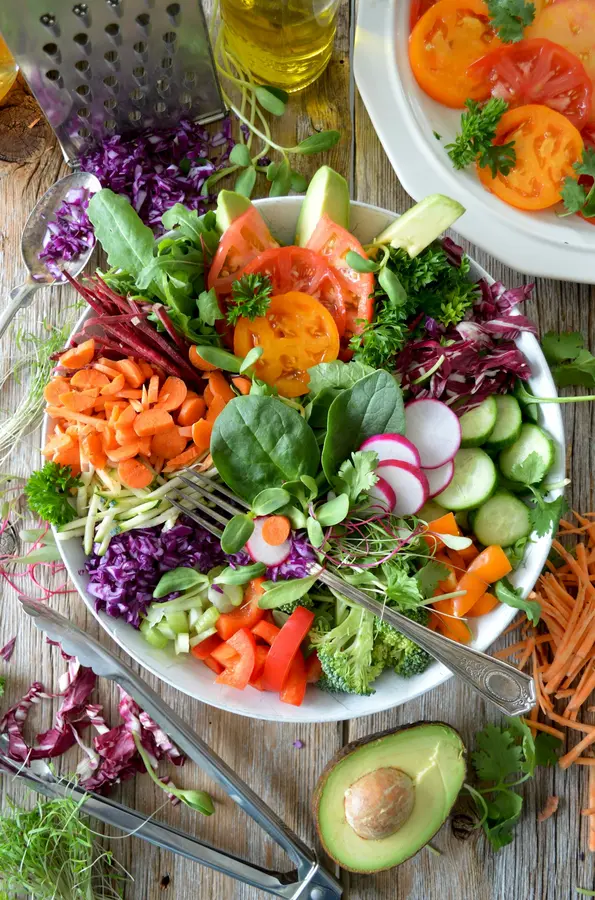
There is no single "liver-cleansing" food, despite the lists that claim otherwise, but the overall pattern of your diet matters a great deal because fatty liver is fundamentally a problem of too much of the wrong fuel. The protective pattern is the familiar one: plenty of vegetables and fruit, especially fiber-rich and cruciferous ones; whole grains, legumes, nuts, and adequate protein to spare the liver from the damage of crash dieting; and far less added sugar, refined carbohydrate, and ultra-processed food, which are the inputs that drive liver-fat accumulation. Fiber and a colorful plate also feed the gut microbiome that works in concert with the liver. We cover the building blocks in our guide to fiber and the broader pattern in the anti-inflammatory diet. Think "feed the liver well," not "flush it out."
Be careful with painkillers and megadosed supplements
The fastest way to hurt a healthy liver is to poison it, usually by accident. Acetaminophen (the active ingredient in Tylenol and hidden inside many combination cold, flu, and pain products) is the single most common cause of acute liver failure in the United States, behind nearly half of cases. It is perfectly safe at normal doses; the danger comes from stacking products that all contain it, exceeding the daily limit printed on the label, or combining it with alcohol. Read labels, do not double up, and keep within the stated dose. The hospital antidote for an overdose, N-acetylcysteine, is exactly why this matters: the fix happens in an emergency room, not in your kitchen.
The harder truth for a supplement shopper is that the "natural" aisle is itself a growing source of liver injury. In the NIH's Drug-Induced Liver Injury Network, herbal and dietary supplements rose from about 10% of cases to more than 16%, making them one of the most common causes of drug-induced liver injury tracked in the United States. Green tea extract is the single most commonly implicated herbal ingredient; the list also includes anabolic "bodybuilding" steroids, kava, and a long roster of weight-loss products. Compounding the risk, supplements are not always what their labels say: analyses of products tied to liver injury have repeatedly found contamination with heavy metals, pharmaceuticals, or pesticides, and sometimes the absence of the very botanical on the label. The lesson is not that all supplements are dangerous, but that more is not safer, that "cleanse" and "fat burner" categories carry real risk, and that third-party testing is non-negotiable. Our guide to choosing quality supplements covers the seals that actually mean something.
The liver-supplement aisle, graded honestly
If you have read this far, you already know the headline: no supplement detoxes your liver, and the best thing most of these products can do is not hurt you. Still, a few have a real story worth telling accurately, and our customers ask about them by name. Here is the honest grade on the popular ones.
| Supplement | The popular claim | What the evidence shows | Honest verdict |
|---|---|---|---|
| Milk thistle (silymarin) | Repairs and detoxes the liver | Trials for liver disease are conflicting or too limited to conclude; two NIH trials found no benefit | Well tolerated, but not a proven liver fix |
| NAC (N-acetylcysteine) | Daily liver protection | Genuinely the hospital antidote for acetaminophen poisoning; thin evidence as a daily "liver" pill | Real drug, wrong use for a supplement |
| Glutathione | Boosts your master detox antioxidant | Your body makes it; swallowed glutathione is largely broken down and poorly absorbed | Body-made; oral dosing is questionable |
| Turmeric / curcumin | Anti-inflammatory liver support | Interesting for inflammation, but high-potency products are a rare cause of liver injury | Promising elsewhere; respect the dose |
| Dandelion / artichoke | Traditional liver "bitters" | Long folk use; human evidence for liver benefit is thin | Low-stakes; do not expect much |
No row here earns a "detoxes your liver." The most defensible reason to take any of them is curiosity plus good tolerance, not a belief that it cleanses the organ.
Milk thistle (silymarin)
Milk thistle is the original liver herb and still the most popular, and its active complex, silymarin, has been studied for decades. The honest summary from the National Center for Complementary and Integrative Health is sobering for anyone hoping it is a cure: results from clinical trials of milk thistle for liver diseases have been "conflicting or too limited to allow conclusions to be reached," two NIH-funded studies (one in hepatitis C, one in non-alcoholic steatohepatitis) found no benefit from silymarin, and overall there is not enough high-quality evidence to draw firm conclusions about its effects. On the safety side it looks reassuring: taken orally it is generally well tolerated, with mostly mild digestive effects such as bloating, nausea, and gas, though people allergic to ragweed, chrysanthemum, marigold, or daisies can have allergic reactions. If you want to try a quality standardized milk thistle or an organic milk thistle, it is a low-risk experiment, but treat it as exactly that, and never as permission to drink more or skip the habits above.
NAC (N-acetylcysteine)
NAC has the most legitimate liver credential of anything in this section, and it is routinely misread. In a hospital, intravenous or oral N-acetylcysteine is the established antidote for acetaminophen poisoning, where it replenishes the glutathione the liver burns through detoxifying the overdose, and given early it sharply improves the odds of recovery. That is a genuine, life-saving medical use. It is also a world away from swallowing a daily NAC capsule as "liver insurance," where the evidence for protecting an otherwise healthy liver is thin. Knowing the difference is the point: NAC is a real drug for an emergency, not a daily detox.
Glutathione
Glutathione is the body's own workhorse antioxidant and a key player in the Phase II conjugation described earlier, which is why "boost your glutathione" is such a tempting pitch. The problem is delivery: your body manufactures glutathione continuously, and glutathione you swallow is largely broken down in the digestive tract and poorly absorbed intact, so the link between an oral capsule and higher functional levels in the liver is far weaker than the marketing implies. We dig into why whole-body antioxidant chemistry resists this kind of single-molecule supplementation in our antioxidants explainer. If you are curious, a reduced glutathione is available, but temper expectations.
Turmeric, dandelion, and the "liver cleanse" blends
Turmeric and its active curcumin draw interest for their anti-inflammatory properties, and there is real science there, but two cautions apply to the liver specifically: absorption of plain curcumin is poor, and, ironically, some high-potency, enhanced-absorption curcumin products have themselves been documented as rare causes of liver injury. Enjoy turmeric as a spice and read our full turmeric and curcumin guide before megadosing an extract; a combined milk thistle with turmeric is a common pairing if you want both at modest doses. Dandelion and artichoke are traditional digestive "bitters" with long folk histories and thin human evidence for liver benefit; a cup of organic dandelion tea is a pleasant, low-stakes ritual, not a treatment. As for the multi-ingredient products literally labeled liver cleanse or "detox," they are usually a kitchen-sink of the herbs above at modest doses; if you choose one, pick a brand that third-party tests, judge it on tolerance, and hold onto realistic expectations about what it can and cannot do.
When your liver actually needs a doctor
The reason fatty liver disease became so common so quietly is that the liver rarely complains until damage is advanced. Early fatty liver and even significant scarring usually cause no symptoms at all, which is why "I feel fine" is not evidence of a healthy liver and why a cleanse you "feel working" is telling you nothing. If you have risk factors, especially excess weight, type 2 diabetes, metabolic syndrome, or regular heavy drinking, the right move is not a detox product; it is a conversation with your clinician and a simple set of blood tests (a liver panel, which includes enzymes such as ALT and AST) that can flag a problem long before you would feel one. Seek prompt medical care for warning signs of more serious liver trouble: yellowing of the skin or eyes (jaundice), dark urine, persistent right-upper-abdominal pain, unusual swelling in the abdomen or legs, or easy bruising. These are reasons to see a doctor, not to reach for a supplement.
A simple, liver-friendly routine
Strip away the marketing and a genuinely protective approach to your liver fits on a short list. None of it is a "cleanse," and all of it is supported by the evidence above.
- Mind your alcohol first. It is the most direct lever. Keep several alcohol-free days a week, avoid binge sessions, and if you do not drink, do not start.
- Manage your weight if you carry excess fat. Losing even 3% to 5% reduces liver fat; aim for gradual, sustainable loss, never a crash diet.
- Eat to feed the liver, not flush it. Build meals around vegetables, fiber, whole foods, and enough protein; cut added sugar, refined carbs, and ultra-processed food.
- Move most days. Regular activity helps the liver even when the scale does not move, so walk, lift, or whatever you will actually keep doing.
- Enjoy your coffee. If you already drink it, black or lightly sweetened coffee is associated with better liver outcomes.
- Respect acetaminophen and avoid megadoses. Stay within the label limit, never combine it with heavy drinking, and skip "fat burner," "bodybuilding," and high-dose "cleanse" products.
- Test, do not guess. If you have risk factors, ask your clinician for a liver panel instead of buying a detox.
- Be choosy if you supplement. Treat milk thistle and friends as low-stakes experiments, buy third-party-tested brands, and tell your doctor what you take.
Frequently asked questions
Does your liver actually need a detox or cleanse?
For a healthy person, no. Your liver detoxifies your blood continuously through built-in enzyme pathways, with your kidneys and gut helping clear the waste, and there is no "backlog" of toxins that a product releases. Health authorities have found no compelling evidence that detox or cleanse programs remove toxins or improve health. The useful move is to support the liver you have, not to flush it.
Do liver detox supplements and teas work?
There is no good evidence that any "liver detox" supplement or tea cleanses the organ. Many detox teas simply act as laxatives or diuretics, which move water and stool rather than toxins. Worse, the supplement category is a growing cause of liver injury, so a "cleanse" product can be a net negative. If you want results, the levers are alcohol, weight, diet, and movement.
Is milk thistle good for your liver?
Milk thistle is the most popular liver herb, but the evidence is underwhelming: clinical trials for liver disease have been conflicting or too limited to draw conclusions, and two NIH-funded studies found no benefit. It is generally well tolerated, so trying it is low-risk, but do not expect it to repair your liver or offset heavy drinking. It is an experiment, not a treatment.
Can a fatty liver be reversed?
Often, yes, especially when caught early. For metabolic (non-alcohol) fatty liver, losing 3% to 5% of body weight reduces liver fat and 7% to 10% can reduce inflammation and scarring; for alcohol-related fatty liver, the early stage frequently improves with abstinence. The key is gradual, sustained change, because rapid crash weight loss can make liver disease worse. Work with a clinician if you have been diagnosed.
Is coffee good or bad for your liver?
Good, on current evidence. Across many observational studies, coffee drinkers have a lower risk of liver fibrosis, cirrhosis, and liver cancer, with benefits seen from both caffeinated and decaf and an apparent sweet spot around three to four cups a day. Because these are associations rather than proof, treat coffee as a helpful habit, not a cure, and skip the sugar and syrup that work against it.
Which supplements can actually damage your liver?
Several. In U.S. injury-tracking data, green tea extract is the most commonly implicated herbal ingredient, and anabolic "bodybuilding" steroids, kava, high-dose niacin, and many weight-loss products have all caused liver injury. High-potency curcumin products are a rare cause too. Because supplements are not always what the label claims, buy third-party-tested brands, avoid megadoses, and tell your doctor what you take.
What is the fastest way to flush or cleanse your liver?
There isn't one, and that is the honest answer the cleanse industry avoids. No juice, tea, pill, or protocol speeds up the liver's chemistry or empties a toxin reserve, because no such reserve exists in a healthy person. The "fast" results people feel from a flush are usually a laxative or diuretic effect. The real work is steady: less alcohol, a healthy weight, good food, movement, and time.
The bottom line
Your liver does not need to be cleansed; it needs to be protected. It is already an extraordinary, self-renewing detoxification system, running every second without any help from a juice or a three-day kit. The "detox" aisle sells the comforting idea that wellness is a product you can buy and feel, but the evidence points the other way: there is no compelling support for cleanses, and some of those very products are now a documented cause of the liver harm they claim to prevent.
The better use of your attention is the short list that genuinely protects the organ. Drink less alcohol, or none. Reach and keep a healthy weight if you carry excess fat, gradually. Eat a whole-food, fiber-rich diet and go easy on sugar and ultra-processed food. Move most days, enjoy your coffee, respect acetaminophen, and skip the megadosed "fat burners" and "cleanses." Treat a milk thistle capsule, if you want one, as a low-stakes curiosity rather than a fix, and if you have real risk factors, get a blood test instead of a detox. Support the organ that already detoxes you, every minute of every day, and it will return the favor for a lifetime.
This article is educational and is not medical advice. Dietary supplements are not intended to diagnose, treat, cure, or prevent any disease. Talk with a qualified healthcare professional before starting any supplement or making a major change to your diet or alcohol intake, especially if you drink regularly, take acetaminophen or other medications, are pregnant or breastfeeding, or have been told you have a liver condition.
Sources
- Detoxes and Cleanses: What You Need To Know, National Center for Complementary and Integrative Health
- Definition & Facts of NAFLD & NASH (MASLD & MASH), National Institute of Diabetes and Digestive and Kidney Diseases
- Treatment for NAFLD & NASH, National Institute of Diabetes and Digestive and Kidney Diseases
- Alcohol's Effects on the Body, National Institute on Alcohol Abuse and Alcoholism
- Herbal and Dietary Supplements, LiverTox (NIH National Library of Medicine)
- Milk Thistle, National Center for Complementary and Integrative Health
- Acetaminophen Hepatotoxicity and Acute Liver Failure, Journal of Clinical Gastroenterology (2009)
- Coffee Consumption Decreases Risks for Hepatic Fibrosis and Cirrhosis: A Meta-Analysis, PLOS ONE (2015)
- Coffee Reduces Risk for Hepatocellular Carcinoma: An Updated Meta-Analysis, Clinical Gastroenterology and Hepatology (2013)
- FDA Approves First Treatment for Liver Scarring Due to Fatty Liver Disease (resmetirom), U.S. Food and Drug Administration (2024)