You can eat plenty of iron and still come up short. The number printed on a food label or a cereal box is the iron that goes in - not the iron your body actually pulls out and uses. The gap between those two numbers is one of the most overlooked reasons someone can do "everything right" with their diet and still feel run-down. The form of iron on your plate, what you eat alongside it, and what you drink with the meal can swing real absorption from a trickle to several times more.
This guide is the practical playbook for closing that gap: which foods and pairings help you absorb more iron, which everyday habits quietly block it, and how to arrange a normal day's meals so the iron you eat does more work. If you are still figuring out whether low iron is your problem in the first place, start with our guide to iron deficiency and exhaustion; if you already know you need a supplement and your stomach is the issue, our companion guide on the best iron for sensitive stomachs covers forms and dosing. This article stays focused on absorption: getting more out of every milligram, whether it comes from food or a bottle.
Key takeaways
- Vitamin C is the biggest lever. Pairing plant (non-heme) iron with vitamin C - citrus, peppers, strawberries, tomatoes - sharply increases how much of it your body absorbs.
- Not all dietary iron is equal. Heme iron from animal foods absorbs readily, while plant-based non-heme iron absorbs less efficiently and is far more sensitive to the rest of the meal.
- Move the blockers to another time slot. Tea, coffee, calcium supplements, and very high-phytate foods can quietly cut absorption, so keep them apart from your most iron-rich meal.
- Your body sets the dial. When iron stores run low the gut absorbs more, and when they are full it absorbs less, so smart pairing matters most for people who actually tend to run low.
- Plant-based eaters can absorb plenty. Stacking vitamin C, soaking or sprouting grains and legumes, and spacing out tea and coffee closes most of the gap without animal foods.
The short answer: how do you absorb more iron from food?
To absorb more iron from food, pair plant-based (non-heme) iron with a source of vitamin C - citrus, peppers, strawberries, or tomatoes - which dramatically improves its absorption. Then keep the strong blockers like tea, coffee, and calcium supplements in a different time slot from your most iron-rich meal, and add a little meat, fish, or poultry if you eat them.
Heme iron from animal foods already absorbs well and is far less affected by the rest of the plate, so most of this advice is really about getting more out of plant-based iron.
Everything below is that one idea, unpacked: understand which iron you are eating, stack the enhancers, and move the blockers out of the way. None of it requires a perfect diet - just a few intentional pairings repeated often enough to matter.
Heme vs. non-heme: why the source of iron changes everything
Dietary iron comes in two forms, and they behave so differently that lumping them together is the first mistake. Heme iron is found only in animal foods - red meat, poultry, and seafood (meat, seafood, and poultry actually contain both forms). Non-heme iron is the kind in plants and fortified foods: lentils, beans, tofu, spinach, pumpkin seeds, quinoa, and iron-fortified cereals contain non-heme iron only.
The difference is not subtle. According to the framework behind the U.S. Dietary Reference Intakes, adults with moderate iron stores absorb roughly 25% of heme iron but often less than 5% - and at most around 17% - of non-heme iron from a meal. Heme iron is also largely shielded from the enhancers and inhibitors in the rest of your food, while non-heme iron is exquisitely sensitive to them. That is why heme iron, despite making up only about 10% to 15% of total iron intake in Western diets, punches well above its weight: it accounts for more than a third of the iron people actually absorb.
The takeaway is empowering, not discouraging. Heme iron mostly takes care of itself. Non-heme iron - the kind most of us eat the most of, and the only kind vegetarians and vegans get - is the negotiable one. It is the form that responds to strategy. Almost everything in this guide is really about making that non-heme iron behave more like heme iron by stacking the conditions in its favor.
Your body has a say too: iron status sets the dial
Before getting into food pairings, one more lever is worth knowing because it puts everything else in context: your own iron status. Absorption is not fixed. When your iron stores run low, your gut automatically increases the fraction of non-heme iron it pulls from food, and when stores are full, it dials absorption down. This is the body's main defense against both deficiency and overload, since there is no easy way to excrete excess iron once it is in.
Two practical consequences follow. First, the percentages above are averages - a genuinely iron-deficient person may absorb considerably more than someone who is replete, which is part of why supplementing without knowing your status is a blunt instrument. Second, it means absorption strategy matters most exactly when you need it: the pairings below give your body the best raw material to work with while it is trying to rebuild.
The enhancers: what helps your body absorb more iron
A handful of well-studied factors reliably increase non-heme iron absorption. Stacking even two or three of them at your most iron-rich meal is usually enough to make a real difference.
Vitamin C is the single most powerful enhancer
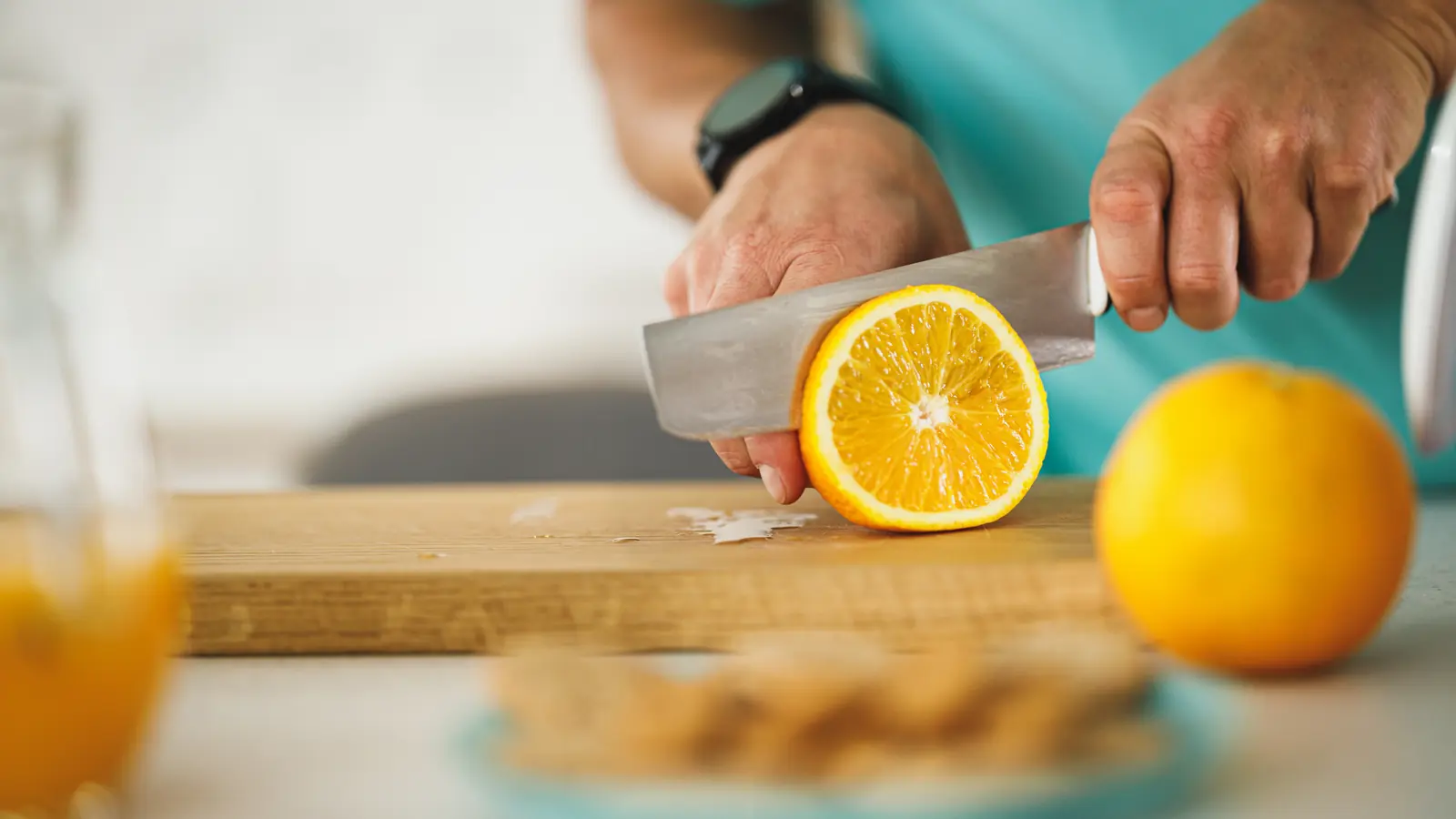
Vitamin C (ascorbic acid) is the absorption booster worth building meals around. It works two ways at once: it chemically reduces iron to the form your gut absorbs more readily, and it grabs onto iron to keep it soluble - which also lets it counteract the blocking effect of phytates and tannins in the same meal. In classic controlled studies by Leif Hallberg, the effect followed a clear dose-response curve, and roughly 50 mg of vitamin C per main meal - about half an orange, a squeeze of lemon, or a handful of strawberries - was enough for a strong effect, with bigger doses helping more.
Practically, this is the easiest win in nutrition. A squeeze of lemon over lentils, bell peppers in a bean chili, tomato sauce on a fortified pasta, strawberries on iron-fortified oatmeal, or a glass of orange juice with a plant-based breakfast all put vitamin C and non-heme iron in the same place at the same time. Because vitamin C is not stored, the trick is to pair it with the iron-rich meal rather than at some other point in the day.
The meat, fish, and poultry factor
Beyond their own heme iron, animal proteins carry a separate, well-documented bonus: a small amount of meat, fish, or poultry eaten in the same meal increases the absorption of the non-heme iron around it - sometimes called the "MFP factor." A few ounces of chicken in a bean stew, or some fish alongside a grain bowl, lifts the iron you get from the plant foods on the same plate. For people who eat animal products even occasionally, this is a reason to combine rather than separate their iron sources. For strict vegetarians and vegans, it simply raises the importance of the other enhancers, especially vitamin C.
A little prep work: soaking, sprouting, and fermenting
Some of the biggest gains in plant-iron absorption happen before the food reaches your plate. Phytates - the main iron blocker in grains, legumes, nuts, and seeds - can be substantially reduced by traditional preparation. Soaking dried beans and grains, sprouting legumes and seeds, and especially fermentation and leavening (think true sourdough bread rather than quick-rise) all break down phytate and free up more of the iron. This is part of why a sourdough loaf and a long-soaked pot of beans can deliver more usable iron than their quick-cooked equivalents, even with the same iron on paper.
Cast iron and a note on vitamin A
Two smaller helpers round out the list. Cooking acidic, moisture-rich foods - a simmering tomato sauce, a chili, a braise - in a cast iron pan leaches a modest amount of iron into the food, an old but real effect. And vitamin A and beta-carotene (from foods like carrots, sweet potatoes, and leafy greens) appear to help keep iron available for absorption and can partly offset the inhibiting effect of phytates. Neither is a headline strategy on its own, but both stack neatly with vitamin C and the MFP factor.
| Factor | Effect on non-heme iron | Found in | What to do |
|---|---|---|---|
| Vitamin C Booster | Strongly increases absorption; also blunts phytates and tannins | Citrus, peppers, strawberries, tomatoes, broccoli | Pair ~50 mg+ with your iron-rich meal |
| Meat / fish / poultry Booster | The "MFP factor" lifts absorption of nearby plant iron | Beef, chicken, fish, shellfish | Combine a little with plant-iron meals |
| Soaking / sprouting / fermenting Booster | Lowers phytate, freeing more plant iron | Sourdough, soaked beans, sprouted grains | Favor traditionally prepared grains and legumes |
| Phytates | Dose-dependent blocker; the main inhibitor in plants | Whole grains, legumes, nuts, seeds, bran | Soak/ferment; add vitamin C to offset |
| Polyphenols / tannins | Strong blocker; binds iron in the gut | Tea, coffee, red wine, cocoa | Move 1 to 2 hours from iron-rich meals |
| Calcium | Blunts absorption in a single meal (effect smaller over time) | Dairy, calcium supplements, fortified drinks | Space supplements from your main iron meal |
The pattern is simple: most boosters are foods you add to the iron-rich meal, while most blockers are things to shift to a different time of day. You do not have to win every meal - just stack the odds at the one or two meals that carry most of your iron.
The blockers: what quietly works against iron absorption
Here is what makes iron blockers tricky: most of them are part of otherwise healthy, normal routines. A cup of tea, a calcium supplement, a high-fiber whole-grain bowl - none of these are "bad," and you should not give them up. You just want them to stop overlapping with the meal that carries most of your iron.
Phytates: the main blocker in plant foods
Phytate (phytic acid) is the single most important inhibitor of non-heme iron, and it lives in exactly the foods people lean on for plant iron: whole grains, legumes, nuts, seeds, and bran. Its effect is steep and dose-dependent. In Hallberg's controlled human studies, as little as 2 mg of phytate cut iron absorption by about 18%, 25 mg by 64%, and 250 mg by 82%. That is a striking range from small amounts.
The fix is not to abandon whole grains and beans - they are nutritional powerhouses and major iron sources. It is to disarm the phytate (soak, sprout, ferment, choose sourdough) and to pair these meals with vitamin C, which directly counteracts phytate's blocking effect. A lentil soup with tomatoes and a squeeze of lemon is a very different iron meal than plain bran cereal eaten dry.
Tea, coffee, and other polyphenols
Polyphenols - including the tannins in tea, coffee, red wine, and cocoa - bind iron in the gut and are among the most powerful dietary blockers, especially for the non-heme iron in plants and supplements. The numbers are sobering. In a controlled study, a cup of coffee taken with a meal cut iron absorption from 5.9% to 1.6% (instant coffee dropped it further), and black tea is generally an even stronger inhibitor, capable of reducing absorption from a meal by roughly 60% or more, with the effect tracking the polyphenol content of the brew.
This does not mean giving up coffee or tea. It means timing. Drinking them with or right after an iron-focused meal is the costly habit; enjoying them between meals, or moving your morning coffee an hour or two away from your iron-rich breakfast, removes most of the penalty. If you take an iron supplement, the same rule applies - keep it well clear of tea and coffee.
Calcium: a real effect, but an overstated one
Calcium is the one inhibitor unusual enough to affect both heme and non-heme iron, which is why it gets singled out. Older single-meal studies found that around 300 to 600 mg of calcium - the amount in a large glass of milk plus a serving of cheese, or a typical calcium tablet - could cut iron absorption from that meal by roughly 50% to 60%.
But this is also where honesty earns its keep, because the calcium story is more reassuring than most pages admit. More recent and longer-term research suggests the single-meal effect is smaller and shorter-lived than those early studies implied, and that ordinary calcium intake over days and weeks does not appear to meaningfully lower iron status in healthy people. Even the NIH hedges, saying calcium "might" reduce iron bioavailability. The sensible reading: do not fear dairy or stop a calcium supplement you need. But if you are actively rebuilding iron, simply taking your calcium supplement at a different meal than your iron is a free, low-effort precaution that costs you nothing.
The spinach paradox and oxalates
Spinach has a reputation as an iron superfood, and it does contain iron - but it is a useful case study in why the label is not the whole story. Spinach is also high in oxalates and polyphenols, which bind much of its iron and give it surprisingly low bioavailability. The NIH specifically cites spinach as an example of an iron-rich plant whose iron is poorly absorbed. Spinach is still a worthwhile food, and pairing it with vitamin C (or a few ounces of meat) helps - but it should not be your one and only plant-iron strategy. Lentils, beans, tofu, and pumpkin seeds are often easier to turn into well-absorbed iron.
| Blocker | Typical reduction (single meal) | Why | Practical move |
|---|---|---|---|
| Black tea Strong | About 60% or more | Tannins/polyphenols bind iron | Drink between meals, not with them |
| Coffee | From ~5.9% to ~1.6% absorbed in one study | Polyphenols bind iron | Keep ~1 to 2 hours from iron meals |
| Phytate (250 mg) Dose-dependent | Up to ~82% (about 18% at just 2 mg) | Binds iron in grains, legumes, bran | Soak/ferment; add vitamin C |
| Calcium (300 to 600 mg) | ~50% to 60% in older studies; smaller over time | Competes at the gut; effect overstated long-term | Space supplements from iron meals |
| Spinach (oxalate) | Iron present but poorly absorbed | Oxalates and polyphenols bind its iron | Pair with vitamin C; do not rely on it alone |
Single-meal percentages come from controlled human studies (largely Hallberg and colleagues, and Morck for coffee) and describe one meal in isolation - they are guides to direction and rough magnitude, not promises for every body or every day. The consistent message across all of them: separate the big blockers from your iron, and pair the iron with vitamin C.
Build a better iron meal: pairing in practice
All of this collapses into a simple habit - design your most iron-rich meal to include an enhancer and exclude the blockers - and let the rest of the day be normal. A few worked examples:
- Lentils or beans + bell peppers, tomatoes, or a squeeze of citrus. A bean chili or a lentil soup with tomato is a near-perfect iron meal: plant iron plus plenty of vitamin C in one bowl.
- Iron-fortified oatmeal or cereal + berries or kiwi. A simple way to add vitamin C to a fortified breakfast - and a reason to move your coffee thirty to sixty minutes later.
- Tofu or tempeh stir-fry + broccoli, peppers, and a little citrus. Broccoli and peppers bring vitamin C; if you eat them, a few shrimp or strips of chicken add the MFP boost.
- Pumpkin or sesame seeds + fruit. Treat seeds as part of a vitamin-C pairing rather than a dry handful eaten alone.
- Steak, salmon, or chicken + whatever you like. Heme-iron meals are forgiving - the iron absorbs well regardless, and the animal protein even helps any plant iron on the plate.
Then handle the blockers with timing, not abstinence. Keep tea, coffee, and a dairy-heavy dessert or calcium supplement at least an hour or two away from the meal that carries most of your iron. If you only change one thing, separate your coffee or tea from your highest-iron meal - for most people that is the highest-leverage tweak of all. For fitting these pairings around the rest of your routine, our supplement timing guide covers how iron interacts with the other things you take.
Iron absorption for vegetarians and vegans
If you eat little or no animal food, none of this is bad news - it just means absorption strategy is not optional, it is the whole game. Because every milligram of your iron is non-heme and therefore sensitive to enhancers and inhibitors, the NIH notes that the iron requirement for people following a vegetarian diet is about 1.8 times higher than for people who eat meat, reflecting the lower bioavailability (roughly 5% to 12% of iron is absorbed from vegetarian diets, versus 14% to 18% from mixed diets).
That 1.8x figure sounds daunting, but it is very winnable with the habits above. Vitamin C at iron-rich meals does a lot of the heavy lifting - it can transform the absorption of a plant meal. Soaking, sprouting, and fermenting your grains and legumes lowers phytate. And separating tea and coffee from meals removes a big, easy-to-miss penalty. For building meals that cover both protein and minerals from plants, our complete guide to plant-based protein pairs naturally with this one. The goal is not to eat more spinach - it is to make the plant iron you already eat actually count.
Do iron supplements absorb the same way?
Mostly, yes - the iron in a typical supplement is non-heme, so the same rules apply. Pairing it with vitamin C helps, and keeping it away from tea, coffee, and calcium reduces the blocking effect. That is why many iron supplements either include vitamin C or advise taking them with a citrus source.
Two absorption wrinkles are specific to supplements. First, the form matters: gentle chelated forms like iron bisglycinate and food-based formulas are designed to absorb efficiently and tend to sit better with the rest of a meal, while elemental iron content varies a lot between forms. Second, and counterintuitively, taking iron less often can absorb better - a dose of iron raises a hormone called hepcidin that temporarily suppresses further absorption, so for many people a single morning dose every other day absorbs a larger fraction than grinding through a dose every day. We cover both of those in depth - forms, elemental dose, and the alternate-day rhythm - in our guide to the best iron for sensitive stomachs, and you can compare specific products on our organic iron supplements page. Below is a quick look at how the options we carry fit an absorption-first routine.
Quick comparison
Iron we carry, viewed through an absorption lens
All four are non-heme iron, so the same pairing rules apply: take with vitamin C, keep clear of tea, coffee, and calcium. They differ mainly in form and whether absorption cofactors are built in.
| Product | Form | Absorption angle | Best for |
|---|---|---|---|
| Garden of Life Vitamin Code RAW Iron 22 mg - 30 Vegan Capsules Food-based iron with vitamin C, B12, and folate from whole foods. | Food-based | Vitamin C is built in, so the main enhancer travels with the dose. | Whole-food shoppers who want cofactors in one capsule. |
| Solgar Gentle Iron 25 mg - 90 Vegetable Capsules Iron bisglycinate at 25 mg elemental iron, smaller starter bottle. | Bisglycinate | Chelated form designed to stay intact and absorb efficiently. | First-timers; pair with a citrus source yourself. |
| Solgar Gentle Iron 25 mg - 180 Vegetable Capsules The same 25 mg bisglycinate formula in a larger, better-value bottle. | Bisglycinate | Same efficient chelate; better cost per serving for a long routine. | Repeat buyers settled into a daily or alternate-day rhythm. |
| Thorne Iron Bisglycinate 25 mg - 60 Capsules A straightforward 25 mg bisglycinate, NSF Certified for Sport. | Bisglycinate | Efficient chelate with third-party sport certification. | Athletes and anyone wanting screened-for-sport assurance. |
For absorption, the food-based RAW Iron has vitamin C built in, while the bisglycinate options are efficient chelates you simply pair with citrus yourself. Whichever you pick, the meal rules still apply: vitamin C with the dose, blockers spaced apart.
When pairing is not enough: test, do not guess
Smart pairing makes the iron you eat go further, but it cannot diagnose a real deficiency or fix one caused by ongoing blood loss, pregnancy, a digestive condition, or a diet that simply falls short. Persistent fatigue, breathlessness, dizziness, headaches, hair shedding, restless legs, or feeling unusually cold can point to low iron - but they have other causes too, which is why a blind supplement trial is a poor substitute for knowing your numbers.
If low iron is on your radar, it is worth asking a clinician whether a CBC, ferritin, and iron panel make sense for you - especially if you have heavy periods, are pregnant, donate blood regularly, have gastrointestinal symptoms, or have tried eating better without feeling better. Testing tells you whether you are dealing with "I should pair my meals more carefully" or "I need a targeted plan," and it keeps you from supplementing iron you do not need, which carries its own risks. Our guide to iron deficiency walks through the symptoms and the workup in more detail.
Frequently asked questions
What food helps absorb iron the most?
Vitamin C-rich foods are the most powerful everyday enhancer of non-heme (plant) iron - citrus, bell peppers, strawberries, tomatoes, and broccoli. Eating a little meat, fish, or poultry in the same meal also boosts the absorption of plant iron. The single best move is to pair your most iron-rich meal with a good source of vitamin C, and keep tea, coffee, and calcium supplements at a different time.
Does vitamin C really improve iron absorption?
Yes, and it is one of the best-documented interactions in nutrition. Vitamin C reduces iron to a more absorbable form, keeps it soluble, and counteracts blockers like phytates and tannins in the same meal. Controlled studies found that roughly 50 mg of vitamin C per meal - about half an orange - produces a strong effect, with more helping further. Pair it with the iron-rich meal itself, since vitamin C is not stored.
Do coffee and tea block iron absorption?
Yes, when consumed with the meal. The polyphenols and tannins in coffee, tea, red wine, and cocoa bind iron in the gut. In studies, coffee cut iron absorption from a meal sharply, and black tea is often an even stronger blocker - able to reduce absorption by around 60% or more. The fix is timing, not abstinence: enjoy them between meals, or keep them about one to two hours away from your iron-rich meal or iron supplement.
Should I stop taking calcium with iron?
You do not need to fear calcium, but a little spacing helps when iron is a priority. Older single-meal studies showed 300 to 600 mg of calcium could blunt iron absorption by about half, though newer and longer-term research suggests the real-world effect is smaller and does not meaningfully lower iron status over time. If you are actively rebuilding iron, simply take a calcium supplement at a different meal than your iron - it is a free precaution.
Is heme iron better absorbed than non-heme iron?
Yes. Heme iron from meat, poultry, and seafood is absorbed far more efficiently - on the order of 25% versus often under 5% for non-heme iron - and it is largely shielded from meal-time enhancers and blockers. Non-heme iron from plants and fortified foods is the form that responds to strategy, which is why vitamin C pairing and blocker timing matter most for vegetarians, vegans, and anyone eating mostly plant iron.
How can vegetarians and vegans absorb more iron?
Because all plant iron is non-heme and less readily absorbed, the iron requirement for vegetarians is about 1.8 times higher. The good news is that absorption is very improvable: pair iron-rich meals with vitamin C, soak/sprout/ferment grains and legumes to lower phytate, separate tea and coffee from meals, and do not rely on spinach alone - lentils, beans, tofu, and pumpkin seeds are easier to turn into usable iron.
Does cooking in a cast iron pan add iron?
It can. Cooking acidic, moisture-rich foods such as tomato sauce or chili in a cast iron pan leaches a modest amount of iron into the food. It is a small, real effect rather than a primary strategy, but it stacks usefully with vitamin C pairing and good meal composition.
Is spinach a good source of iron?
Spinach contains iron, but its iron is poorly absorbed because spinach is also high in oxalates and polyphenols that bind it - the NIH cites it as a classic example. Spinach is still a healthy food, and pairing it with vitamin C helps, but it should not be your only plant-iron source. Build variety with lentils, beans, tofu, and seeds, and pair them with vitamin C.
Bottom line
Eating iron and absorbing iron are two different things, and the gap between them is almost entirely under your control. Heme iron from animal foods takes care of itself; the non-heme iron in plants and supplements is the form that rewards strategy. Pair it with vitamin C, lean on a little meat or fish if you eat them, soak and ferment your grains and legumes, and move the big blockers - tea, coffee, calcium supplements, and very high-phytate foods - out of the same time slot. Do that consistently at the one or two meals that carry most of your iron, and you will get far more out of the iron you are already eating - and if a blood test still says you are low, you will be in a much better position to fix it.
Sources
- NIH Office of Dietary Supplements: Iron Fact Sheet for Health Professionals
- NIH Office of Dietary Supplements: Iron Fact Sheet for Consumers
- Institute of Medicine, Dietary Reference Intakes: Iron (heme vs. non-heme absorption)
- Hallberg et al. (1986): Effect of ascorbic acid on iron absorption from different meals
- Hallberg, Brune, Rossander (1989): Ascorbic acid and dose-dependent inhibition of iron absorption by phytate
- Morck, Lynch, Cook (1983): Inhibition of food iron absorption by coffee
- Hurrell, Reddy, Cook (1999): Inhibition of non-haem iron absorption by polyphenolic-containing beverages
- Hallberg et al. (1991): Calcium and the absorption of nonheme and heme iron
- MedlinePlus: Iron