Few words carry a bigger health halo than antioxidants. They are stamped on green tea, dark chocolate, acai bowls, multivitamins, and serums, almost always as a synonym for "good for you." The underlying science is real: oxidative stress is a genuine driver of aging and chronic disease, and the antioxidants in plants are part of why a colorful diet protects you. But the leap from that fact to "take this antioxidant pill and neutralize the damage" is where the story falls apart, and it falls apart in a way that has surprised researchers more than once.
Here we untangle the real biology from the health-halo marketing, one claim at a time. You will learn what a free radical actually is and why some of them are useful, the antioxidant defense system your body builds on its own, why high-dose antioxidant supplements have repeatedly failed (and sometimes harmed) in large trials, which specific antioxidants have evidence behind them and which are riding a trend, why the popular "high-antioxidant" food rankings were quietly retired, and how to actually get the antioxidants that matter. The short version: antioxidants are a system, not a supplement, and the best way to support that system is almost never a megadose.
Key takeaways
- A free radical is an unstable molecule that steals electrons. Burning fuel with oxygen throws them off, and they can damage cell membranes, proteins, and DNA in a small chain reaction.
- An antioxidant simply ends that chain reaction. It donates an electron to a free radical and stays stable, which is how vitamin C, vitamin E, and colorful plant pigments protect your tissues.
- Oxidative stress, not free radicals themselves, is the real target. Some free radicals are normal and even useful; the problem is when they outpace your defenses.
- Your body makes its own antioxidants. Built-in systems handle much of the load - the part that supplement labels conveniently leave out.
- High-dose antioxidant pills keep failing in trials. Some of the largest nutrition studies ever run found megadoses not just useless but, in a few cases, harmful - so more is not better.
- Get your antioxidants from a colorful plate. A varied diet of fruits, vegetables, and whole foods beats isolated high-dose supplements.
What a free radical actually is, and why "oxidative stress" is the real target
Your cells run on oxygen, and burning fuel with oxygen is a slightly messy process. It throws off free radicals and other reactive oxygen species: molecules with an unpaired electron that makes them chemically unstable. To stabilize themselves, they grab an electron from whatever is nearby, which can be a cell membrane, a protein, or a strand of DNA. That stolen electron leaves the next molecule unstable, and a small chain reaction of damage can follow.
An antioxidant is simply a molecule that can donate an electron to a free radical and stay stable afterward, ending the chain reaction before it does harm. That is the whole concept. Vitamin C, vitamin E, and the colorful pigments in plants all work, in part, by absorbing that reactivity so your own tissues do not have to.
Here is the part the supplement aisle skips. Free radicals are not pure villains. Your body makes them on purpose. Immune cells use bursts of reactive oxygen to kill bacteria. Exercise generates oxidative stress that your muscles read as a signal to get stronger and more insulin-sensitive. Reactive oxygen species are part of how cells talk to each other. The goal was never to eliminate oxidation, which would be like trying to put out a fire by removing all the oxygen in the building. The goal is balance. "Oxidative stress" is the name for what happens when free-radical production outpaces your defenses for long enough to cause cumulative damage. That imbalance, not the presence of free radicals, is the thing worth addressing.
This distinction is not academic. In a striking 2009 trial published in PNAS, researchers gave healthy young men a daily combination of 1,000 mg of vitamin C and 400 IU of vitamin E while they trained. Exercise improved insulin sensitivity in the men who took no antioxidants, but that improvement was largely blocked in the antioxidant group. The supplements blunted the very oxidative signal the body uses to adapt to training. It is one of the cleanest demonstrations that more antioxidant is not automatically better, and that the right dose of oxidative stress is part of being healthy.
Your body makes its own antioxidants (the part the label leaves out)
Read a supplement label and you would think antioxidants are something you have to buy. In reality, your most important antioxidants are enzymes your cells produce around the clock. Three do most of the heavy lifting:
- Superoxide dismutase (SOD) converts one of the most common free radicals into less reactive hydrogen peroxide. It depends on the trace minerals copper, zinc, and manganese to work.
- Catalase then breaks that hydrogen peroxide down into plain water and oxygen. It relies on iron.
- Glutathione peroxidase neutralizes hydrogen peroxide and other damaging compounds, and it is built around selenium. Selenium is a constituent of about 25 different selenoproteins your body uses for, among other things, protection from oxidative damage.
Sitting alongside these enzymes is glutathione, a small molecule your cells synthesize and recycle constantly. It is often called the body's "master antioxidant" because it both neutralizes free radicals directly and regenerates other antioxidants after they have been used up.
Two things follow from this. First, your diet's biggest antioxidant job is often to supply the raw materials and cofactors this internal system needs, the selenium, zinc, copper, and manganese, rather than to deliver a giant dose of any single antioxidant compound. Second, antioxidants work as a relay team, not as soloists. According to the National Institutes of Health Office of Dietary Supplements, vitamin C "has been shown to regenerate other antioxidants within the body, including alpha-tocopherol (vitamin E)." Vitamin C hands an electron to spent vitamin E so it can go back to protecting your cell membranes. This is exactly why a varied intake of many antioxidants from food tends to outperform a megadose of one isolated antioxidant from a bottle: the team only functions when all the members are present in sane amounts.
Why high-dose antioxidant supplements keep failing in trials
If antioxidants neutralize the free radicals behind aging and disease, then antioxidant supplements should prevent disease. It is a clean, logical hypothesis. It has also been tested in some of the largest nutrition trials ever run, and the results were not just disappointing. Several were alarming.
| Trial | Who and what | What happened |
|---|---|---|
| ATBC (1994) | 29,133 male smokers in Finland; beta-carotene 20 mg and/or vitamin E 50 mg daily | The beta-carotene group had about 18% more lung cancer and 8% higher overall mortality, not less |
| CARET (1996) | 18,314 smokers and asbestos-exposed workers; beta-carotene 30 mg plus 25,000 IU vitamin A daily | Stopped roughly 21 months early: 28% more lung cancer and 17% more deaths in the supplement group |
| SELECT (2011) | More than 35,000 healthy men; vitamin E 400 IU daily | 17% increase in prostate cancer (hazard ratio 1.17) in the vitamin E group versus placebo |
| Cochrane review (2012) | 78 randomized trials, 296,707 participants, pooled | In low-bias trials, beta-carotene and vitamin E supplements significantly increased mortality; vitamin C and selenium showed no benefit |
These are primary-prevention trials in large general or at-risk populations. They test isolated, high-dose antioxidants, which is a very different thing from eating antioxidant-rich food.
The ATBC and CARET trials were designed to prove that beta-carotene, the antioxidant pigment in carrots and sweet potatoes, would protect smokers from lung cancer. Both found the opposite. Beta-carotene supplements increased lung cancer in this high-risk group, and CARET was halted ahead of schedule because the harm was clear. The SELECT trial expected vitamin E to lower prostate cancer risk in healthy men; instead the vitamin E group developed significantly more prostate cancer. And when the Cochrane collaboration pooled 78 trials and nearly 300,000 people, the highest-quality studies showed that beta-carotene and vitamin E supplements were associated with a small but real increase in death, while vitamin C and selenium simply did nothing.
The pattern is consistent enough that the U.S. Preventive Services Task Force now recommends against beta-carotene or vitamin E supplements for preventing cancer or heart disease. Why does the tidy hypothesis keep breaking? The leading explanation comes back to balance. At high doses, an antioxidant can flip and behave as a pro-oxidant, generating the very damage it was supposed to prevent. Flooding the body with one purified antioxidant can also disrupt the relay-team signaling that depends on a normal redox balance, the same way the exercise study above showed antioxidants blunting a healthy adaptation. As the National Center for Complementary and Integrative Health puts it, "antioxidants consumed as purified chemicals might act differently than those consumed in foods," and "the high doses of antioxidants in dietary supplements may have different effects than the smaller amounts in foods." That sentence is the entire lesson of this section.
The antioxidants worth knowing, graded honestly
"Which antioxidant should I take?" is the wrong first question, but people still want to know how the popular ones stack up. The table below grades each on the evidence that matters: not its test-tube power, but whether getting more of it actually helps a person. The verdicts that follow are about supplements; nearly all of these are worth eating in food.
| Antioxidant | Best food sources | What the evidence supports | Supplement verdict |
|---|---|---|---|
| Vitamin C | Citrus, peppers, kiwi, strawberries, broccoli | Essential nutrient; corrects deficiency; modest, brief help with cold symptoms | Food first; a modest dose is harmless, megadoses are pointless |
| Vitamin E | Nuts, seeds, sunflower oil, wheat germ, greens | Essential nutrient; protects cell membranes from oxidation | Skip high-dose supplements; linked to prostate cancer and bleeding risk |
| Selenium | Brazil nuts, seafood, eggs, whole grains | Powers glutathione peroxidase; correct only if intake is low | Only if deficient; the safe-to-toxic window is narrow |
| Beta-carotene and carotenoids | Carrots, sweet potato, leafy greens, tomatoes | Food intake tracks with better health; the body self-limits conversion | Do not supplement beta-carotene, especially if you smoke |
| Lutein and zeaxanthin | Kale, spinach, egg yolk, corn | Concentrate in the eye; part of the AREDS2 eye formula | Food first; a formula has a role only in specific eye disease |
| Polyphenols and flavonoids | Berries, tea, cocoa, olive oil, onions, apples | Diets rich in them track with lower disease risk | Eat them; isolated high-dose extracts are largely unproven |
| CoQ10 | Organ meats, oily fish, whole grains | Made by the body; specific roles in heart and statin contexts | Situational, not a general antioxidant; see our CoQ10 guide |
| Glutathione and NAC | Body makes it; supported by sulfur-rich foods | Central to internal defense; NAC reliably raises it | Oral glutathione is poorly absorbed; evidence is preliminary |
| Astaxanthin | Salmon, shrimp, algae | Promising early human data for skin and recovery | Emerging; reasonable to be curious, too soon to be sure |
"Food first" is not a hedge. For most of these, the food evidence is strong and the isolated-supplement evidence is weak, null, or negative.
Vitamin C
Vitamin C is a genuine, water-soluble antioxidant and an essential nutrient, and the Office of Dietary Supplements calls it "an important physiological antioxidant." You need 90 mg a day as a man and 75 mg as a woman, plus an extra 35 mg if you smoke, and a few servings of fruit and vegetables clear that easily. The problem with the giant 1,000 mg-plus doses people take is plumbing: at intakes of 30 to 180 mg your body absorbs 70 to 90% of it, but above 1 gram absorption drops below 50% and the excess is simply flushed out in urine. Clinical trials are blunt on the payoff. Most show that vitamin C supplements do not prevent cancer or heart disease, and regular doses of at least 200 mg a day do not reduce how often the general population catches colds, though they may slightly shorten symptoms once you are sick. Eat the peppers and the kiwi; a food-based whole-food vitamin C is fine insurance, but you cannot out-supplement a poor diet here.
Vitamin E
Vitamin E is the body's main fat-soluble antioxidant, described by the Office of Dietary Supplements as the nutrient that "stops the production of reactive oxygen species formed when fat undergoes oxidation," which makes it a guardian of your cell membranes. The daily requirement is modest, 15 mg (about 22 IU of the natural form). Two cautions matter. First, the SELECT trial tied 400 IU a day of synthetic vitamin E to more prostate cancer, and high doses can raise the risk of bleeding, especially alongside aspirin or blood thinners. Second, if you do choose a supplement, the form matters: look for natural mixed tocopherols (which include beta, gamma, and delta forms found in food) rather than a megadose of synthetic alpha-tocopherol alone. A sensible mixed-tocopherol vitamin E at a reasonable dose is the better-built product, but for most people nuts and seeds are the right delivery vehicle.
Selenium
Selenium earns its place not by mopping up free radicals directly but by powering glutathione peroxidase, one of your core internal antioxidant enzymes. You only need 55 mcg a day, and here the headline is restraint: the upper limit is 400 mcg, so the safe-to-excess window is unusually narrow, and overdoing it causes selenosis, with a garlic odor on the breath, a metallic taste, and brittle, falling hair and nails. The SELECT trial found 200 mcg a day did nothing for prostate cancer, and a Cochrane review found selenium supplements did not lower overall cancer risk. The classic food source is dramatic: a single ounce of Brazil nuts (six to eight nuts) can carry around 544 mcg, well past the daily limit, which is exactly why our guide to Brazil nuts warns against eating them by the handful. Unless a clinician has flagged low selenium, you do not need a selenium supplement on top of food.
Carotenoids: beta-carotene, lutein, zeaxanthin, and lycopene
Carotenoids are the orange, red, and deep-green plant pigments, and they are the clearest example of the food-versus-pill split. Diets rich in carotenoids track with better health, but as ATBC and CARET showed, an isolated beta-carotene pill increased lung cancer in smokers. From food, your body converts only as much beta-carotene to vitamin A as it needs; from a high-dose supplement, that safety valve is bypassed. Lutein and zeaxanthin concentrate in the retina and are the carotenoids studied for the aging eye; they are the pair that replaced beta-carotene in the modern AREDS2 eye formula, a story we cover in the section on specific exceptions below and in depth in our guide to nutrients for eye health. Lycopene, the red in tomatoes, is one of the few antioxidants you absorb better from cooked-and-oiled food than from raw. The takeaway across the whole family is the same: eat the rainbow of them, supplement none of them on a whim.
Polyphenols and flavonoids: quercetin, resveratrol, catechins, anthocyanins
This is the largest and most hyped antioxidant family, the compounds behind the color and bite of berries, tea, cocoa, red wine, onions, and olive oil. Population studies consistently link polyphenol-rich diets with lower rates of heart disease and other conditions, and that is genuinely encouraging. The trouble starts when a single polyphenol is pulled out, concentrated, and sold as a cure. Resveratrol, the red-wine compound, looks spectacular in cell and animal studies but is poorly absorbed and rapidly cleared by humans, and its clinical trials have been inconsistent, a classic case of lab promise outrunning human proof. Quercetin (in onions, apples, and capers) and catechins like the EGCG in green tea are widely studied and reasonable to consume, but the evidence for high-dose isolated extracts is far thinner than the marketing implies. If you enjoy a green tea extract or a quercetin supplement, treat it as an experiment with a clear purpose, not as a proven shield. The anthocyanins that make blueberries and cherries dark are the same pigments tied in studies to lower inflammatory markers, which is one reason berries anchor an anti-inflammatory diet.
CoQ10, glutathione, NAC, and astaxanthin
These are the antioxidants people most often ask whether to supplement, so here is the honest read on each. CoQ10 is both made by your body and a fat-soluble antioxidant; its real evidence is specific rather than general (heart failure and the statin conversation), which is why we treat it on its own in our CoQ10 guide rather than as a daily antioxidant for everyone, and why a CoQ10 supplement is a targeted choice. Glutathione is your master antioxidant, but swallowing it is inefficient: standard oral glutathione is largely broken down in digestion, so blood levels are hard to raise that way. That is why many people interested in glutathione look instead at NAC (N-acetylcysteine), a stable precursor that supplies cysteine, the rate-limiting building block your cells use to make their own glutathione. A direct reduced glutathione product exists, but the precursor route is better supported biologically. The human evidence for both as everyday antioxidants is still preliminary. Astaxanthin, the red carotenoid from algae and the pigment that makes salmon pink, has the most encouraging early human data of this group, with small trials at 4 to 12 mg a day for skin and exercise recovery, but it is emerging rather than established. Curiosity is fair; certainty is premature.
The ORAC trap: why "high-antioxidant" food rankings are meaningless
For years, foods were marketed by their ORAC score, short for Oxygen Radical Absorbance Capacity, a number meant to rank how powerfully a food soaked up free radicals in a test tube. Acai, goji berries, dark chocolate, and exotic juices were all sold on enormous ORAC values. The U.S. Department of Agriculture even published a database of them.
Then, in 2012, the USDA withdrew that database entirely. Its reasoning is worth quoting in spirit: the antioxidant capacity measured in a test tube has no demonstrated relevance to what happens inside the human body, in-vitro values cannot be extrapolated to in-vivo effects, and the numbers were being routinely misused by manufacturers to sell products and by shoppers to choose them. A high ORAC score tells you a compound is reactive in a beaker. It tells you nothing about whether it is absorbed, whether it reaches your tissues, or whether it does anything useful once it gets there. So if you ever see a product boasting about its antioxidant score or "ORAC units," you can read it as a marketing relic the government's own scientists disowned. Judge food by its overall nutrition and your enjoyment of it, not by a discredited antioxidant number.
How to actually get antioxidants that work: eat the rainbow
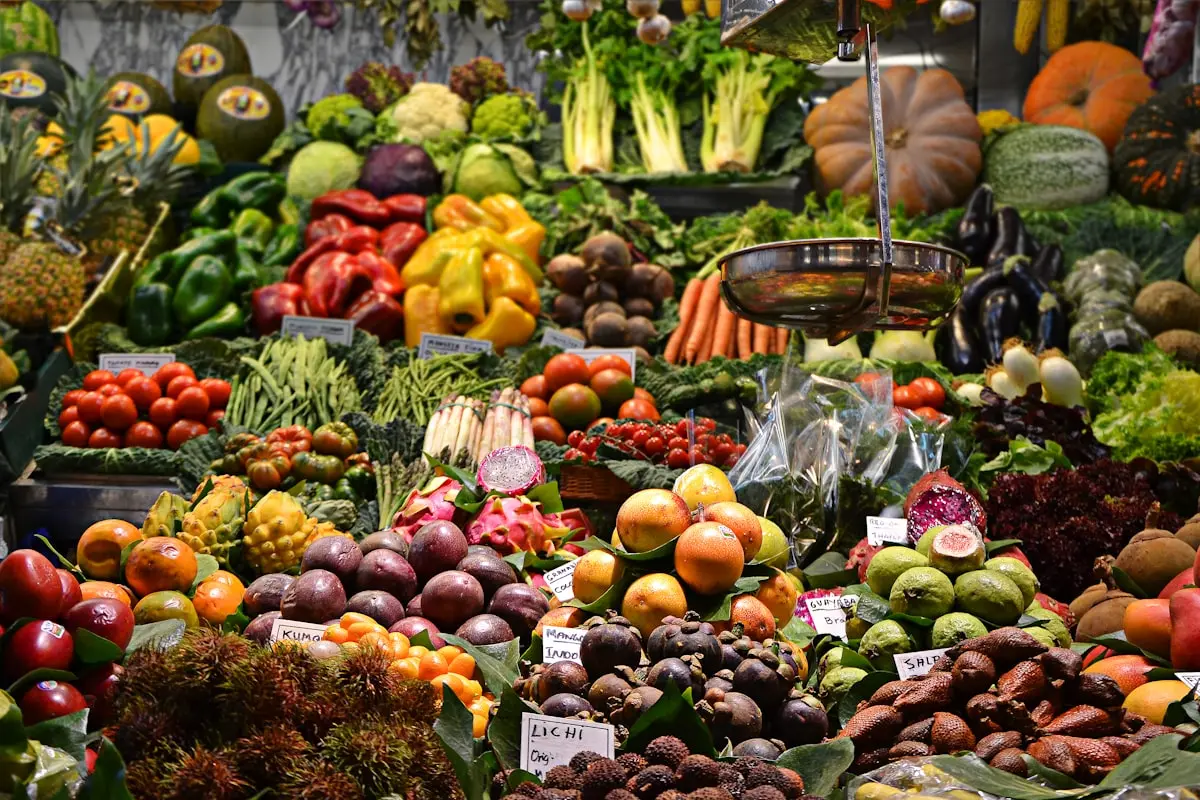
Strip away the supplements and the test-tube scores, and the practical advice is refreshingly simple and well supported: eat a wide variety of colorful whole plants, most days. The colors are not decoration; each pigment family represents a different set of antioxidant compounds, and eating across the spectrum gives you the broad, balanced intake your relay-team defense system is built to use.
| Color | Key antioxidants | Everyday foods |
|---|---|---|
| Red | Lycopene, anthocyanins | Tomatoes, watermelon, strawberries, red peppers |
| Orange and yellow | Beta-carotene, other carotenoids, vitamin C | Carrots, sweet potato, mango, citrus, squash |
| Green | Lutein, zeaxanthin, folate, catechins | Spinach, kale, broccoli, green tea, avocado |
| Blue and purple | Anthocyanins, resveratrol | Blueberries, blackberries, red grapes, eggplant |
| White and brown | Quercetin, allicin, polyphenols | Onions, garlic, apples, cocoa, whole grains |
A practical target: aim for at least three different colors a day, and let the week cover all five. Frozen counts, and is often picked riper than fresh.
A few habits raise your real, absorbed antioxidant intake more than any capsule. Cook tomatoes with a little olive oil, since lycopene absorbs better that way. Keep some berries (fresh or frozen) in steady rotation for anthocyanins. Make tea or coffee part of the day; both are major polyphenol sources for most people. Use herbs and spices generously. And lean on legumes, nuts, and intact whole grains, which carry polyphenols along with the fiber that feeds your gut. If you want the deeper food strategy, our guide to an anti-inflammatory diet and our look at building immune resilience beyond vitamin C both build on this same eat-the-rainbow foundation. Whole foods such as goji berries belong here as food, enjoyed for variety, not bought for a number on the bag.
When a specific antioxidant supplement genuinely makes sense
"Food first" is the rule, but it is not an absolute. There are real, evidence-based situations where a targeted antioxidant supplement earns its place, and it is worth naming them so the advice does not collapse into "never."
- Intermediate or advanced age-related macular degeneration. This is the standout exception. The AREDS2 formula, a specific combination of vitamin C (500 mg), vitamin E (400 IU), lutein (10 mg), zeaxanthin (2 mg), zinc (80 mg), and copper (2 mg), has been shown to slow progression to advanced AMD in people who already have the disease. Notably, AREDS2 deliberately replaced the original formula's beta-carotene with lutein and zeaxanthin precisely because of the lung-cancer signal in smokers, and swapping in those carotenoids was tied to roughly an 18% lower risk of progression (and about 26% in people whose diets were lowest in those pigments). This is a medical formula for a diagnosed eye condition, not a general antioxidant for healthy eyes, and our eye-health guide covers who it is for.
- A documented deficiency. If blood work or your diet shows you are genuinely low in vitamin C, vitamin E, or selenium, correcting that gap is worthwhile, and that is replacement, not antioxidant megadosing.
- Specific clinical contexts such as the heart and statin conversations around CoQ10, or malabsorption conditions that impair fat-soluble vitamin uptake. These are decisions to make with a clinician, for a named reason, with a dose and an endpoint, not a permanent shelf of bottles.
The common thread: a good antioxidant supplement decision answers the question "what specific gap or condition is this for?" If the honest answer is "general protection" or "just in case," the evidence says your money is better spent at the produce aisle.
Safety: when antioxidants turn pro-oxidant
The recurring theme of this guide is that antioxidants are dose-dependent and context-dependent, and at the wrong dose they can do harm. Keep these guardrails in mind:
- Smokers should not take beta-carotene supplements. The ATBC and CARET trials make this one non-negotiable.
- High-dose vitamin E carries a bleeding risk, particularly if you take aspirin or anticoagulants, and it was linked to more prostate cancer in the SELECT trial. Stop high-dose vitamin E well before any surgery and tell your surgeon.
- Selenium has a narrow safe range. Stay below 400 mcg a day from all sources combined, and remember a few Brazil nuts can approach that on their own.
- High-dose antioxidants can blunt healthy adaptations. As the exercise study showed, megadoses around training may interfere with the gains you are working for.
- Antioxidants can interact with cancer treatment. Because some chemotherapy and radiation work partly by generating oxidative stress in tumor cells, high-dose antioxidants could theoretically blunt them. Anyone in active cancer treatment should clear all antioxidant supplements with their oncologist first.
None of this applies to eating colorful food, which is safe and beneficial. It applies to swallowing isolated antioxidants at doses far above what any meal would deliver. When in doubt, talk to a healthcare professional before adding a high-dose antioxidant, especially if you take medication or have a chronic condition.
Frequently asked questions
Are antioxidant supplements worth taking?
For most healthy people eating a reasonably varied diet, no. Large trials have repeatedly found that isolated, high-dose antioxidant supplements fail to prevent cancer or heart disease, and some, notably beta-carotene and high-dose vitamin E, were tied to higher risks. The clear exceptions are correcting a documented deficiency and specific medical formulas like AREDS2 for diagnosed eye disease. Antioxidant-rich food, by contrast, is consistently worth eating.
What is the most powerful antioxidant?
There is no single "most powerful" antioxidant that matters for your health, and chasing one misunderstands how the system works. Your body's own glutathione and antioxidant enzymes do the central work, and dietary antioxidants function as a team that regenerates one another. Test-tube potency rankings (the old ORAC scores) were discredited and withdrawn precisely because they do not predict real benefit in the body.
Can you take too many antioxidants?
Yes. At high doses, antioxidants can act as pro-oxidants and cause the kind of damage they are meant to prevent, and specific ones carry specific risks: beta-carotene in smokers, vitamin E and bleeding, selenium toxicity above 400 mcg a day. You essentially cannot overdo antioxidants from whole food, but you can absolutely overdo them from supplements.
Is it better to get antioxidants from food or supplements?
Food, clearly. Health agencies note that antioxidants taken as purified chemicals at high doses can behave differently from the smaller amounts packaged with hundreds of other compounds in food. Whole foods deliver antioxidants in balanced combinations your body evolved to use, which is the leading explanation for why antioxidant-rich diets help while antioxidant pills generally do not.
Do antioxidants slow aging or prevent wrinkles?
A diet rich in colorful plants is genuinely associated with healthier aging, and oxidative stress is part of the aging process, so the basic idea is sound. But no antioxidant pill has been shown to meaningfully slow aging, and the supplement trials aimed at chronic disease did not deliver. For skin specifically, sun protection and not smoking outperform any antioxidant capsule. For the broader picture, see our guide to the science of longevity.
Should I take vitamin C and vitamin E together?
From food, this pairing happens naturally and is part of why the antioxidant network functions, since vitamin C helps regenerate used-up vitamin E. As a high-dose supplement combination, however, it is the exact pairing that blunted exercise benefits in the PNAS study and that failed in disease-prevention trials. There is no need to buy them as a high-dose duo; a varied diet supplies both in the amounts that actually cooperate.
Do antioxidants boost the immune system?
Adequate antioxidant nutrients support normal immune function, and deficiencies impair it, but "boosting" immunity with megadoses is not supported, and high-dose vitamin C does not prevent colds in the general population. The immune-supporting move is a nutrient-complete, colorful diet rather than a single antioxidant, which we cover in our guide to a resilient immune system beyond vitamin C.
The bottom line
Antioxidants are real and they matter, but almost the opposite of how the label implies. Your body runs a sophisticated, self-renewing antioxidant defense built on enzymes and glutathione, and your diet's job is to keep that system supplied and balanced, not to bombard it with a single purified compound. The evidence here is unusually consistent: antioxidant-rich whole foods track with better health, while isolated high-dose antioxidant supplements have failed and occasionally backfired in the largest trials ever run.
So spend your effort where it pays. Eat a colorful range of vegetables, fruit, nuts, legumes, tea, herbs, and olive oil most days; cook in ways that help absorption; and treat antioxidant supplements as targeted tools for a named deficiency or condition, chosen with a clinician, rather than a daily insurance policy. Ignore the antioxidant scores on the packaging, skip the megadoses, and let a varied plate, not a bottle, do the work.
Sources
- The Alpha-Tocopherol, Beta Carotene Cancer Prevention (ATBC) Study, New England Journal of Medicine (1994)
- Beta Carotene and Retinol Efficacy Trial (CARET), New England Journal of Medicine (1996)
- Vitamin E and the Risk of Prostate Cancer (SELECT), JAMA (2011)
- Antioxidant supplements for prevention of mortality, Cochrane Database of Systematic Reviews (2012)
- Antioxidants: In Depth, National Center for Complementary and Integrative Health
- Vitamin C Fact Sheet, NIH Office of Dietary Supplements
- Vitamin E Fact Sheet, NIH Office of Dietary Supplements
- Selenium Fact Sheet, NIH Office of Dietary Supplements
- About AREDS and AREDS2, National Eye Institute
- Antioxidants prevent health-promoting effects of physical exercise in humans, PNAS (2009)