Sugar on a Nutrition Facts label can be surprisingly confusing.
A yogurt might show 8 grams of total sugar but only 2 grams of added sugar. A piece of fruit contains sugar but no added sugar at all. Honey sounds more natural than table sugar, yet it still counts as added sugar when used as a sweetener in packaged food.
The key is understanding that total sugar and added sugar are not the same thing.
Here is the simple way to read the label.
The Short Version
- Total Sugars includes both naturally occurring and added sugars.
- Added Sugars tells you how much sugar was added during processing or preparation.
- Naturally occurring sugars in whole fruit and plain milk are not counted as added sugars.
- Honey, syrups, table sugar, and concentrated fruit juice used as sweeteners generally count as added sugars.
- The FDA Daily Value for added sugars is 50 grams per day based on a 2,000-calorie diet.
- On the label, 5% Daily Value or less is low; 20% or more is high.
- You do not need to eliminate all sugar. The label is most useful for comparing similar foods.
What Does “Total Sugars” Mean?
Total Sugars is exactly what it sounds like: all the sugar in one serving of the food.
That includes sugar naturally present in foods plus any sugar added during processing.
For example, plain yogurt naturally contains lactose, a type of sugar found in milk. Fruit naturally contains sugars as well.
Those sugars contribute to the Total Sugars number, but they are not automatically considered Added Sugars.
The FDA explains the distinction directly: Total Sugars includes naturally occurring sugars as well as any added sugars that may be present.
That is why judging a food only by its Total Sugars number can be misleading.
What Counts as Added Sugar?
Added sugars are sugars introduced during food processing or preparation.
Common examples include:
- Cane sugar
- Table sugar
- Brown sugar
- Dextrose
- Honey
- Maple and other syrups
- Concentrated fruit or vegetable juices used as sweeteners
One common misconception is that a “natural” sweetener automatically avoids the added-sugar category.
It does not.
Honey may have a different flavor and origin from white sugar, but when a manufacturer adds honey to sweeten a product, that sugar generally appears under Added Sugars on the Nutrition Facts label.
The distinction is about whether the sugar was added, not whether the ingredient sounds natural.
Why Does the Label Separate Them?
The separate Added Sugars line gives you context that Total Sugars alone cannot provide.
Consider two foods:
Food A: 12 g Total Sugars, 0 g Added Sugars
Food B: 12 g Total Sugars, 10 g Added Sugars
The numbers look identical if you only read Total Sugars.
But Food A's sugar may largely come from ingredients such as fruit or milk, while most of Food B's sugar was added during processing.
That does not automatically make Food B “bad.” It simply gives you more useful information about where its sweetness comes from.
According to the FDA, consuming too many calories from added sugars can make it harder to meet nutrient needs while staying within overall calorie limits. U.S. Food and Drug Administration
How Much Added Sugar Is Too Much?
The FDA Daily Value for Added Sugars is 50 grams per day, based on a 2,000-calorie diet. U.S. Food and Drug Administration
But you do not need to keep a running calculator all day.
Use % Daily Value (%DV) instead.
The FDA's Nutrition Facts guidance gives an easy rule:
5% DV or less per serving = low
20% DV or more per serving = high
Imagine choosing between two snack bars.
One contains 3 grams of added sugar, or about 6% DV.
Another contains 12 grams, or about 24% DV.
Neither number tells you everything about the food. You still want to consider protein, fiber, saturated fat, ingredients, serving size, and what role the food plays in your diet.
But if the products are otherwise similar, %DV makes the comparison much easier.
What About Fruit?
Whole fruit is a good example of why Total Sugars should not be treated as a simple “good or bad” score.
An apple contains naturally occurring sugar, but it also comes packaged with water, fiber, vitamins, minerals, and other components of the whole fruit.
Its naturally occurring sugar is not listed as Added Sugars.
The same principle applies to the naturally occurring lactose in plain milk.
Once sweeteners are added to a product, however, that added portion is identified separately on the label.
So instead of asking, “Does this food contain sugar?”, a better question is:
“How much of the sugar was added?”
Watch the Serving Size
There is one easy way to misread even a perfectly clear label: ignoring the serving size.
If a snack contains 8 grams of added sugar per serving and the package contains two servings, eating the entire package means consuming 16 grams.
The same applies to %DV.
FDA guidance emphasizes checking serving size because all of the nutrition information on the label is tied to the stated serving. U.S. Food and Drug Administration
Before comparing products, make sure you are comparing similar serving sizes.
A Better Way to Shop
You do not need to search for foods with zero sugar across the board.
Instead:
- Compare Added Sugars, not just Total Sugars.
- Use %DV to compare similar products.
- Check serving size first.
- Look at fiber and protein too.
- Remember that “organic,” “natural,” or “made with honey” does not mean sugar-free.
- Choose unsweetened versions when they work just as well for you.
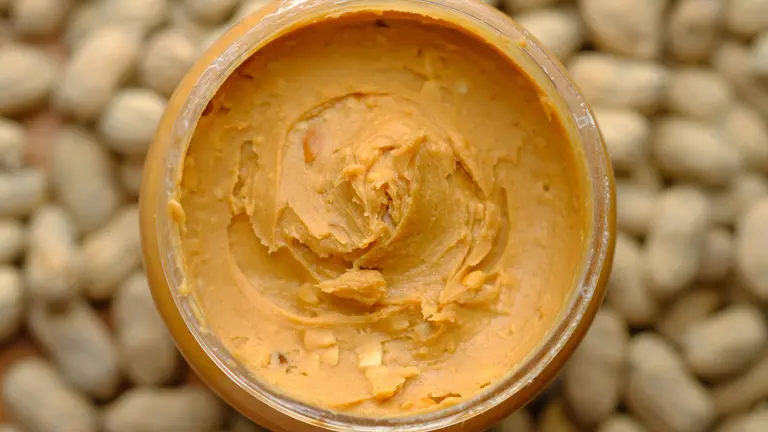
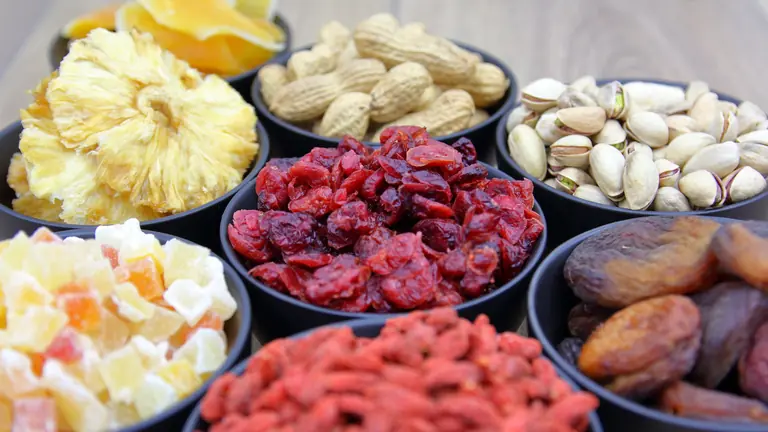
For example, unsweetened nut butter lets you add sweetness yourself if you want it. Plain nuts and beans naturally make the decision even simpler because many contain little or no sugar and no added sugar.
Frequently Asked Questions
Is natural sugar healthier than added sugar?
The source and overall food matter. Naturally occurring sugar in whole fruit comes with the rest of the fruit's nutritional package. The Nutrition Facts label separates Added Sugars specifically so consumers can see sugars introduced during processing.
Does honey count as added sugar?
Yes, when honey is added to a food as a sweetener, it counts toward Added Sugars under FDA labeling.
Is 0g added sugar the same as sugar-free?
No. A food can contain naturally occurring sugars while having 0 grams of added sugar.
Should I avoid all added sugar?
Not necessarily. A practical approach is to watch the amount and overall dietary pattern rather than expecting every food to contain zero added sugar.
The Bottom Line
The most useful sugar number on a food label is often not Total Sugars.
It is Added Sugars.
Total Sugars includes naturally occurring and added sugars together. Added Sugars tells you how much sweetness was introduced during processing or preparation.
When comparing similar foods, check the serving size, look at Added Sugars, and remember the simple FDA guide: 5% DV is low; 20% DV is high.
That gives you a much better picture than judging a food by the word “sugar” alone.
Sources
- U.S. Food & Drug Administration — Added Sugars on the Nutrition Facts Label
- U.S. Food & Drug Administration — What's on the Nutrition Facts Label
- U.S. Food & Drug Administration — The Lows and Highs of Percent Daily Value