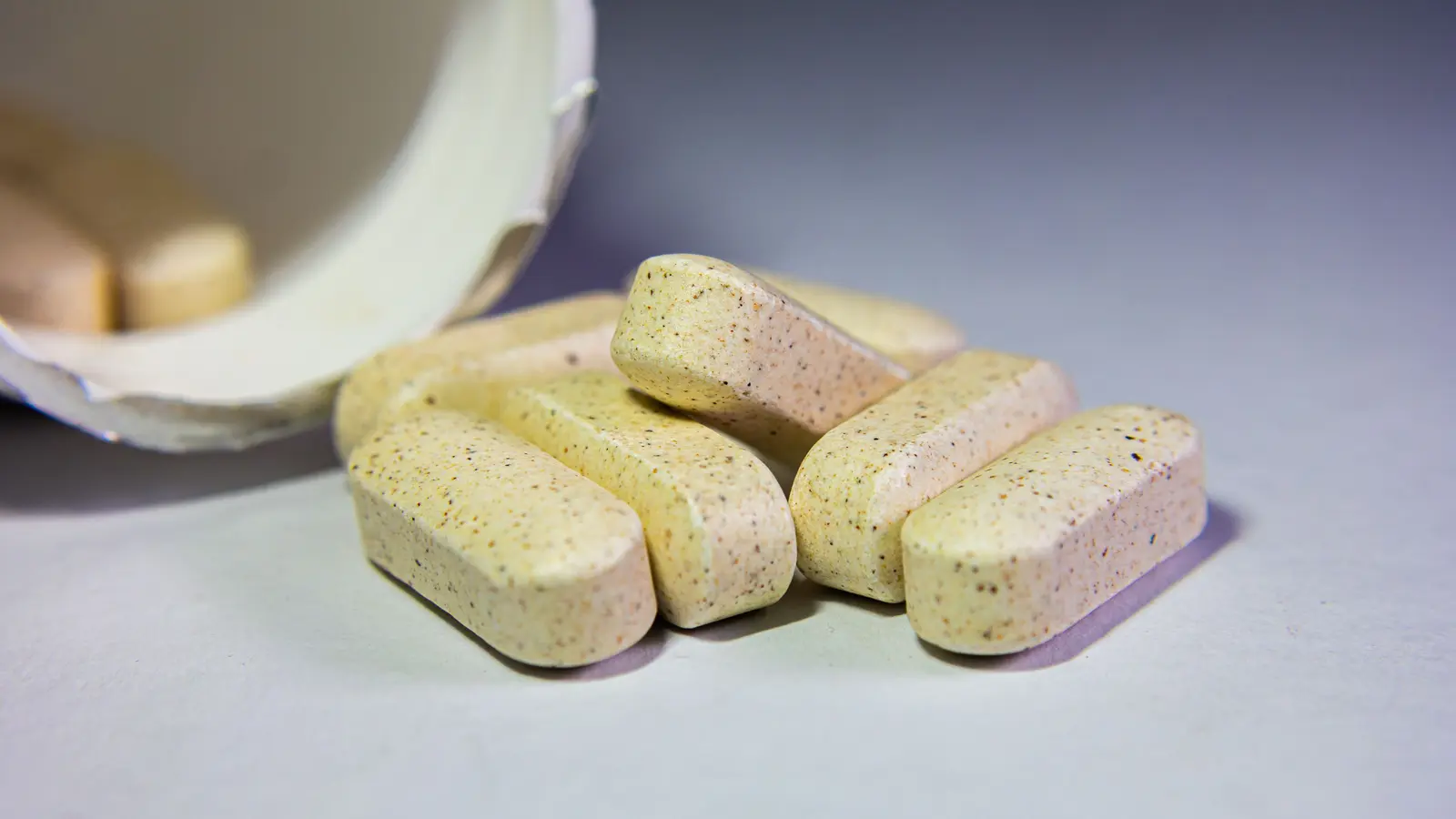
Two panels of specialists read the same trials and reached opposite conclusions. In 2019 the American College of Rheumatology strongly recommended against glucosamine for knee, hip, and hand osteoarthritis, alone or combined with chondroitin. Two years later the American Academy of Orthopaedic Surgeons put both compounds on a short list of supplements that may help with mild-to-moderate knee osteoarthritis, while cautioning that the evidence is inconsistent. Neither group had private data. They weighed the same research and disagreed about what counts as enough.
That disagreement is the honest place to start, because it is the thing product pages never mention. What follows is what glucosamine, chondroitin, and MSM each do, what the largest trials found when they measured joint pain, why the form printed on the label changes the picture, and how to test one on yourself without losing six months to guesswork.
Where the evidence lands
- These are three different compounds with three different files. Glucosamine and chondroitin are cartilage building blocks studied together for decades; MSM is a sulfur compound with a much thinner and more recent evidence base.
- The largest independent trial, the NIH-funded GAIT study of 1,583 people, found no significant benefit for joint pain overall. A subgroup with moderate-to-severe knee pain did better on the combination, and the researchers called that result preliminary.
- Guidelines split along a predictable line. Rheumatology and osteoarthritis-research bodies recommend against these supplements; orthopaedic and European groups allow or favor them, largely because they weigh industry-funded trials differently.
- Form is the buried variable. Most of the positive glucosamine research used a patented prescription crystalline glucosamine sulfate at 1,500 mg once daily, not the hydrochloride in most American bottles.
- Many labels fall short of trial doses. Studies used 1,500 mg of glucosamine and 1,200 mg of chondroitin daily, and MSM trials ran 2 to 6 grams, several times the MSM in a typical combination tablet.
- Side effects are usually mild and digestive, but talk with your healthcare professional first if you take warfarin, manage diabetes or glaucoma, are pregnant or breastfeeding, or have a shellfish allergy.
What glucosamine, chondroitin, and MSM each do in a joint
All three land in the same joint-pain formulas, often in the same tablet, and that shared billing hides real differences.
Glucosamine is an amino sugar your body makes on its own. It serves as a building block for glycosaminoglycans, the long sugar chains woven through cartilage. Supplemental glucosamine is usually manufactured from the shells of shrimp, crab, and other crustaceans, though a shellfish-free version fermented from corn also exists.
Chondroitin sulfate is one of those glycosaminoglycans in finished form. It sits in cartilage and helps the tissue hold water, which is what lets cartilage resist compression when you load a joint. Supplements are extracted from animal cartilage, most often bovine or porcine.
MSM, or methylsulfonylmethane, is not a cartilage component at all. It is a small organosulfur compound present in trace amounts in fruits, vegetables, and grains, and it acts as a dietary sulfur donor. Sulfur turns up in connective tissue, so the reasoning behind putting MSM in joint formulas is structural by analogy rather than by direct evidence.
The theory across all three is appealing: feed the joint its raw materials and the joint repairs itself. Biology rarely works that neatly. Swallowing a cartilage component does not send it to your knee any more than eating a steak sends protein to your biceps. Everything gets digested first, and how much of it ever reaches joint tissue is one of the open questions in this field.
| Compound | What it is | Role in a joint | Daily dose used in trials | Where the evidence stands |
|---|---|---|---|---|
| Glucosamine | Amino sugar, usually from shellfish shells | Building block for cartilage sugar chains | 1,500 mg | Large and conflicting. Positive results cluster in trials of one prescription European formulation. |
| Chondroitin sulfate | Glycosaminoglycan from animal cartilage | Helps cartilage hold water and resist compression | 1,200 mg | Mixed. One guideline conditionally favors it for hand osteoarthritis while advising against it for knee and hip. |
| MSM | Organosulfur compound found in trace amounts in food | Supplies sulfur used in connective tissue | 2,000 to 6,000 mg | Thin. A meta-analysis found no clinically meaningful pain reduction; later small trials are mildly positive. |
Doses reflect the regimens tested in published trials, not a recommendation. Check any product against your own healthcare professional's advice.
Four studies that shaped the argument
Two randomized trials, one pooled analysis, and one recent review carry most of the weight in this debate. They point in different directions, and reading them in order explains why the field never settled.
GAIT, 2006. The Glucosamine/chondroitin Arthritis Intervention Trial randomized 1,583 people with knee osteoarthritis to glucosamine, chondroitin sulfate, both, celecoxib, or placebo for 24 weeks. It was funded by the National Institutes of Health rather than a manufacturer, which is why it still anchors the debate. Overall, none of the supplement arms beat placebo at the primary endpoint, a 20 percent drop in pain on the WOMAC index, the standard osteoarthritis pain-and-function scale. Placebo response was 60.1 percent; glucosamine came in 3.9 points higher, chondroitin 5.3 points higher, the combination 6.5 points higher, and none of those gaps reached statistical significance. Celecoxib did, at 10 points.
The result everyone quotes came from a pre-specified subgroup. Among the 354 participants who started with moderate-to-severe pain, 79.2 percent responded to the combination versus 54.3 percent on placebo. That is a large gap, and the authors labeled the analysis exploratory. Subgroups that size generate hypotheses; they do not confirm them, and no adequately powered trial has since confirmed this one.
The 2010 network meta-analysis. A team at the University of Bern pooled 10 large trials covering 3,803 patients and measured effects against a threshold set before the analysis began: a 0.9 cm improvement on a 10 cm pain scale, the smallest change a patient would notice. Glucosamine came in at 0.4 cm, chondroitin at 0.3 cm, the combination at 0.5 cm. None of the credible intervals crossed the threshold. Joint space narrowing did not budge either. The authors, who declared no industry ties, concluded that insurers should not cover these products.
That paper also produced the single most useful finding for a shopper. Industry-independent trials showed smaller effects than commercially funded ones, and the difference was statistically significant. Funding source predicts the result.
MOVES, 2016. This European trial gave 606 people with moderate-to-severe knee pain either chondroitin plus glucosamine hydrochloride or celecoxib for six months, and the supplement combination matched the drug. Pain fell about 50 percent in both groups. Two details matter before you read that as a win. The trial had no placebo arm, so a 50 percent improvement in both groups cannot be separated from the large placebo and natural-fluctuation effects that osteoarthritis trials routinely produce. And the trial was funded by Bioiberica, the company that makes the chondroitin product tested, which also participated in the study design.
The 2025 systematic review. A review in Nutrients gathered 146 studies and reported that 102 of 113 efficacy studies were positive. That sounds decisive until you look at the method. Counting how many studies reported a positive result treats a small industry-sponsored trial and a 1,583-person NIH trial as one vote each, and it does not weigh study quality or funding. Guideline panels use graded frameworks precisely because vote-counting inflates weak evidence.
Why two expert panels disagree
The split is not about honesty. It is about thresholds.
The 2019 American College of Rheumatology and Arthritis Foundation guideline strongly recommends against glucosamine for knee, hip, and hand osteoarthritis, and strongly against chondroitin and combination products for knee and hip. It carves out one exception: chondroitin is conditionally recommended for hand osteoarthritis, on the strength of a single trial. The Osteoarthritis Research Society International reached the same overall verdict that year.
The American Academy of Orthopaedic Surgeons went the other way in its 2021 knee guideline, listing glucosamine and chondroitin among supplements that may reduce pain and improve function in mild-to-moderate disease, with an explicit caution that the evidence is inconsistent. In Europe, the ESCEO group goes further and places prescription-grade glucosamine sulfate in first-line care. Several of the researchers behind that position also co-authored the manufacturer-funded trials it rests on.
Three things drive the divergence. Panels differ on how small an average benefit can be before it stops mattering to a patient. They differ on how much to discount industry-funded results, which the Bern analysis showed run larger. And they differ on whether trials of one patented European formulation should count as evidence for the whole category. Change any one of those judgments and the recommendation flips.
For a reader, the practical translation is straightforward. If these supplements worked reliably and strongly, expert bodies would not be able to disagree about them. Whatever effect exists is small enough to sit inside the margin where reasonable panels argue.
Glucosamine sulfate vs. hydrochloride, the variable nobody mentions
Glucosamine reaches you as one of two salts, and the research behind each is not the same.
Most of the favorable long-term data comes from a patented crystalline glucosamine sulfate given as a single 1,500 mg daily dose, sold as a prescription medicine in parts of Europe and not available over the counter in the United States. Its manufacturer argues that the crystalline form is more stable and reaches higher blood levels than other preparations, and that trials of everything else understate what glucosamine can do. The strongest version of that case rests on two three-year trials, one in The Lancet in 2001 and one in Archives of Internal Medicine in 2002, in which knees on placebo lost measurable joint space while knees on 1,500 mg of crystalline glucosamine sulfate lost essentially none. Researchers employed by the manufacturer co-authored both, and the wider pooled analysis found nothing like it.
Independent reviewers are more restrained. The National Center for Complementary and Integrative Health agrees that studies of the prescription formulation generally had more favorable results, then names three reasons to hold that pattern loosely: most of those studies carried a high risk of bias from weaknesses in how they were designed, most were published more than 20 years ago, and they were funded by the pharmaceutical company. Positive trials of a proprietary product tend to be run by people connected to it, which makes the formulation and the funding hard to separate.
American shelves mostly carry glucosamine hydrochloride, which is cheaper to make and carries more glucosamine per milligram of salt. GAIT used the hydrochloride. So did MOVES. One of those trials was null and the other lacked a placebo arm, which is roughly where the honest summary sits.
If you decide to try glucosamine, the useful move is to match a tested regimen as closely as you can rather than to chase a form you cannot buy: 1,500 mg of glucosamine daily, taken with chondroitin at 1,200 mg if you are testing the combination, for a defined period.
MSM has a thinner file and a dose problem
MSM entered joint formulas on reasoning rather than results, and the results have been slow to arrive.
A meta-analysis of MSM and the related compound DMSO turned up only three eligible randomized trials covering 326 patients, and only one of those three actually tested MSM. The other two used DMSO, a chemical relative, which means the entire pooled MSM literature at that point amounted to a single trial. Together the three produced a pain reduction of about 6 mm on a 100 mm scale, neither statistically significant nor clinically meaningful. The authors flagged short dosing periods as a limitation and declined to draw a firm conclusion in either direction.
Later work is mildly encouraging and comes with caveats. A 2023 Japanese trial gave 88 adults with mild knee pain 2 grams of MSM daily for 12 weeks and reported a small improvement on a knee-specific quality-of-life score, at a p-value of 0.046 that sits right at the edge of significance. The authors work in the research and development division of the company that supplied the material. Pushing the other way, a US Army trial randomized 180 initial-entry trainees to 3 grams of MSM or placebo to see whether it could head off knee pain during high-impact training, and found no difference at 30 or 60 days. Prevention in fit young recruits is a different question from relief in an aching 60-year-old knee, but it is the larger of the two studies.
Then there is the arithmetic problem. Trials of MSM used 2 to 6 grams a day. Combination joint tablets typically deliver a few hundred milligrams, because glucosamine and chondroitin already take up most of the pill. Anyone who wants to test MSM at a dose that resembles the research needs a standalone product; the MSM riding along in a three-in-one formula is closer to a label ingredient than a tested dose.
MSM also shows up in hair, skin, and nail blends on the same sulfur logic. The evidence there is even earlier, as our guide to nutrients for hair, skin, and nails covers in detail.
Trial doses vs. what is in the bottle
Nothing on the front of a joint supplement tells you how its serving compares with the amount used in the research, and the two are rarely the same.
Take a well-made example. Solgar Extra Strength Glucosamine Chondroitin MSM with Ester-C gives you 1,068 mg of glucosamine hydrochloride, 1,200 mg of chondroitin sulfate, and 700 mg of MSM in a three-tablet serving. The chondroitin lands exactly on the trial dose. Glucosamine sits roughly 30 percent below it. MSM comes in at roughly a third of the lowest dose ever tested for joints. That is not a knock on the product, which is a clean and reasonably dosed formula by category standards. It is the arithmetic almost every combination product runs into, since 1,500 plus 1,200 plus 3,000 milligrams will not fit in a tablet anyone wants to swallow.
| Ingredient | Dose used in trials | Typical 3-tablet combination serving | What that means |
|---|---|---|---|
| Glucosamine | 1,500 mg/day | ~1,068 mg | About 70 percent of the tested amount |
| Chondroitin sulfate | 1,200 mg/day | 1,200 mg | Matches the trial dose |
| MSM | 2,000 to 6,000 mg/day | ~700 mg | Below the lowest tested joint dose |
Figures for the combination column come from the Solgar Extra Strength label. Other brands differ, so read the Supplement Facts panel and note the serving size in tablets, not the number on the front.
Content accuracy is the second question. Because these products are regulated as foods rather than drugs, nobody verifies the panel before it reaches a shelf. An analytical study that measured 12 commercial glucosamine supplements found the six Australian products landed within roughly 2 percent of their labeled amounts, while only half of the six Indian products fell within 10 percent of theirs. That sample is small and neither market is ours, but it makes the general point: manufacturing standards vary, and the label is a claim rather than a measurement. Buying from established brands and looking for a third-party seal such as USP Verified or NSF Contents Certified is the practical hedge. A branded raw material named on the panel, such as the OptiMSM form of MSM, is a smaller but real signal that the maker is willing to be specific about what it bought. For what each certification mark actually verifies, and what it does not, see our guide to choosing quality supplements.
Chondroitin carries a version of the same problem on a different axis. Nobody synthesizes it. The material is extracted from animal cartilage, so the source tissue and the purification process decide what ends up in the capsule. A review of chondroitin preparations found that the pharmaceutical-grade material sold as a drug in Europe is held to a standardized purity, while the chondroitin in a number of supplements was poor by comparison, with no rules at all governing where the raw material came from. That matters for how you read a favorable European guideline. Those recommendations were written around the pharmaceutical grade, and the endorsement does not automatically travel to the bottle in front of you.
One more label question comes up constantly in search, so it is worth answering plainly here and again in the FAQ below: glucosamine is not sold with USDA Organic certification, because it is normally extracted from crustacean shells and there is currently no USDA organic standard covering seafood. Chondroitin, an isolate pulled from animal cartilage, is not certified either.
Side effects and who should ask a clinician first
The safety picture is reassuring in broad strokes and specific in its exceptions. Across large studies, no major safety problems have surfaced, and the most common complaints are digestive: nausea, loose stools, constipation, indigestion, and bloating, usually mild and often reduced by taking the tablets with food. Now the exceptions.
Warfarin. This one is not theoretical. A 2008 case report and pharmacovigilance review described a 71-year-old man stable on warfarin for five years whose INR rose from 2.3 to 3.9 about three weeks after he increased his glucosamine and chondroitin dose. The same paper found 20 reports in the FDA MedWatch database of altered coagulation, raised INR, or increased bleeding and bruising in warfarin patients taking these supplements, one of them a brain bleed that left the patient in a persistent vegetative state. In the World Health Organization's separate database the authors counted 21 reports of raised INR with glucosamine, and 17 of those resolved once the supplement was stopped. Individual case reports are weak evidence on their own. A signal that reverses when you withdraw the suspect substance is the kind that tends to be real. If you take warfarin or any anticoagulant, this is a conversation with your prescriber before the first tablet, not after.
Blood sugar. Glucosamine is an amino sugar, and early laboratory work raised the possibility that it could worsen insulin resistance. Human trials have been mostly reassuring. The longest of them gave 407 overweight and obese middle-aged women crystalline glucosamine sulfate for 2.5 years and tracked their blood work for 6.5, and found no effect on average HbA1c or on new diabetes diagnoses. That study enrolled women without diabetes, which is a real limit on how far it stretches. NCCIH still notes that glucosamine may raise blood glucose in some people, so if you manage diabetes, mention it at your next visit and keep an eye on your readings after starting.
Eye pressure. The least discussed of these, and not the smallest. A 2013 report in JAMA Ophthalmology linked oral glucosamine to raised intraocular pressure. A 2024 paper then went through three databases at once: glucosamine users in UK Biobank had higher corneal-compensated eye pressure, and Finnish registry data put their subsequent risk of primary open-angle glaucoma at more than twice that of non-users. Registry associations cannot establish cause, and no trial has tested this directly, so the finding is a flag rather than a verdict. Even so, tell your ophthalmologist you take glucosamine if you have glaucoma or ocular hypertension, rather than assuming a joint supplement is invisible to the eye.
Shellfish allergy. The concern is understandable, since most glucosamine comes from crustacean shells. Shellfish allergy is driven by tropomyosin, a muscle protein in the flesh, not by the chitin in the shell. In a double-blind placebo-controlled challenge, 15 shrimp-allergic adults took 1,500 mg of shrimp-derived glucosamine with no immediate or delayed reactions. Fifteen people is a small study, manufacturing purity varies, and products still declare shellfish on the label, so anyone with a significant shellfish allergy should clear it with an allergist or choose a corn-fermented glucosamine instead.
Pregnancy and breastfeeding. Little is known about safety in either case. The sensible default is to skip it.
Vegetarians and vegans. Shellfish-free glucosamine made by fermenting corn is widely available. Chondroitin is another matter, since it is extracted from animal cartilage and has no established plant equivalent.
How to run a fair 12-week trial on yourself
Given evidence this mixed, personal experiment is a defensible approach as long as you run it properly. Most people do not, which is why so many end up taking a supplement for years without knowing whether it does anything.
Worth asking first: are you the right person to run it? The one place the research pointed anywhere was the GAIT subgroup with moderate-to-severe knee pain, and even there the finding was exploratory. Mild, occasional aching gives you a weak rationale and almost nothing to measure. Persistent pain that limits what you do gives you both, which is also a reason to bring your clinician into the decision rather than running the experiment privately.
Write down a baseline you can measure
Pick three specific activities that bother you now: stairs down, the first ten minutes after getting out of bed, standing up from a low chair. Rate each 0 to 10 today, and count how many days last week you reached for a pain reliever. Memory is a poor instrument for slow change in either direction.
Dose to the research, not to the bottle
Aim for 1,500 mg of glucosamine and 1,200 mg of chondroitin daily if you are testing the pair. Read the panel and do the arithmetic; if the serving falls short, adjust with your healthcare professional's guidance rather than assuming the label knows the trials. For MSM, a standalone product such as Solgar MSM 1000 mg at two tablets daily reaches 2 grams, which is inside the tested range.
Change one thing at a time
Starting a supplement, a new exercise routine, and a diet change in the same week guarantees you learn nothing about any of them. Start the supplement alone and hold everything else steady, at least for the first stretch.
Give it 8 to 12 weeks, then decide
These compounds are slow if they work at all. GAIT ran 24 weeks and MOVES ran six months, but if nothing has moved on your baseline numbers by week 12, further waiting is unlikely to change the answer. Stop and put the money toward something with a better track record.
Price the experiment before you start it
A three-tablet combination serving runs somewhere near 60 cents a day at typical shelf prices, so a full 12-week trial costs roughly 50 dollars. Standalone MSM is cheaper, closer to a quarter a day, or about 20 dollars for the same stretch. Those are small enough numbers that trying is reasonable and large enough that drifting into a fifth year of a supplement you never evaluated is a real waste. Decide up front what you are willing to spend to get an answer.
Run the stop test
If you think it is helping, stop for four weeks and watch your baseline numbers. Osteoarthritis pain fluctuates on its own, and placebo effects in these trials are large enough to run 50 to 60 percent response rates. Coming off is the only cheap way to tell a real effect from a good month.
What has stronger evidence than any of these
The guidelines that disagree about supplements agree almost completely about everything else, which is a signal worth acting on.
Exercise and strength training top every list. Loading a joint deliberately builds the muscle that supports it, and structured exercise carries a strong recommendation in every major osteoarthritis guideline, with none of the argument that surrounds the supplements. Weight management sits in core care for the same mechanical reason. Topical NSAIDs come ahead of the oral versions for knee osteoarthritis and carry far less systemic risk. None of that is exciting, and all of it rests on evidence nobody is fighting about.
Among things you can put in a cup or a capsule, a few have more promising files than MSM. Diet is the broadest lever, and our guide to anti-inflammatory eating covers the patterns with real support behind them. Turmeric has a larger set of knee osteoarthritis trials behind it than MSM does, though the quality of that literature is uneven too. Formulas such as Gaia Herbs Turmeric Supreme Joint pair standardized curcuminoids with boswellia and black pepper for absorption; our turmeric and curcumin guide covers what the research supports and how to read a curcuminoid label. Collagen peptides have their own body of joint research, separate from the compounds in this article, and the collagen guide sorts the skin evidence from the joint evidence.
Botanical blends take yet another route. A tincture like MaryRuth's Joint Health Liquid Extract leads with devil's claw and cat's claw, herbs with modest and preliminary research behind them. Blends of this kind often list a proprietary total rather than the amount of each herb, which makes it impossible to check any ingredient against the dose a study used. That is a fair reason to treat them as comfort-and-routine products rather than as tested interventions. You can browse the full specialty supplements selection to compare formulas side by side.
Frequently asked questions
Does glucosamine actually work for knee pain?
For most people with mild knee osteoarthritis, the honest answer is probably not much. The largest independent trial found no significant benefit over placebo, and a pooled analysis of 3,803 patients put the average pain improvement well below the level a patient would notice. A subgroup with moderate-to-severe pain responded better to the glucosamine and chondroitin combination in one exploratory analysis, which no adequately powered study has since confirmed.
Does glucosamine or chondroitin rebuild cartilage?
Nothing in the literature shows cartilage growing back. A narrower claim has some support. Two three-year trials of prescription crystalline glucosamine sulfate reported that knees on placebo lost roughly 0.2 to 0.3 mm of joint space while knees on the supplement lost essentially none, which is slowed loss rather than repair. Independent reviewers do not take either at face value, since the manufacturer's own researchers co-authored both, and the pooled analysis of 3,803 patients found the joint-space differences minute with credible intervals overlapping zero. A two-year imaging arm of GAIT found no significant difference either, though it was underpowered to rule out a small one. Marketing that promises rebuilt or regenerated cartilage is describing something no study has produced.
Glucosamine sulfate or glucosamine hydrochloride: which should I take?
Most of the favorable long-term research used a patented crystalline glucosamine sulfate at 1,500 mg once daily, sold as a prescription in parts of Europe and unavailable over the counter here. American products are usually hydrochloride, which delivered null results in the NIH-funded trial. Reviewers caution that the trials of the prescription form were largely run by parties connected to it, so the form advantage is not settled. Matching the tested daily amount matters more than agonizing over the salt.
Is there such a thing as organic glucosamine or chondroitin?
Not in the USDA sense. Glucosamine is normally made from crustacean shells, and there is currently no USDA organic standard covering seafood, so it cannot be certified the way a crop can. Chondroitin is an isolate extracted from animal cartilage and is not sold with organic certification either. A finished product may be organic-friendly in other respects, such as non-GMO sourcing or organic other-ingredients, and a corn-fermented glucosamine has a plant origin. Read the seal and the ingredient list rather than the marketing word.
How long does glucosamine take to work?
If it does anything, it is slow. Published trials ran 24 weeks to six months, and most practitioners suggest reassessing at 8 to 12 weeks. Set a baseline before you start, because slow change is nearly impossible to judge from memory. If nothing has moved by week 12, stopping is a reasonable decision.
How much glucosamine and chondroitin should I take a day?
The major trials used 1,500 mg of glucosamine and 1,200 mg of chondroitin daily. GAIT and MOVES both split that across three doses; the prescription European glucosamine sulfate is given as a single 1,500 mg dose instead. MSM studies used 2 to 6 grams. Check the Supplement Facts panel and note the serving size in tablets, because a three-tablet serving is common and a one-tablet product usually falls well short of these amounts. Labels generally direct you to take the tablets with meals, which also tends to blunt the digestive complaints that make people quit early.
Is it safe to take glucosamine long term?
Long-term use has not produced a major safety signal. A 2.5-year trial found no effect on blood sugar markers, and reported side effects across the literature stay mild and mostly digestive. The better question is whether continuing is worth it. If you have taken a joint supplement for years without once comparing your joints on it against your joints off it, a four-week break will tell you more than another bottle will. Keep your prescriber informed if you take an anticoagulant or manage diabetes or glaucoma.
Can I take glucosamine if I have a shellfish allergy?
Ask your allergist first. The allergen in shellfish is a muscle protein in the flesh, while glucosamine comes from the shell, and a small controlled challenge found that 15 shrimp-allergic adults tolerated 1,500 mg without a reaction. Fifteen people is a thin basis for a personal decision, purity varies between manufacturers, and products still declare shellfish. A corn-fermented glucosamine sidesteps the question entirely.
Is it safe to take with blood thinners or diabetes medication?
Talk to your prescriber before starting. Glucosamine and chondroitin have been linked to raised INR and bleeding in people on warfarin, with 20 such reports in the FDA's adverse event database alongside published case reports. The blood sugar concern has held up less well, since human trials including a 2.5-year study found no meaningful change in average HbA1c, but monitoring after you start is still sensible if you manage diabetes.
Is MSM better than glucosamine?
Neither has a strong file, and MSM's is the thinner of the two. A meta-analysis of the available randomized trials found no clinically meaningful pain reduction, while later small studies have been mildly positive. MSM does have one practical advantage: it is inexpensive, well tolerated, and easy to dose at the amounts used in research, provided you buy it on its own rather than relying on the few hundred milligrams tucked into a combination tablet.
Should I take collagen for my joints instead?
Collagen is a different question with a different evidence base, and it is worth looking at on its own terms rather than as a substitute. Hydrolyzed peptides and undenatured type II collagen have been studied at set doses for joint comfort, with results that are also mixed but tested separately from glucosamine. Some products cover both angles at once, such as Solgar Collagen Hyaluronic Acid Complex, which pairs hydrolyzed type II collagen with chondroitin and hyaluronic acid.
The bottom line
Glucosamine, chondroitin, and MSM occupy an unusual place: studied heavily, still unsettled, and oversold in almost every listing that ranks for them. The pooled evidence points to a small effect at best, the strongest positive results cluster in trials with commercial sponsorship or a formulation Americans cannot buy, and expert panels split over what to make of it. That does not make them a scam. It makes them a reasonable, low-risk experiment with a modest expected payoff, worth trying at a real dose for a defined stretch and worth abandoning without regret if your own joint pain does not move. Put the exercise, the strength work, and the weight conversation first, because those are where the evidence is not in dispute.
This article is for general education and is not medical advice. Talk to your healthcare professional before starting a supplement, especially during pregnancy, while breastfeeding, if you take medication, or if you manage a health condition.
References
- National Center for Complementary and Integrative Health. Glucosamine and Chondroitin for Osteoarthritis: What You Need To Know.
- Clegg DO, Reda DJ, Harris CL, et al. Glucosamine, chondroitin sulfate, and the two in combination for painful knee osteoarthritis. New England Journal of Medicine, 2006 (the GAIT trial).
- Wandel S, Juni P, Tendal B, et al. Effects of glucosamine, chondroitin, or placebo in patients with osteoarthritis of hip or knee: network meta-analysis. BMJ, 2010.
- Sawitzke AD, Shi H, Finco MF, et al. The effect of glucosamine and/or chondroitin sulfate on the progression of knee osteoarthritis. Arthritis & Rheumatism, 2008 (the GAIT imaging arm).
- Reginster JY, Deroisy R, Rovati LC, et al. Long-term effects of glucosamine sulphate on osteoarthritis progression: a randomised, placebo-controlled clinical trial. The Lancet, 2001.
- Pavelka K, Gatterova J, Olejarova M, et al. Glucosamine sulfate use and delay of progression of knee osteoarthritis: a 3-year, randomized, placebo-controlled, double-blind study. Archives of Internal Medicine, 2002.
- Hochberg MC, Martel-Pelletier J, Monfort J, et al. Combined chondroitin sulfate and glucosamine for painful knee osteoarthritis: a non-inferiority trial versus celecoxib. Annals of the Rheumatic Diseases, 2016 (the MOVES trial).
- Kolasinski SL, Neogi T, Hochberg MC, et al. 2019 American College of Rheumatology/Arthritis Foundation Guideline for the Management of Osteoarthritis of the Hand, Hip, and Knee.
- Bannuru RR, Osani MC, Vaysbrot EE, et al. OARSI guidelines for the non-surgical management of knee, hip, and polyarticular osteoarthritis. Osteoarthritis and Cartilage, 2019.
- American Academy of Orthopaedic Surgeons. Management of Osteoarthritis of the Knee (Non-Arthroplasty): Evidence-Based Clinical Practice Guideline, 3rd edition, 2021.
- Baden KER, Hoeksema SL, Gibson N, et al. The safety and efficacy of glucosamine and/or chondroitin in humans: a systematic review. Nutrients, 2025.
- Brien S, Prescott P, Lewith G. Meta-analysis of dimethyl sulfoxide and methylsulfonylmethane in the treatment of osteoarthritis of the knee, 2011.
- Toguchi A, Noguchi N, Kanno T, Yamada A. Methylsulfonylmethane improves knee quality of life in participants with mild knee pain: a randomized, double-blind, placebo-controlled trial. Nutrients, 2023.
- Tennent DJ, Hylden CM, Kocher BK, et al. A randomized controlled trial evaluating methylsulfonylmethane versus placebo to prevent knee pain in military initial entry trainees. US Army Medical Department Journal, 2017.
- Volpi N. Quality of different chondroitin sulfate preparations in relation to their therapeutic activity. Journal of Pharmacy and Pharmacology, 2009.
- Asthana C, Peterson GM, Shastri M, Patel RP. Development and validation of a novel HPLC-charged aerosol detector method for quantification of glucosamine in dietary supplements. PLOS ONE, 2019.
- Gommans YMM, Runhaar J, Jacobs ML, Bierma-Zeinstra SMA. The effect of prolonged glucosamine usage on HbA1c levels and new-onset diabetes mellitus in overweight and obese middle-aged women. American Journal of Medicine, 2017.
- Lehrer S, Morello T, Karrasch C, Rheinstein PH, Danias J. Effect of glucosamine on intraocular pressure and risk of developing glaucoma. Journal of Glaucoma, 2024.
- Murphy RK, Ketzler L, Rice RD, et al. Oral glucosamine supplements as a possible ocular hypertensive agent. JAMA Ophthalmology, 2013.
- Villacis J, Rice TR, Bucci LR, et al. Do shrimp-allergic individuals tolerate shrimp-derived glucosamine? Clinical & Experimental Allergy, 2006.
- Knudsen JF, Sokol GH. Potential glucosamine-warfarin interaction resulting in increased international normalized ratio. Pharmacotherapy, 2008.